Glossary

What is Intersegmental Traction?

Intersegmental Traction is a chiropractic therapy that gently stretches and mobilizes the spine using a specialized table with rolling rollers or mechanical segments. The treatment aims to improve spinal joint mobility, reduce stiffness. And enhance circulation to spinal discs and muscles without manual manipulation.

Reviewed by Advanced Injury Care ClinicSources reviewed: American Chiropractic Association, National Center for Biotechnology Information

Quick Facts About Intersegmental Traction

Category

Non-invasive spinal therapy

Used for

Spinal stiffness, disc hydration, muscle relaxation

Common confusion

Often mistaken for spinal decompression or manual adjustment

Also called

IST, Rolling Table Therapy

Often discussed with

Back Pain Treatment, Work Injury Treatment

Key Takeaways About Intersegmental Traction

Understanding Intersegmental Traction

How Intersegmental Traction applies to Chiropractor services in Hendersonville, United States—practical illustration

Intersegmental traction is a type of spinal therapy. Chiropractors (back doctors) use it often.

Related glossary terms: Spinal Adjustment, Decompression Therapy, Flexion-Distraction Technique.

It works without quick pushes or cracking sounds. A special table moves under your back. This table rolls or rocks gently.

The motion stretches your spine in a soft rhythm. It targets small back joints (called segments). This helps them move better.

Doctors suggest it for stiff backs. It helps if you sit too long. It also helps bad posture or small back shifts.

The goal is to help your spine move normally. It also relaxes tight muscles. The table's rolling boosts blood flow.

Your spinal discs (spine cushions) need this blood. They don't get blood directly. Movement brings them nutrients.

This keeps discs healthy. It also helps them stay wet. The therapy is passive. So you just lie there.

It's good for people who don't want quick pushes. It works well for older folks or those hurt.

How Intersegmental Traction Works?

Intersegmental traction tables have small rollers. These rollers move along your spine. You lie face-up on the table.

The rollers go from your lower back to upper back. They stretch each part of your spine. The stretch is gentle and repeats.

You can change how fast or hard the rollers go. This depends on what feels best for you. A session lasts 10 to 15 minutes.

You might feel a soft massage. The rollers move along your back. This feels soothing.

The rollers do a few things. They help take pressure off back joints. This eases nerve and disc pressure.

The rolling helps your spine move in a set rhythm. This breaks up stiffness in joints. It also helps soft tissues.

The stretch boosts blood flow. Oxygen and nutrients reach your discs better. This helps discs stay healthy.

It's great for worn discs. It also helps after small back injuries.

This therapy is part of bigger back plans. It works with other treatments. These may include back pushes or exercises.

It doesn't replace quick pushes. It helps them work better. It also keeps your spine moving between pushes.

Why Intersegmental Traction Matters?

Your spine keeps you healthy. It protects nerves and helps you move. When back joints get stiff, it causes pain.

Stiff joints can hurt in other body parts too. Intersegmental traction helps this. It makes joints move better.

It does this without hard pushes. This is good for people who want gentle help.

Another good thing is better blood flow. Discs need blood to stay healthy. The table's rolling brings them nutrients.

This stops discs from wearing out. It also helps them heal. This matters if you sit a lot or have desk jobs.

It helps if you have herniated discs (bulging cushions). These discs lose water and get stiff. The therapy keeps them flexible.

With this therapy, backs work better. Pain goes down. You move easier.

When Intersegmental Traction Matters Most?

This therapy helps most when backs need to move better. It's good for small back injuries. These include muscle or ligament pulls.

Gentle movement helps heal them. It doesn't cause more hurt. It also helps if you're stiff from getting older.

Bad posture or doing the same thing over causes stiffness. Driving or lifting can do this. Sitting too long is another cause.

It can also get your back ready for quick pushes. It loosens stiff joints. This makes pushes work better.

It's often used for new chiropractic patients. They might fear quick pushes. This therapy is gentle and safe.

Older adults or people with weak bones use it too. Quick pushes can be risky for them. This therapy is a safer choice.

But it's not for everyone. Some back problems can't use it. These include bad back shifts or broken bones.

Infections or nerve problems can't use it either. Always ask your doctor first.

How to Evaluate Intersegmental Traction?

Related Concepts Compared

Intersegmental Traction vs. Spinal Decompression

Spinal decompression uses a traction table to stretch the spine under controlled tension, often for disc herniation. Intersegmental traction uses rolling rollers to mobilize joints and improve circulation without sustained pulling.

Intersegmental Traction vs. Flexion-Distraction Technique

Flexion-distraction involves a chiropractor manually applying pressure to the spine while the table moves. Intersegmental traction is fully passive, with the table doing all the work.

Intersegmental Traction vs. Chiropractic Adjustment

Chiropractic adjustments involve quick, targeted thrusts to realign joints. Intersegmental traction uses gentle rolling to stretch and mobilize the spine without manual manipulation.

Expert Note

Intersegmental traction is particularly effective for patients who need gentle, consistent spinal mobilization. It’s not a substitute for manual adjustments but serves as a valuable adjunct therapy, especially for those with muscle tension or disc hydration concerns.

Common Mistakes or Myths About Intersegmental Traction

  • Assuming intersegmental traction is the same as spinal decompression—they use different mechanisms and goals.
  • Expecting immediate pain relief after one session; benefits often require multiple treatments.
  • Believing intersegmental traction can replace manual adjustments for severe misalignments.
  • Using intersegmental traction without consulting a provider, especially with existing spinal conditions.

Intersegmental Traction in Practice: A Real-World Example

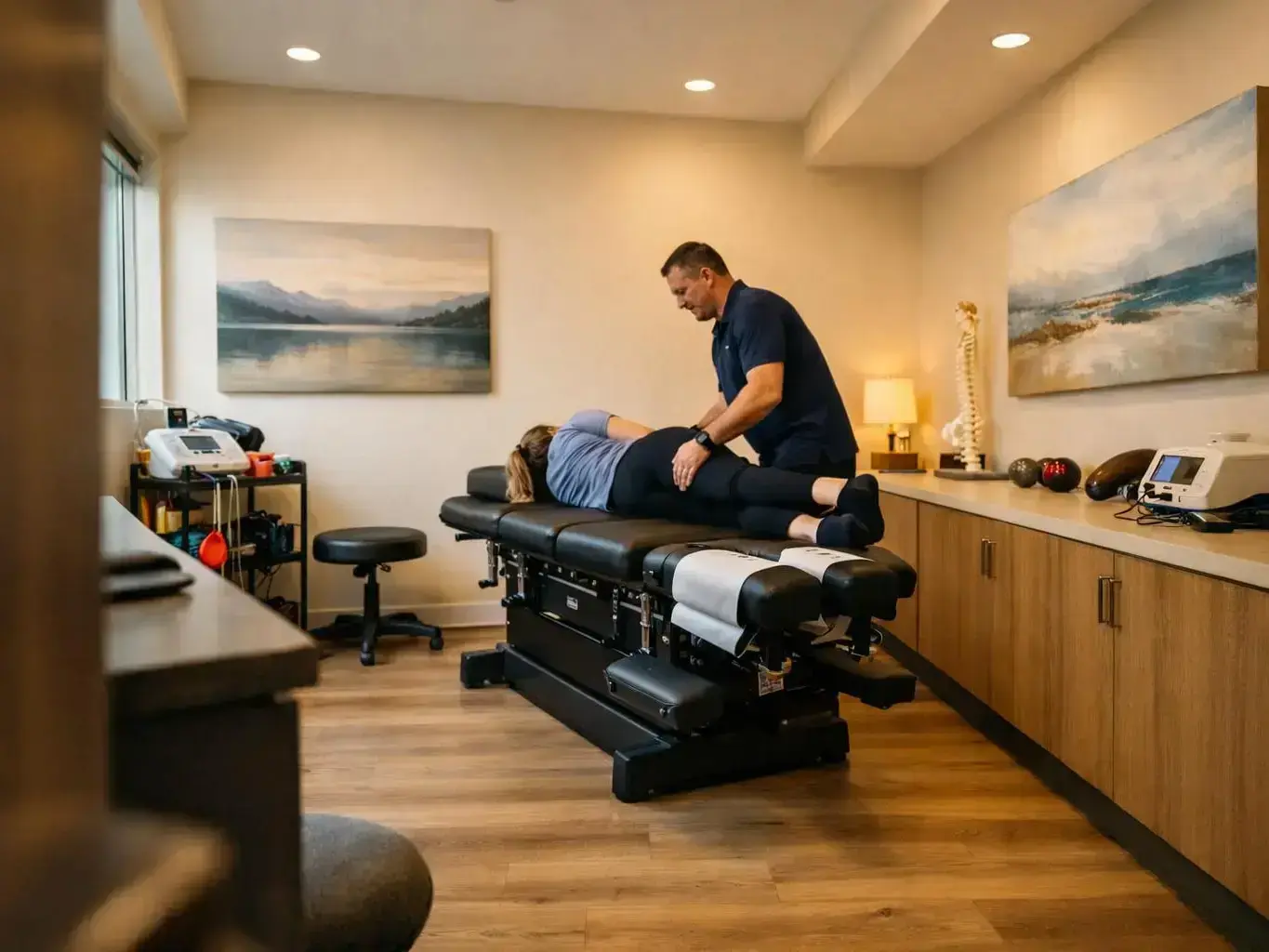
After sitting at a desk for long hours, a patient begins experiencing lower back stiffness and occasional discomfort. Their chiropractor recommends intersegmental traction to improve spinal mobility and reduce tension. During each session, the patient lies on a rolling table for 12 minutes, feeling a gentle stretch along their spine. After several sessions, they notice reduced stiffness and improved flexibility, making daily movements easier.

Sources & Further Reading on Intersegmental Traction

Related Services

Related Terms

Spinal Adjustment

Spinal Adjustment is a hands-on procedure performed by a chiropractor to apply controlled force to a specific joint in the spine. This technique aims to improve spinal motion, reduce nerve irritation. And restore proper alignment, often resulting in decreased pain and improved function. It's a core component of chiropractic care used to address musculoskeletal issues.

Decompression Therapy

Decompression Therapy is a non-surgical treatment designed to relieve pressure on the spine and affected nerves. It uses controlled mechanical traction to gently stretch the spine, promoting healing by improving blood flow, reducing disc bulges. And easing pain in conditions like herniated discs, sciatica. And chronic back pain.

Flexion-Distraction Technique

Flexion-Distraction Technique is a gentle, non-surgical chiropractic method used to treat spinal conditions like herniated discs, sciatica. And back pain. It involves a specialized table that stretches and flexes the spine, creating space between vertebrae to relieve pressure on nerves and improve mobility without forceful manipulation.

Chiropractic Care

Chiropractic Care is a health care profession focused on diagnosing and treating musculoskeletal disorders, primarily through manual adjustments and manipulations of the spine. Chiropractic Care aims to improve joint function, reduce pain. And support the body's natural ability to heal without surgery or medication. It's commonly used for back pain, neck pain, headaches. And injuries from accidents or repetitive strain.

Herniated Disc

Herniated Disc is a spinal condition where the soft, gel-like center of a spinal disc pushes through a crack in the tougher outer layer, often pressing on nearby nerves. This can cause pain, numbness. Or weakness in the back, neck, arms. Or legs, depending on the disc’s location along the spine.

Advanced Injury Care Clinic

Have Questions About Intersegmental Traction?

Contact Advanced Injury Care Clinic for practical guidance on Intersegmental Traction and related chiropractor work in Hendersonville.

+1 615-777-0624