Understanding Herniated Disc
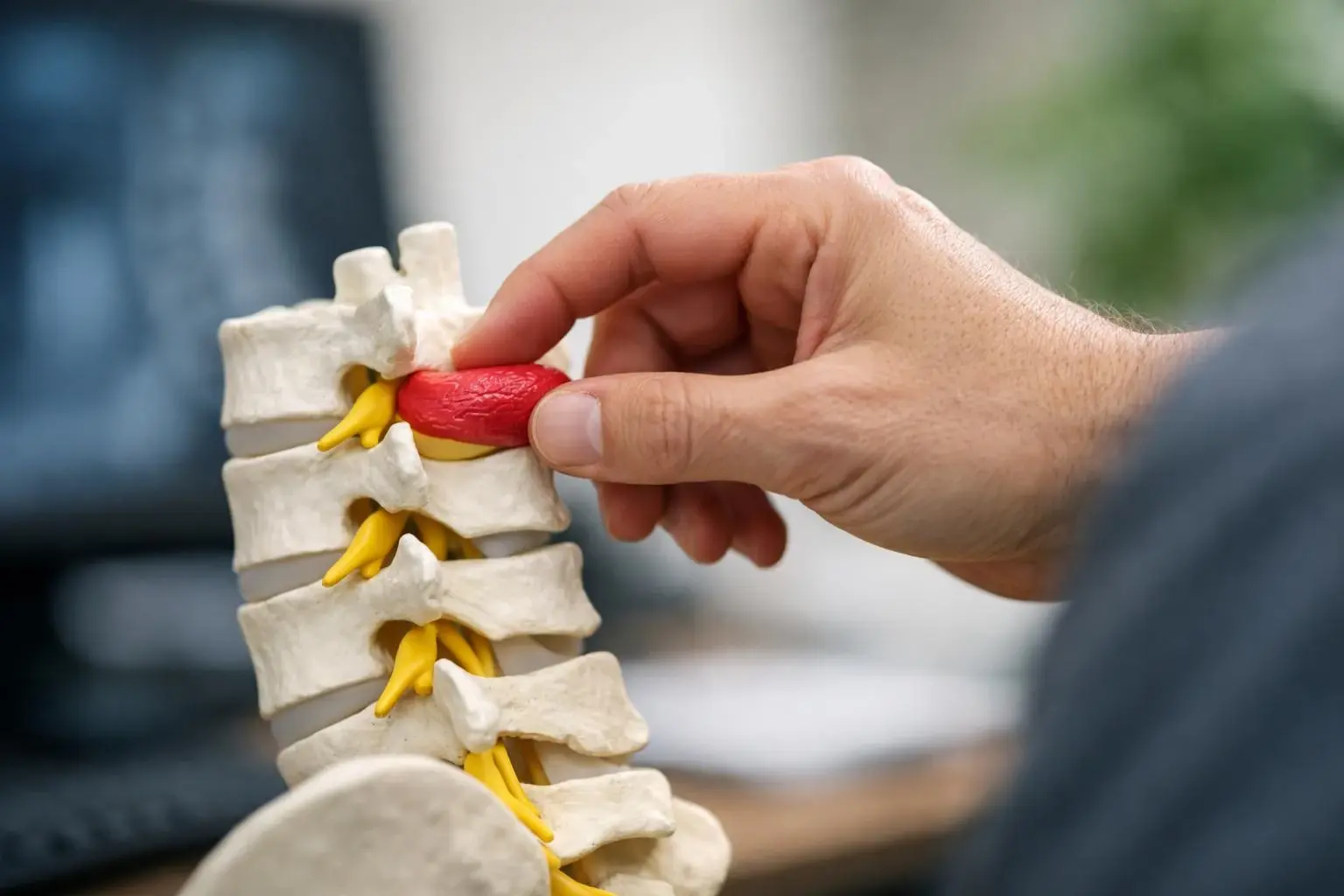
A herniated disc is also called a slipped or ruptured disc. It happens when the soft center of a spinal disc leaks out. The leak goes through a tear in the disc's outer layer.
Related glossary terms: Nerve Compression, Spinal Decompression, Chiropractic Care.
The spine has bones called vertebrae. They stack on top of each other. Discs sit between them like cushions.
These discs absorb shock. They let the spine bend and move. When the outer layer weakens, the soft center can push out.
This can press on nearby nerves. It can also press on the spinal cord. This pressure causes pain, tingling. Or numbness.
It can also cause weakness. The pain is where the nerve goes.
Herniated discs happen most often in the lower back. This is called the lumbar spine. They also happen in the neck, called the cervical spine.
They're less common in the middle back. This is the thoracic spine. The rib cage makes this area stiff and strong.
This problem can come from wear and tear. It can also come from an injury like a fall. Lifting wrong can cause it too.
Aging is a big factor. Discs lose water and get stiff. This makes them easier to tear.
Younger people can get herniated discs too. Sports injuries can cause them. So can car accidents or doing the same motion over and over.
How Herniated Disc Works?
When a disc herniates, the leaked material can bother nerves. It can press on them too. This causes symptoms.
Where the herniation is decides where symptoms show up. A herniated disc in the lower back can cause sciatica. This is pain that goes down the leg.
The sciatic nerve is affected. In the neck, a herniated disc can cause pain. It can also cause numbness or weakness.
These symptoms can be in the shoulders, arms. Or hands. How bad symptoms are depends on the leak. It also depends on how much it presses on nerves.
To diagnose a herniated disc, doctors do a physical exam. They also use imaging tests. These can be MRI or CT scans.
In the exam, the doctor checks muscle strength. They check reflexes too. They look for pain or numbness.
Imaging tests show where the herniation is. They show how big it is. X-rays show the spine's bones.
But X-rays don't show herniated discs. MRI is the best tool for this. Sometimes, doctors use nerve tests.
These are called electromyography (EMG). They measure nerve function. They help find nerve damage.
Why Herniated Disc Matters?
A herniated disc can make daily life hard. Simple tasks like sitting can hurt. Standing or walking can be hard too.
If not treated, it can cause long-term pain. It can also cause muscle weakness. In bad cases, it can affect bladder or bowel control.
This needs emergency care. Early help can manage symptoms. It can stop more damage too.
It can also make life better. Most people get better with rest. Physical therapy helps too.
Pain management helps as well. Some people need surgery. This is if symptoms don't get better.
Knowing about this condition helps with care. Some moves can make it worse. Bending, lifting. Or twisting are examples.
Safe habits can help. It also helps to know when to see a doctor. Sudden weakness needs attention.
So does numbness in the groin or legs. Loss of bladder control is serious. This could mean cauda equina syndrome.
When Herniated Disc Matters Most?
Herniated discs worry doctors when symptoms are bad. Mild cases may get better with rest. Pain relievers can help too.
But if pain, numbness. Or weakness won't go away, see a doctor. Some people are at higher risk. This includes workers with hard jobs.
Athletes and older adults are at risk too. They should get help if symptoms bother them. Herniated discs can slow healing from injuries.
This includes car accidents or work injuries. Early diagnosis helps with legal or insurance claims.
In Hendersonville, TN, many see chiropractors for herniated discs. This is true for active adults. It's also true for people with hard jobs.
Local weather can affect symptoms. Humid weather can make them worse. Seasonal outdoor work can too.
Landscapers and construction workers often get herniated discs. Athletes in the area can get them too. This is from lifting or sudden hits.
Knowing symptoms early helps. Getting the right care helps too. This can stop long-term problems.