Glossary

What is Radiculopathy?

Radiculopathy is a medical condition caused by compression, inflammation. Or injury to a spinal nerve root as it exits the spinal cord. This pressure disrupts nerve signals, leading to pain, numbness, tingling. Or weakness that often travels into the arms or legs. Radiculopathy most commonly affects the lower back (lumbar) or neck (cervical) regions.

Reviewed by Advanced Injury Care ClinicSources reviewed: American Academy of Orthopaedic Surgeons, Mayo Clinic

Quick Facts About Radiculopathy

Category

Nerve disorder

Used for

Diagnosing radiating pain or weakness

Common confusion

Often mistaken for muscle strain or arthritis

Also called

Pinched nerve, Nerve root compression

Often discussed with

Back Pain Treatment, Neck Pain Treatment

Key Takeaways About Radiculopathy

Understanding Radiculopathy

Radiculopathy in Chiropractor: Radiculopathy is a medical condition caused by compression, inflammation, Or injury to—visu...

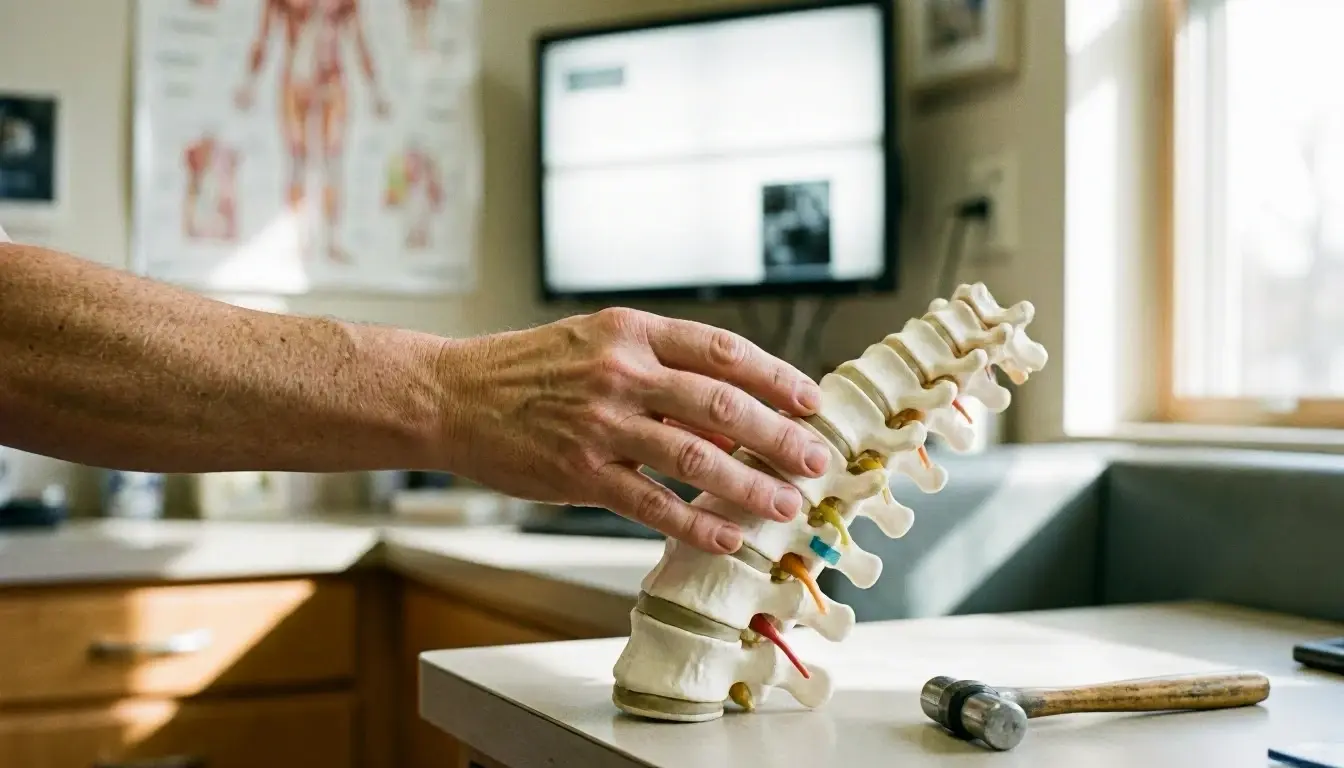
Radiculopathy happens when a nerve root gets squeezed. The spine has bones, discs. And nerves. Each nerve root leaves the spine through small holes.

Related glossary terms: Herniated Disc, Nerve Compression, Spinal Decompression.

These holes can get too small. This happens from a bulging disc or bone spurs. Swelling can also make them narrow. Then the nerve gets pinched.

This pinch hurts the nerve. It can cause pain, tingling. Or weakness. These feelings go down the arm or leg.

Most radiculopathy is in the lower back or neck. Lower back problems often cause sciatica. Sciatica is a sharp pain down the leg.

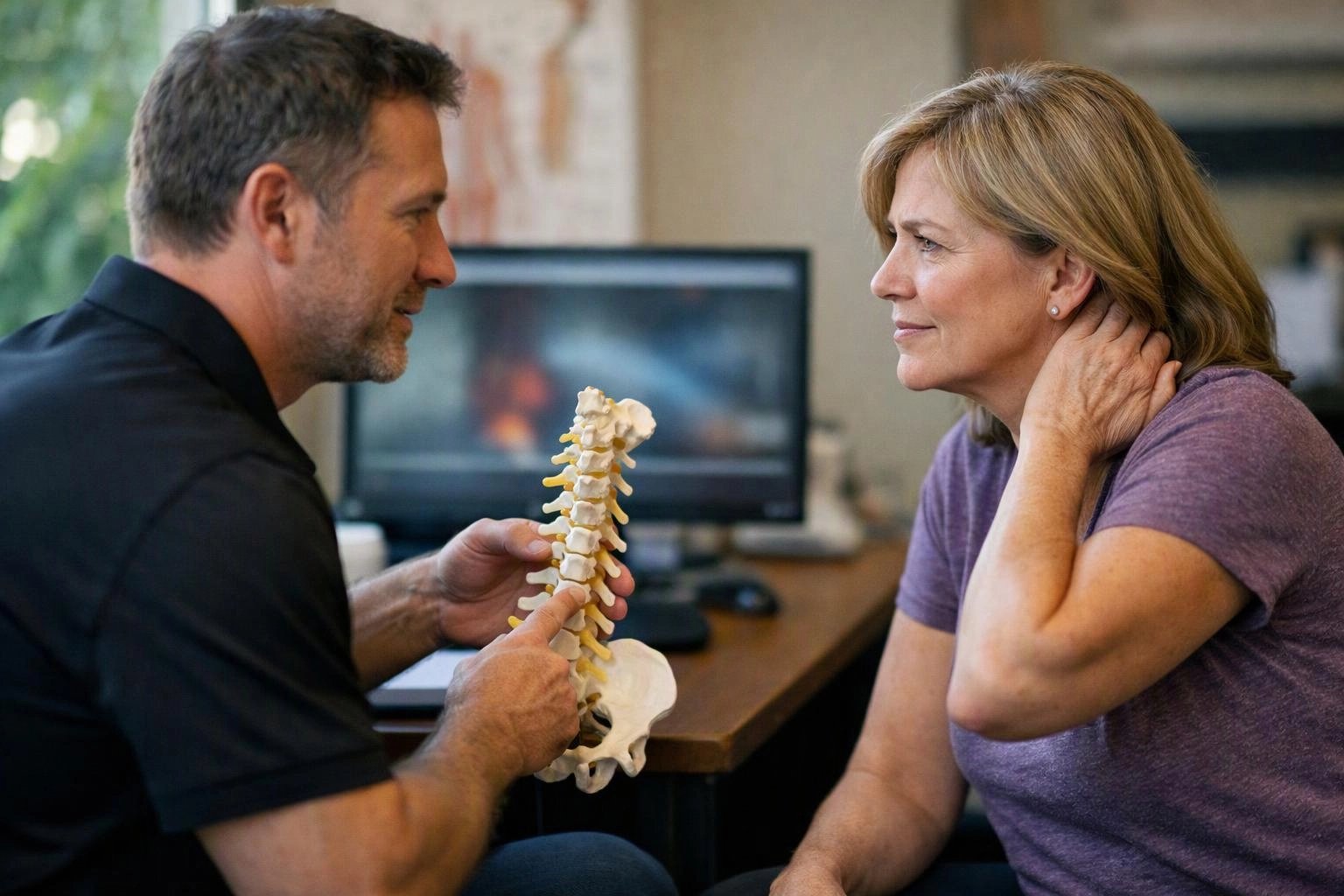
Neck problems may hurt the shoulder, arm. Or hand. They can cause numbness or weakness too. That's the main idea.

Middle back problems are less common. They can cause pain in the chest or belly. Knowing where it hurts helps doctors find the problem.

How Radiculopathy Works?

The problem starts when something presses the nerve. Nerves usually send signals without trouble. But a bulging disc or bone spur can squeeze them.

Swelling can also take up space. This pressure can hurt the nerve's coating. It can mess up the nerve's signals too.

Over time, this causes pain. It can also cause numbness or weak muscles. These are the main signs.

Doctors check for radiculopathy with tests. They may test reflexes, strength. And feeling. They can see the problem with X-rays or MRI scans.

MRI scans show soft parts like discs. They can show if a disc is bulging. X-rays show bones and bone spurs.

Doctors may use an EMG (nerve test). This test checks how nerves are working. It helps confirm the problem. Finding it early stops more damage.

Why Radiculopathy Matters?

Radiculopathy can make life hard. Pain or weakness may make sitting tough. It can make standing or moving hard too.

If it's not treated, nerves can get damaged. Muscles can get weak and waste away. Treating it early helps stop this.

Then people can go back to work. They can exercise and move without pain. This makes life better.

Chronic pain can also hurt your mind. It can cause stress or worry. It can make it hard to sleep.

Good treatment helps both body and mind. Chiropractors can help. So can physical therapy and lifestyle changes.

These can help without surgery. They can stop the problem from coming back.

When Radiculopathy Matters Most?

Radiculopathy matters most when it gets worse. Early signs may not seem bad. But they can get worse if ignored.

See a doctor if arms or legs get weak fast. Also see one if you lose bladder or bowel control. Pain that keeps you awake is another sign.

These may mean the nerve is squeezed badly. They need quick medical help. Don't wait if you have these signs.

Some jobs make radiculopathy more likely. Jobs with heavy lifting can strain the back. So can sitting too long or doing the same motion.

Athletes, builders. And office workers are at risk. Good posture helps. So does lifting the right way.

Staying active helps too. These things can lower your risk. They can also stop flare-ups.

How to Evaluate Radiculopathy?

Related Concepts Compared

Radiculopathy vs. Sciatica

Sciatica refers specifically to pain along the sciatic nerve, usually caused by lumbar radiculopathy. Radiculopathy is a broader term covering nerve root issues anywhere in the spine.

Radiculopathy vs. Neuropathy

Neuropathy involves damage to peripheral nerves, often due to diabetes or toxins. Radiculopathy affects nerve roots near the spine, typically from compression or injury.

Radiculopathy vs. Herniated Disc

A herniated disc is a common cause of radiculopathy, where the disc material presses on a nerve root. Radiculopathy is the resulting condition, not the cause itself.

Expert Note

Radiculopathy symptoms can vary widely—some patients feel sharp pain. While others experience only numbness. Early intervention often prevents long-term nerve damage. So monitoring minor symptoms is key.

Common Mistakes or Myths About Radiculopathy

  • Assuming radiculopathy is just muscle soreness—nerve pain often radiates along a specific path.
  • Ignoring mild symptoms, which can worsen without treatment.
  • Confusing radiculopathy with arthritis, which affects joints rather than nerves.
  • Believing surgery is the only treatment—many cases improve with conservative care.
  • Overlooking posture or ergonomics, which can contribute to nerve compression.

Radiculopathy in Practice: A Real-World Example

A construction worker notices a sharp pain shooting down his leg after lifting heavy materials. Over time, the pain worsens. And he feels numbness in his foot. An MRI reveals a herniated disc pressing on a lumbar nerve root, confirming lumbar radiculopathy. Treatment includes chiropractic adjustments, physical therapy. And activity modifications to reduce nerve pressure.

Sources & Further Reading on Radiculopathy

  • American Academy of Orthopaedic Surgeons
  • Mayo Clinic
  • National Institute of Neurological Disorders and Stroke

Related Services

Related Terms

Herniated Disc

Herniated Disc is a spinal condition where the soft, gel-like center of a spinal disc pushes through a crack in the tougher outer layer, often pressing on nearby nerves. This can cause pain, numbness. Or weakness in the back, neck, arms. Or legs, depending on the disc’s location along the spine.

Nerve Compression

Nerve Compression is a condition where a nerve is squeezed or pressed by surrounding tissues like bones, muscles, tendons. Or discs. This pressure disrupts the nerve’s normal function, causing pain, tingling, numbness. Or weakness in the affected area. Nerve Compression often occurs in the spine, wrists. Or elbows and can result from injury, repetitive motion. Or poor posture.

Spinal Decompression

Spinal Decompression is a non-surgical treatment designed to relieve pressure on the spine and spinal nerves. It involves gently stretching the spine using a motorized table or similar device to create negative pressure within spinal discs, helping herniated or bulging discs retract and promoting healing by allowing oxygen, water. And nutrient-rich fluids to move into the discs.

Advanced Injury Care Clinic

Have Questions About Radiculopathy?

Contact Advanced Injury Care Clinic for practical guidance on Radiculopathy and related chiropractor work in Hendersonville.

+1 615-777-0624