Understanding EMG

EMG is a test. It checks muscle and nerve signals. EMG stands for electromyography.
Related glossary terms: Nerve Compression, Radiculopathy, Chiropractic Care.
Muscles make tiny electrical signals. Nerves send these signals. EMG records them.
Doctors use EMG to find problems. It checks muscles and nerves. They see if they work right.
EMG helps find many issues. It can spot muscle problems. It finds nerve squishes (compression) too.
It also finds diseases. These affect nerves and muscles.
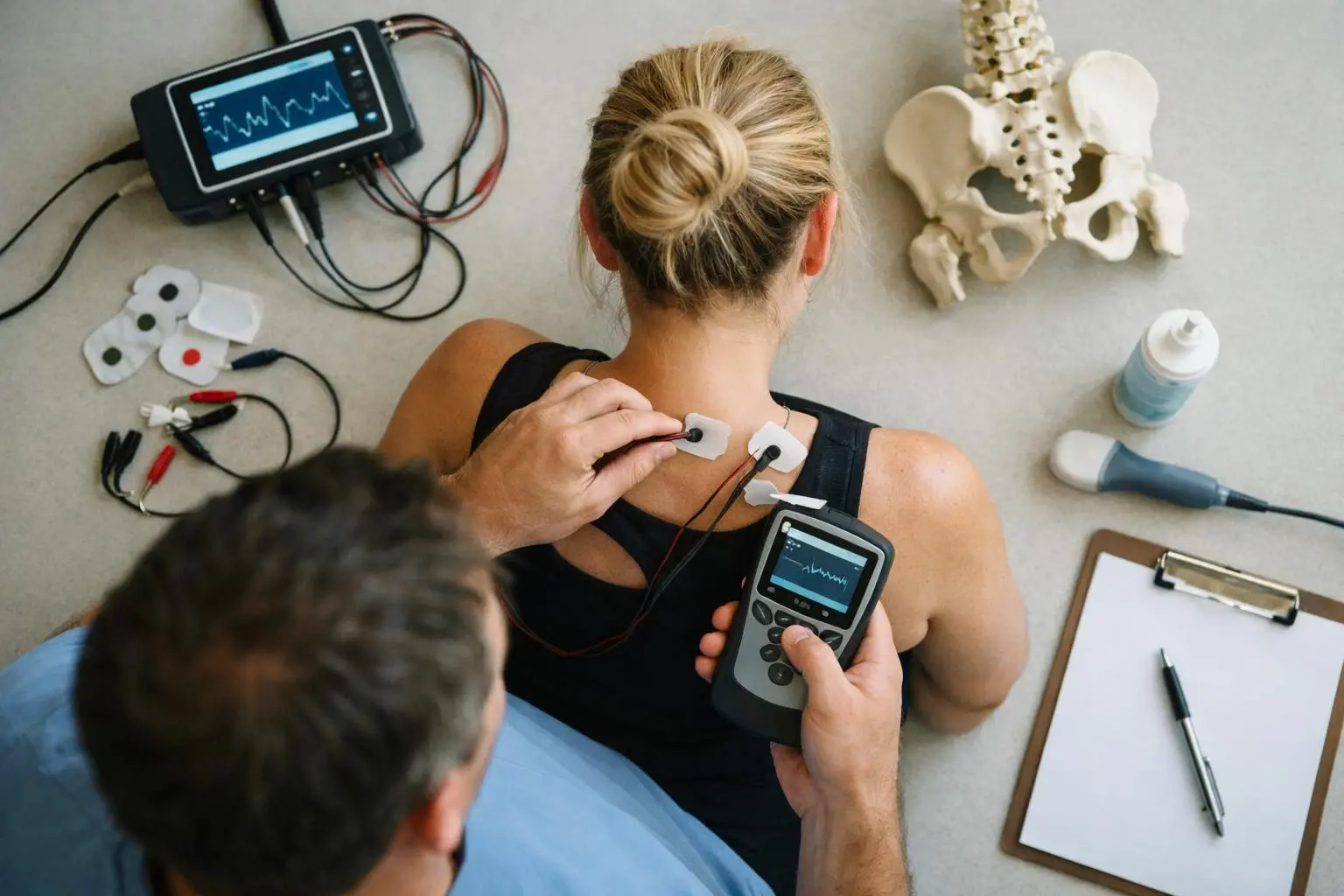
During EMG, a doctor puts small needles in muscles. The needles are called electrodes. They go in certain spots.
Electrodes feel the signals. They check muscles at rest. They also check when muscles move.
Some tests use sticky pads. These go on the skin. Needle electrodes give more details.
The signals show on a screen. They can turn into sounds. The doctor listens and watches.
EMG happens in clinics. It happens in hospitals too. You don't need medicine to sleep.
How EMG Works?
EMG finds muscle signals. It looks at them when muscles rest. It also looks when they work.
A resting muscle has few signals. When it moves, signals grow. This means nerves work well.
If signals act strange, there may be trouble. Bad signals at rest mean problems. Weak signals when moving mean trouble too.
This can mean nerve damage. It can mean muscle disease. It may mean other issues too.
The test starts with needles. They go in the muscle. The needles are electrodes.
You may relax the muscle. Or you may move it a little. It depends on what the doctor checks.
The needles record signals. They show on a screen. They look like wavy lines.
The doctor reads the lines. They see if muscles and nerves act normal. Or if they act strange.
Sometimes they do more tests. These are nerve tests (NCS). They give more info.
Why EMG Matters?
EMG is very helpful. It shows things other tests can't. It tells how muscles and nerves work.
X-rays and MRIs show shapes. They don't show how things work. EMG fills that gap.
It measures signals. This helps find problems. It shows why you hurt or feel weak.
EMG helps find many issues. It can spot carpal tunnel. It finds slipped discs too.
It also finds muscle diseases. One is called muscular dystrophy.
EMG helps doctors treat you. If it finds a squished nerve, they can help. They may move your spine.
They may suggest therapy. Or other treatments. This eases nerve pressure.
Without EMG, doctors guess. They may pick the wrong treatment. That can waste time.
EMG is great for long-term pain. It helps with injuries too. First treatments don't always work.
When EMG Matters Most?
EMG matters most when nerves or muscles act strange. Signs include weakness or numbness. It can be tingling or pain.
These signs don't go away. Rest doesn't help. Simple fixes don't work.
Someone with leg pain may get EMG. This checks if a slipped disc hurts a nerve. It's called sciatica.
Someone with wrist pain may get EMG. This checks nerve damage. It's called carpal tunnel.
They may need surgery. Or other help.
EMG tracks some diseases. One is ALS. Another is muscular dystrophy.
Patients get EMG tests often. This shows how muscles and nerves change. It helps doctors help them.
EMG can rule out problems. This gives clear next steps. Symptoms may come from small issues.
For Hendersonville, TN doctors, EMG is key. It finds work injuries. It finds car accident injuries.
It finds sports injuries too. These often hurt nerves or muscles.