

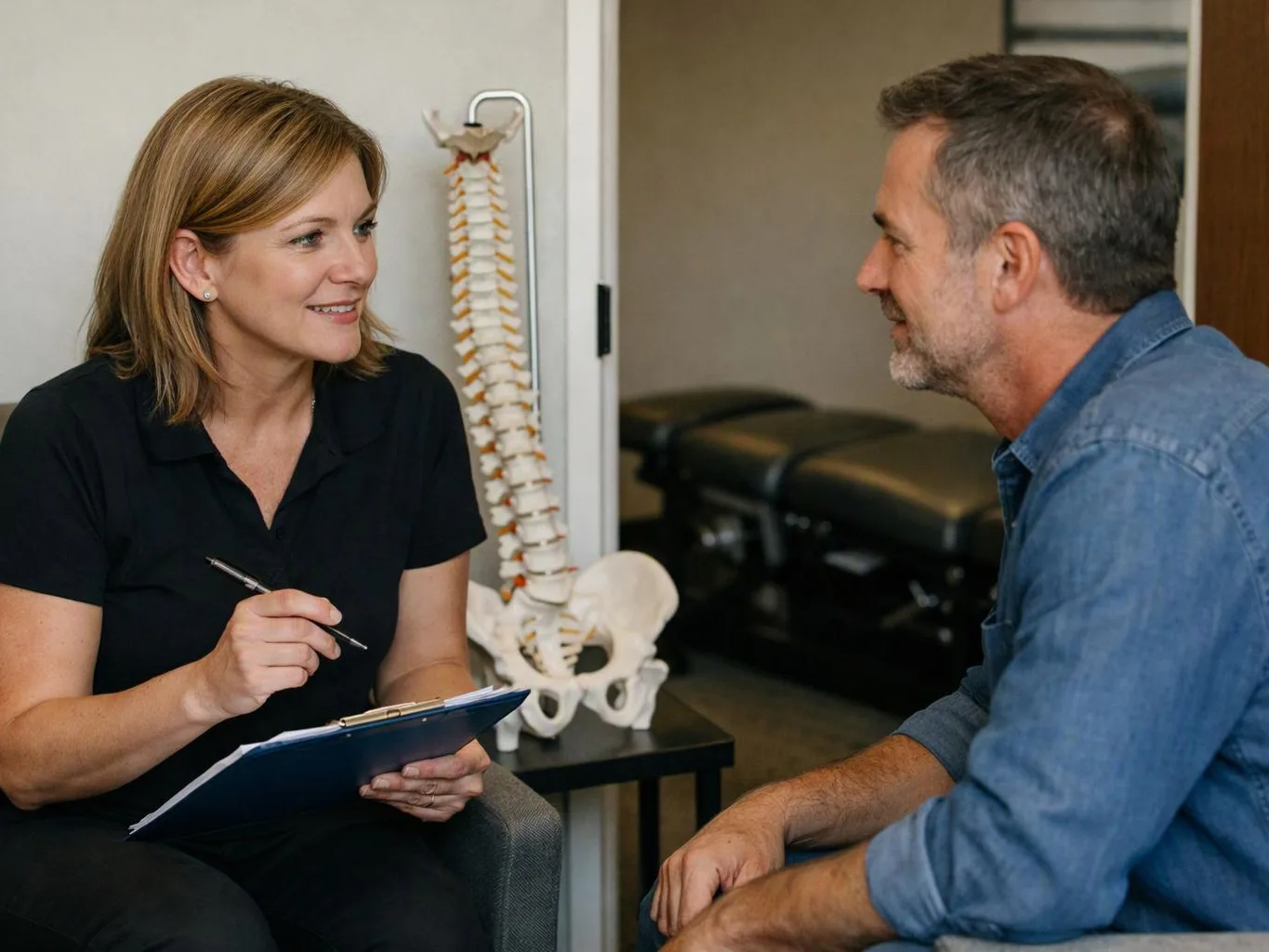
Discuss symptoms and goals
We ask where symptoms occur, what affects them, and how they limit work, sport, or daily movement.
Targeted dry needling may help ease muscle pain and support improved movement. We pair treatment with a personalized care plan based on your symptoms and goals.
Dry needling may help reduce muscle tightness linked with movement limits.
Treatment can support improved movement when muscle pain affects daily activity.
A broader care plan can connect muscle treatment with corrective exercises and injury rehabilitation.

Dry needling focuses on selected muscle areas that may contribute to pain, tightness, or reduced movement. We first review your health history, symptoms, and goals, then decide whether this treatment fits your needs. Treatment may stand alone or form part of a wider plan with spinal adjustments, soft tissue therapy, or therapeutic exercises. It doesn't replace an assessment of the full injury, especially after an auto accident, work injury, or sports injury. Our deeper focus is measurement. We compare movement, pain patterns, and daily function during follow-up visits. Individual response differs, so progress guides the next care decision.
Dry needling is a treatment that uses thin needles to address selected muscle areas linked with pain or movement limits.
A useful visit starts with honest details about your symptoms, health, and daily activities.
We ask where symptoms occur, what affects them, and how they limit work, sport, or daily movement.
We examine relevant movement and muscle concerns, then decide whether dry needling fits the planned treatment.
We use thin needles on selected muscle areas as part of the agreed care plan.
We discuss how the area feels, review movement, and decide whether exercises or other care should follow.
We assess muscle symptoms, movement limits, and injury history before considering dry needling for each patient.
We discuss expected sensations, goals, and treatment options before applying dry needling to selected muscle areas.
We review movement and symptom changes after care, then adjust the plan when the clinical findings support it.
Get a treatment discussion focused on muscle pain, movement limits, and your recovery goals. Advanced Injury Care Clinic serves Hendersonville and nearby Middle Tennessee communities.

Sports activity can leave one muscle group tight and limit normal movement. Dry needling may fit when the assessment links that tightness with a trigger point or related muscle issue. Bring details about the activity, pain pattern, and movement change, so we can discuss treatment options and any exercises that support recovery.
Neck pain that returns during desk work may involve muscle tension, limited motion, or another condition that needs review. The key step is identifying what brings the symptoms back, not treating one sore spot in isolation. We’ll assess your movement, discuss your goals, and build care around the findings.
After an auto accident, muscle pain can appear with neck stiffness, back pain, or other injury signs. Dry needling may be considered only after we review the injury and overall symptoms. Schedule an evaluation and share accident details, prior care, and any changes in movement so treatment matches the condition.

The health and wellness information on this website is for general informational purposes only and is not medical advice. It does not create a provider-patient relationship. Always consult a qualified licensed provider in Hendersonville, TN, United States about your specific condition before making care decisions. Individual results vary.
(615) 265-0412