
What Is Range Of Motion?
Range Of Motion is the available movement at a joint or group of joints, measured through a specific direction and plane. The term describes how far a body part can move actively or passively. Clinicians compare movement quality, symmetry, and comfort to guide assessment and exercise planning.
Quick Facts About Range Of Motion
Category
Movement assessment
Used for
Exercise planning and progress checks
Common confusion
Joint movement is not muscle strength
Also called
ROM
Often discussed with
Corrective Exercise Therapy
Key Takeaways About Range Of Motion
- Range Of Motion focuses on movement at a joint.
- Active and passive movement provide different information.
- Range Of Motion is not the same as muscle strength.
How Range Of Motion Works
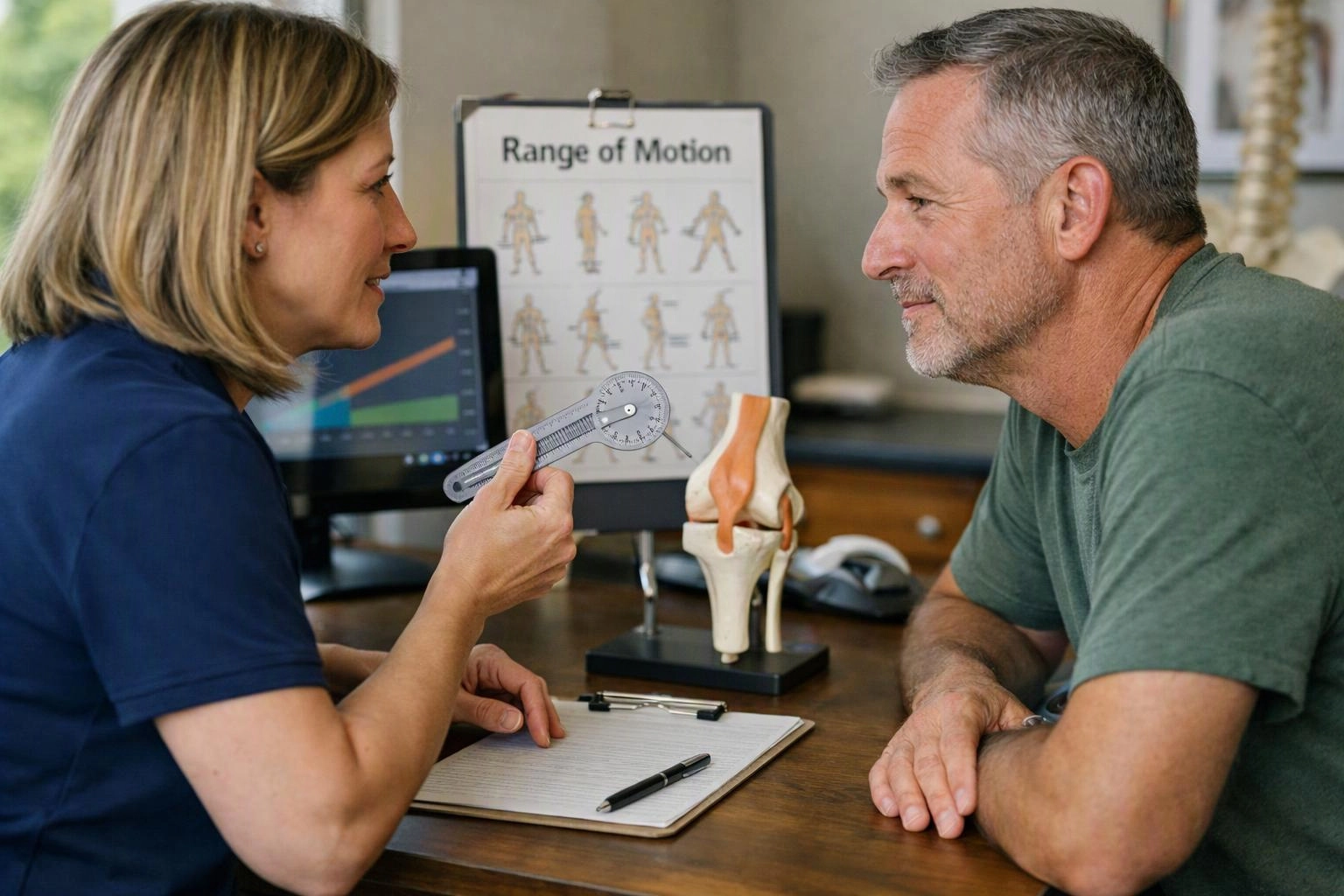
Range Of Motion describes joint movement through a chosen direction, such as bending or rotating. A clinician observes the starting position, the movement path, and the point where motion changes. A goniometer may help record an angle, while visual comparison can show differences between sides.
Related glossary terms: Joint Mobilization, Proprioception, Gait Analysis.
Active range of motion occurs when you move a body part using your own muscles. Passive range of motion occurs when an outside force guides the movement. The difference between these forms can help show whether limited movement relates to joint mobility, muscle control, or discomfort. Corrective exercise plans may use controlled movements to practice a smoother and more useful motion pattern.
From the Advanced Injury Care Clinic team
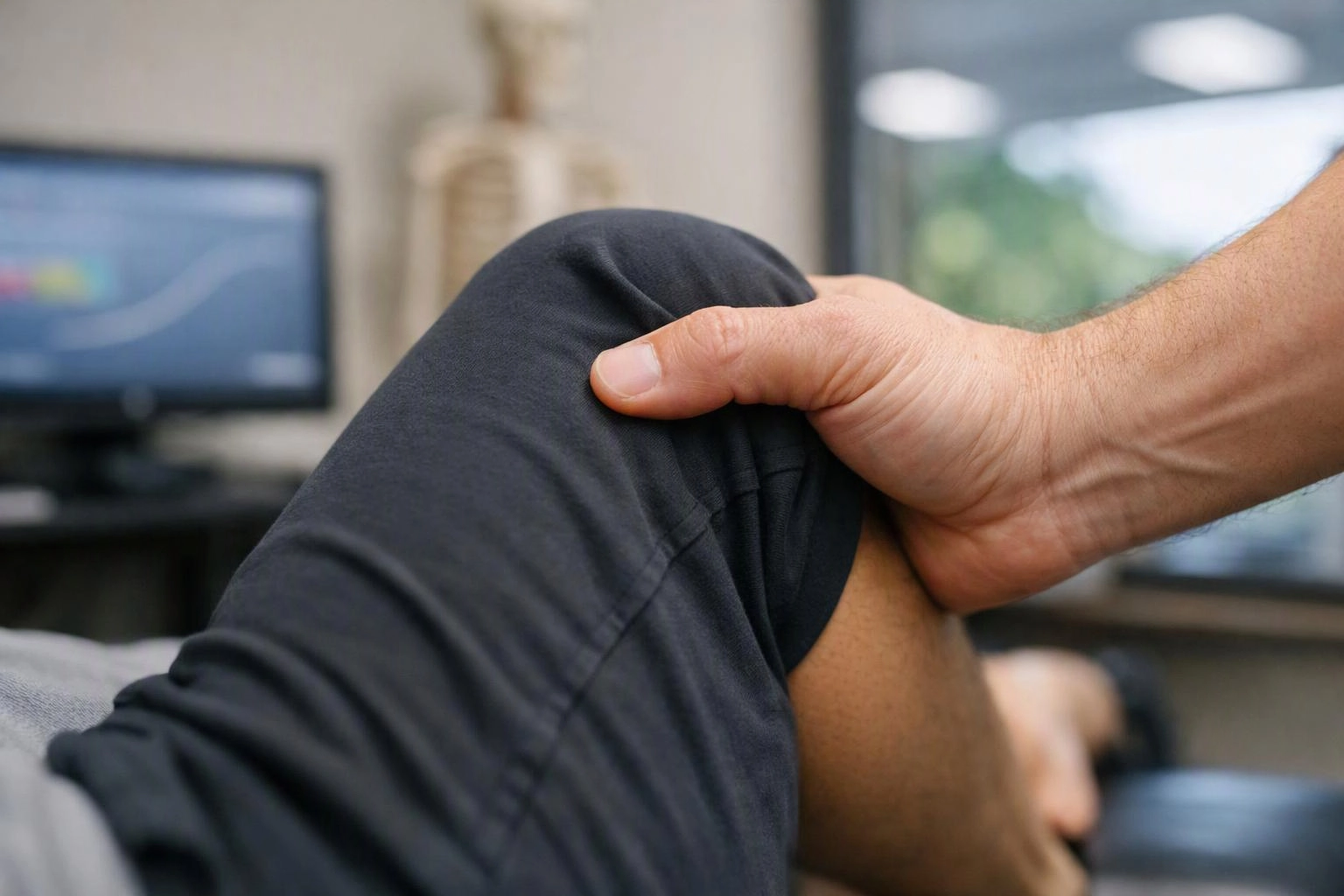
When we assess Range Of Motion, we observe how a joint moves during relevant exercises and functional positions. We note movement quality, side-to-side differences, and control. Our team uses these observations to select and adjust Corrective Exercise Therapy activities that match the person’s movement needs.
Range Of Motion in Practice: A Real-World Example
A person with limited shoulder movement may struggle to reach an overhead shelf. During Corrective Exercise Therapy, the clinician observes the shoulder path and selects controlled movements that practice the available motion.
Related Services
Related Terms
Joint Mobilization
Joint Mobilization is a hands-on manual therapy technique that applies controlled movement to a joint to…
Proprioception
Proprioception is the body's awareness of joint position, movement, and force without relying on sight. Sensory…
Gait Analysis
Gait Analysis is the structured observation of how you walk or run. The assessment examines movement…
Anterior Pelvic Tilt
Anterior Pelvic Tilt is a postural position in which the front of the pelvis rotates forward…
Advanced Injury Care Clinic
Have Questions About Range Of Motion?
Contact Advanced Injury Care Clinic for practical guidance on Range Of Motion and related chiropractor work in Hendersonville.