
What Is Proprioception?
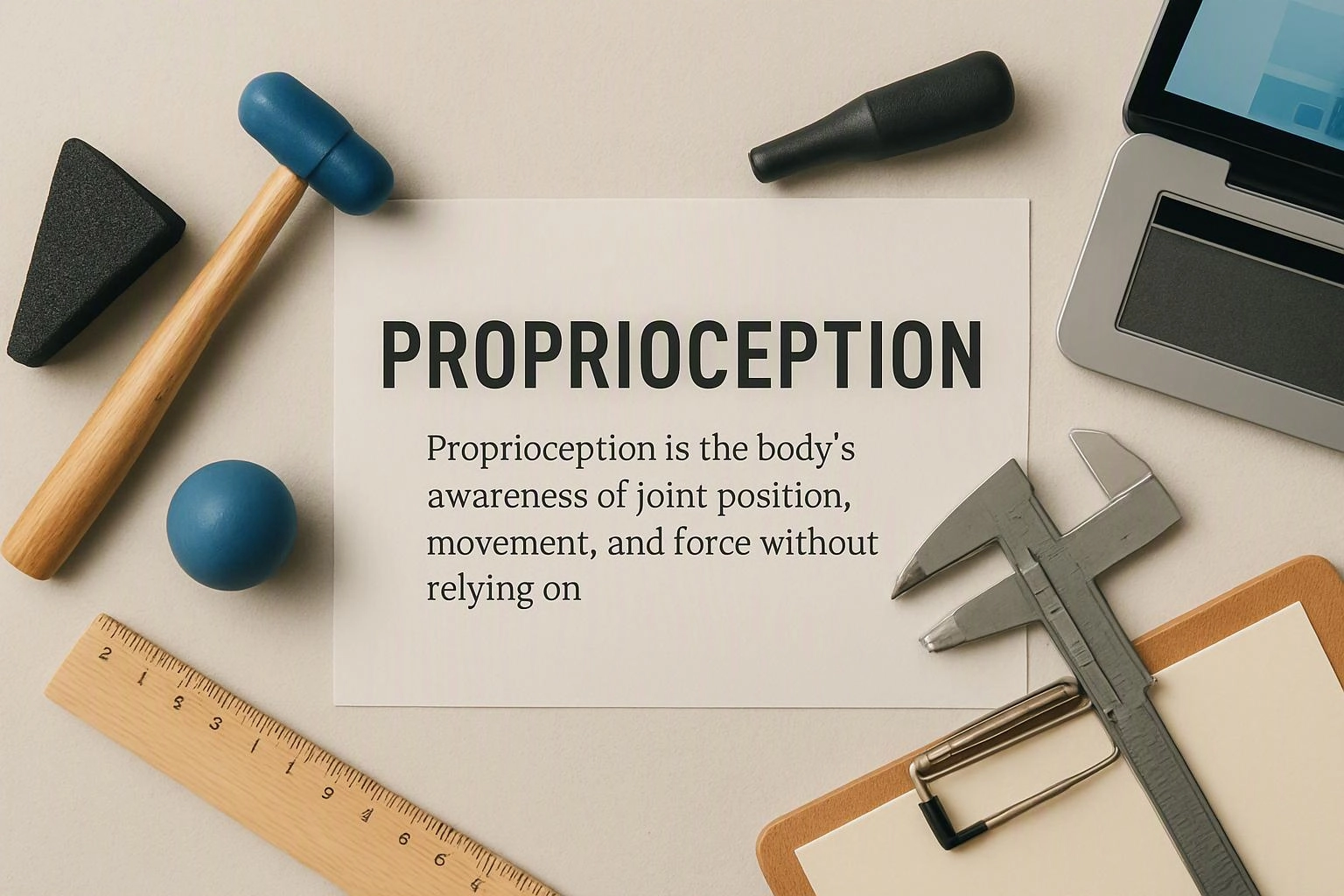
Proprioception is the body's awareness of joint position, movement, and force without relying on sight. Sensory receptors in muscles, tendons, ligaments, and joints send information to the brain and spinal cord. This feedback helps you coordinate movement, adjust posture, and control balance during everyday tasks, exercise, and recovery.
Quick Facts About Proprioception
Category
Movement and sensory function
Used for
Position awareness and coordination
Common confusion
Often confused with balance
Also called
Body position awareness, Kinesthesia
Often discussed with
Corrective Exercise Therapy
Key Takeaways About Proprioception
- Proprioception works through internal sensory feedback.
- Exercise can challenge position awareness and movement control.
- Proprioception is not the same as balance.
How Proprioception Works
Proprioception begins when sensory receptors detect changes in muscle length, tendon tension, and joint position. Those signals travel through the nervous system and help the brain organize a movement response. Your eyes can support this process, but proprioceptive feedback continues when you are not looking directly at a body part.
Related glossary terms: Mechanoreceptor, Gait Analysis, Range Of Motion.
Corrective exercise therapy may test this function through controlled movements, changes in stance, or tasks that require precise joint positioning. A person may perform a movement accurately with visual guidance but show less control when visual input changes. Mechanoreceptors provide much of the local information that supports these adjustments, while gait analysis can reveal how position awareness affects walking patterns.
From the Advanced Injury Care Clinic team
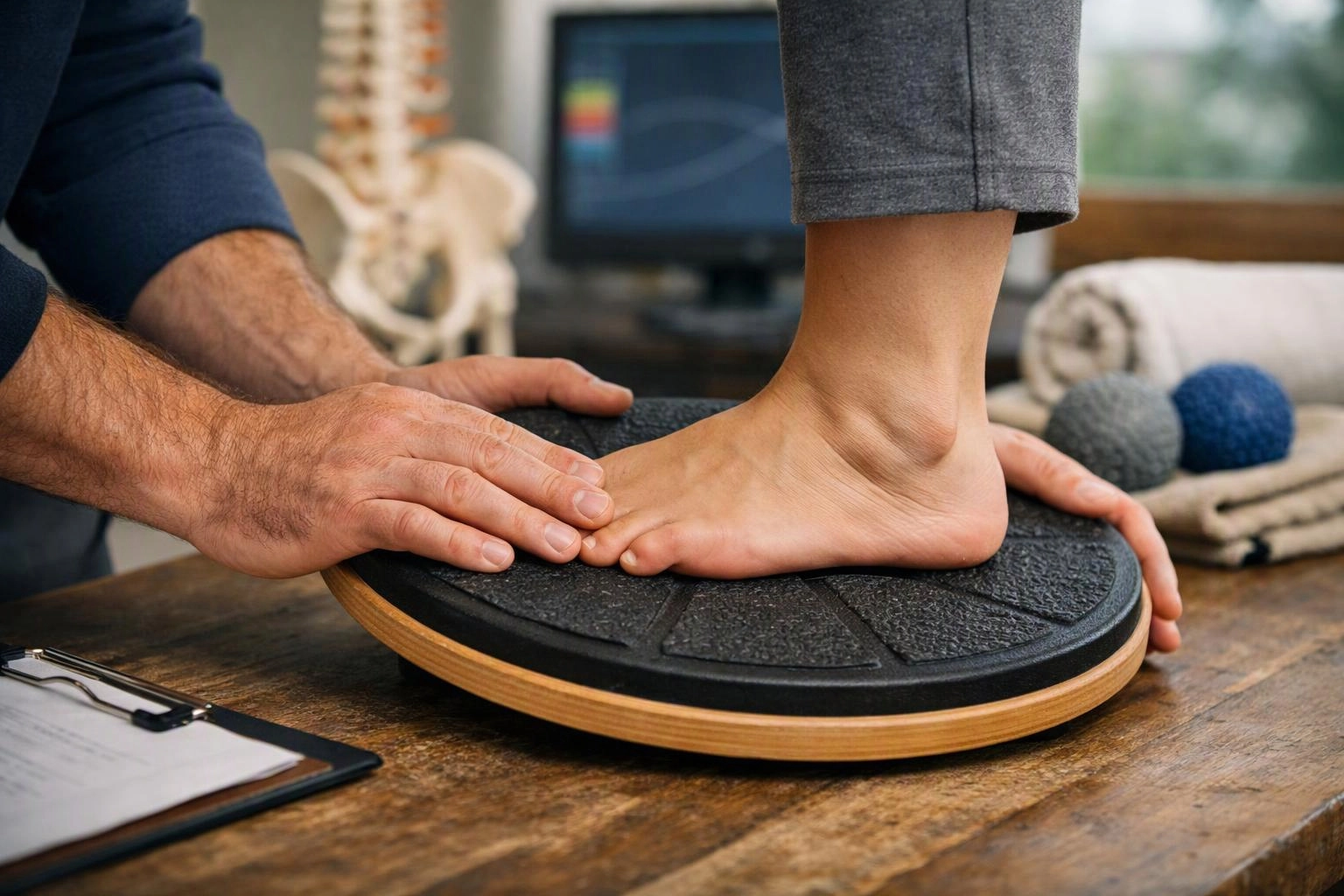
When we plan corrective exercise therapy, we observe how a person controls joint position during slow, deliberate movements. We may adjust the exercise surface, visual input, or movement direction to see how the nervous system responds. Our team connects these observations with strength, mobility, and coordination findings.
Proprioception in Practice: A Real-World Example
A person recovering from an ankle injury may practice standing while keeping the knee aligned over the foot. Corrective exercise therapy can make the task more demanding by changing the stance or reducing visual guidance.
Related Services
Related Terms
Mechanoreceptor
A mechanoreceptor is a sensory receptor that detects physical forces, including pressure, stretch, vibration, and movement…
Gait Analysis
Gait Analysis is the structured observation of how you walk or run. The assessment examines movement…
Range Of Motion
Range Of Motion is the available movement at a joint or group of joints, measured through…
Vestibular Rehabilitation
Vestibular rehabilitation is a specialized form of exercise-based care that helps the brain and body respond…
Advanced Injury Care Clinic
Have Questions About Proprioception?
Contact Advanced Injury Care Clinic for practical guidance on Proprioception and related chiropractor work in Hendersonville.