
What Is Vestibular Rehabilitation?
Vestibular rehabilitation is a specialized form of exercise-based care that helps the brain and body respond to balance signals from the inner ear, eyes, muscles, and joints. A clinician selects movements based on symptoms and functional limits. The approach may address dizziness, motion sensitivity, imbalance, or difficulty walking after vestibular system disruption.
Quick Facts About Vestibular Rehabilitation
Category
Exercise-based balance care
Used for
Dizziness, imbalance, and motion sensitivity
Common confusion
General exercise or strength training
Also called
Vestibular therapy, Vestibular rehabilitation therapy
Often discussed with
Vertigo Treatment
Key Takeaways About Vestibular Rehabilitation
- It focuses on balance signals and movement responses.
- Exercises are matched to symptoms and daily activities.
- It is not the same as general strengthening exercise.
How Vestibular Rehabilitation Works
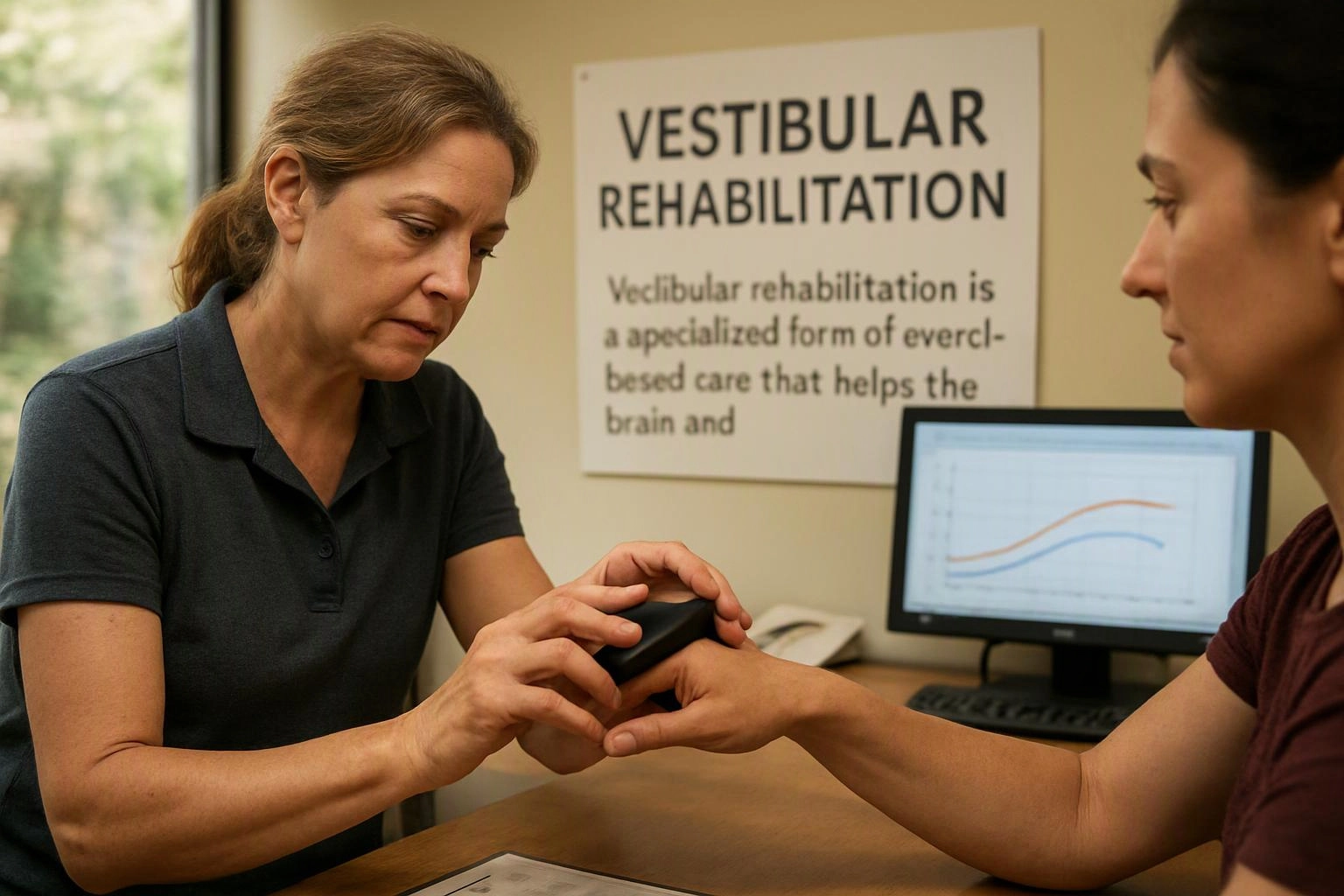
Vestibular rehabilitation uses planned head, eye, body, and walking movements to help the nervous system process balance information more effectively. A provider observes how symptoms change during movement and adjusts the activity to match the person’s current ability. The work may include gaze control, balance tasks, and movement practice.
Related glossary terms: Proprioception, Gait Analysis, Range Of Motion.
Gaze stabilization asks the eyes to stay focused while the head moves. Habituation exercises repeat selected motions so the nervous system can respond with less disruption. Balance training challenges control on different surfaces or during changes in direction. Progress is judged by movement quality, steadiness, symptom behavior, and performance during useful daily tasks.
From the Advanced Injury Care Clinic team
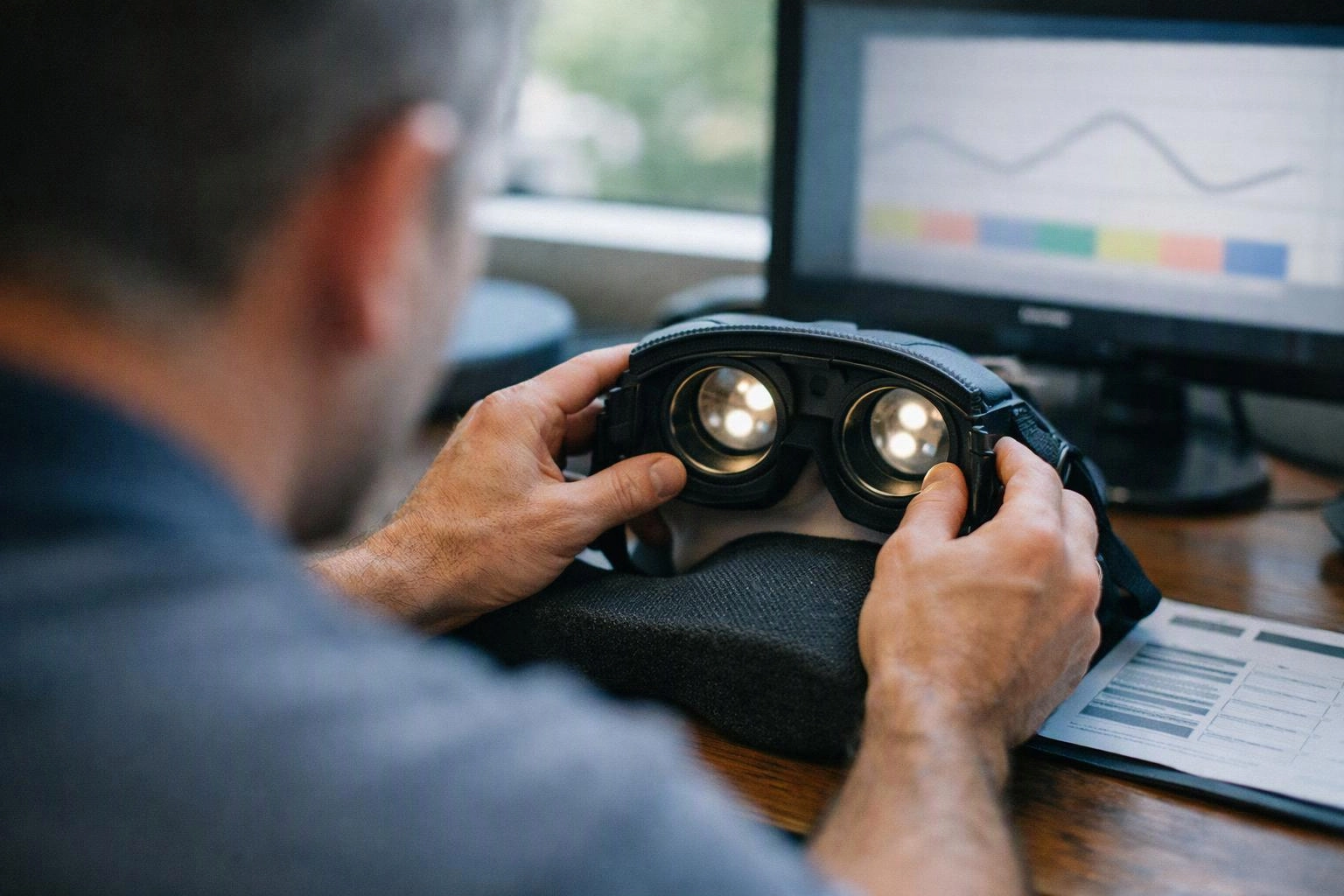
When we assess vestibular rehabilitation, we review balance, eye movement, head movement, walking, and symptom responses together. Our team uses those observations to select activities that fit the person’s current tolerance and functional goals. We also watch for movement patterns that may point to a need for further evaluation.
Vestibular Rehabilitation in Practice: A Real-World Example
A person with dizziness when turning the head may practice keeping the eyes on a target while walking and changing direction. The activity can be adjusted as balance control and symptom tolerance improve.
Related Services
Related Terms
Proprioception
Proprioception is the body's awareness of joint position, movement, and force without relying on sight. Sensory…
Gait Analysis
Gait Analysis is the structured observation of how you walk or run. The assessment examines movement…
Range Of Motion
Range Of Motion is the available movement at a joint or group of joints, measured through…
Advanced Injury Care Clinic
Have Questions About Vestibular Rehabilitation?
Contact Advanced Injury Care Clinic for practical guidance on Vestibular Rehabilitation and related chiropractor work in Hendersonville.