
What Is a Trigger Point?
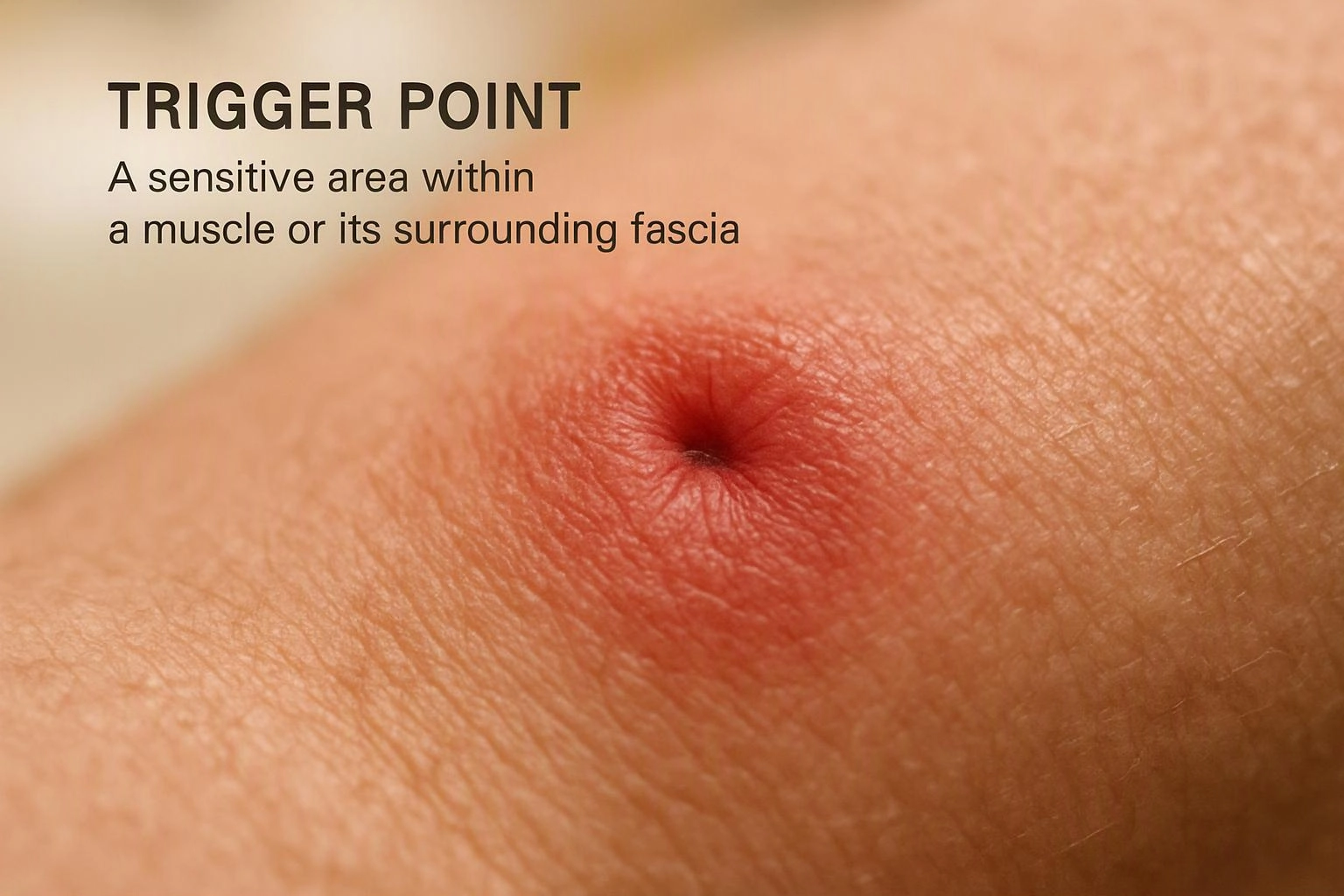
Trigger Point is a sensitive area within a muscle or its surrounding fascia that may produce local tenderness and refer discomfort to another area. Pressure or movement can reproduce the familiar symptoms. Clinicians assess the point through the person’s reported symptoms, muscle response, and physical findings before selecting an appropriate treatment approach.
Quick Facts About Trigger Point
Category
Muscle and fascia finding
Used for
Assessing localized muscle tenderness
Common confusion
Often confused with a muscle knot or injury
Also called
Myofascial trigger point, Muscle knot
Often discussed with
Dry Needling
Key Takeaways About Trigger Point
- A trigger point may reproduce familiar symptoms when the area is pressed.
- Pain from one muscle area can be felt somewhere else.
- A trigger point is not the same as a muscle tear.
How Trigger Point Works

Trigger Point assessment focuses on how a muscle feels, moves, and responds to pressure. A clinician locates a sensitive band or spot within the muscle and checks whether that finding matches the person’s reported discomfort. The response may stay near the area or appear in a connected region.
Related glossary terms: Myofascial Pain, Referred Pain, Range Of Motion.
Dry Needling uses a thin needle to address selected muscle tissue after the clinician identifies a relevant point. The goal is to influence the local muscle response and support more comfortable movement. Clinicians may reassess tenderness, muscle tension, and movement after treatment to see how the area responds.
Practical distinction
A trigger point describes a clinical finding, not a complete diagnosis. Referred pain can resemble nerve pain, joint pain, or symptoms from another condition, so the surrounding pattern and physical examination guide interpretation.
From the Advanced Injury Care Clinic team
When we assess a trigger point, we compare the tender area with the person’s symptoms and movement pattern. Our team uses those findings to decide whether dry needling fits the presentation and to check the muscle’s response during follow-up assessment.
Trigger Point in Practice: A Real-World Example
A person may report shoulder discomfort even though pressure on a tender upper-back muscle reproduces the same feeling. During Dry Needling, the clinician may target that muscle point and then reassess shoulder movement.
Related Services
Related Terms
Myofascial Pain
Myofascial Pain is a muscle and connective tissue pain pattern linked to sensitive areas within tight…
Referred Pain
Referred Pain is discomfort felt in an area away from the tissue causing the problem. Shared…
Range Of Motion
Range Of Motion is the available movement at a joint or group of joints, measured through…
Mechanoreceptor
A mechanoreceptor is a sensory receptor that detects physical forces, including pressure, stretch, vibration, and movement…
Advanced Injury Care Clinic
Have Questions About Trigger Point?
Contact Advanced Injury Care Clinic for practical guidance on Trigger Point and related chiropractor work in Hendersonville.