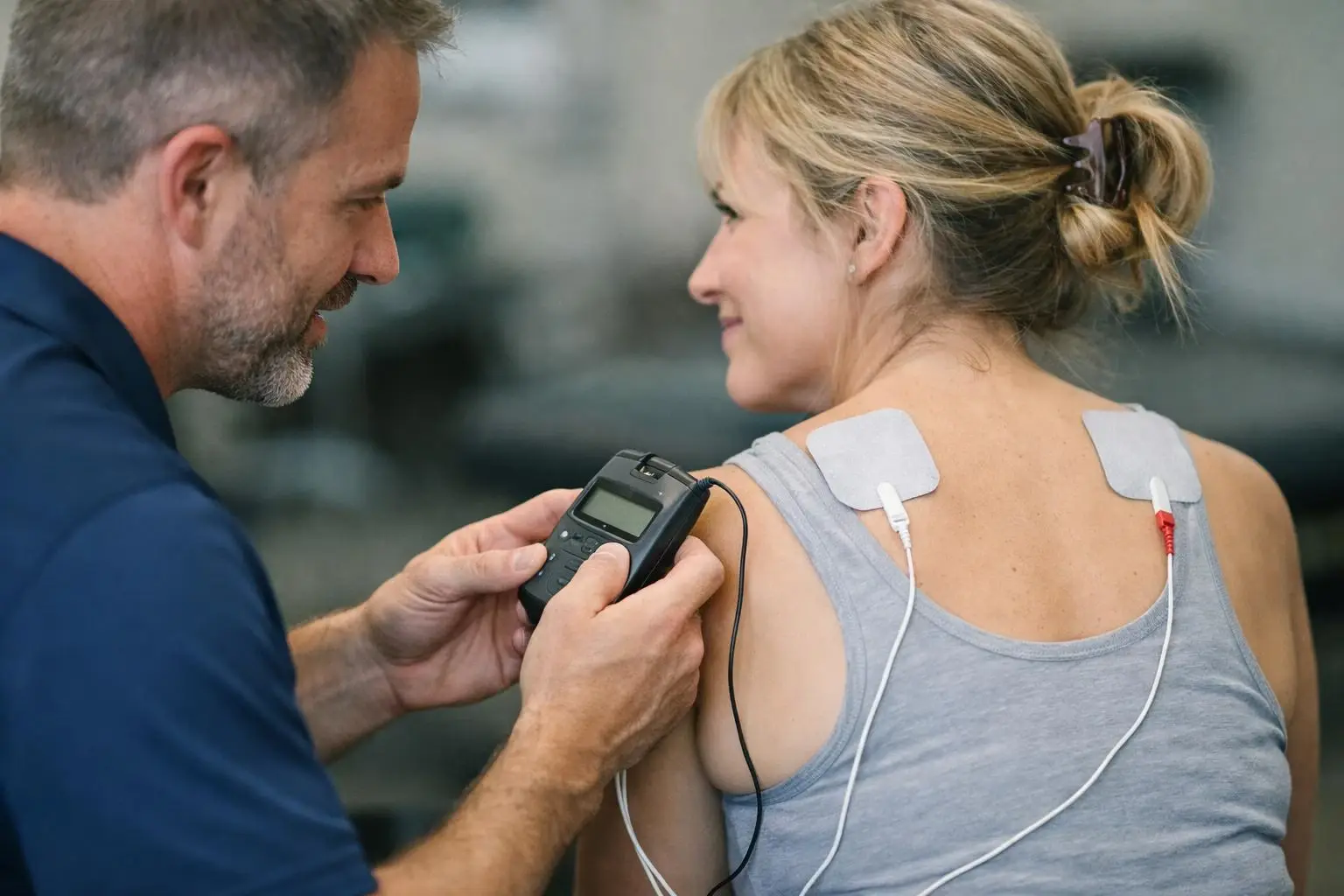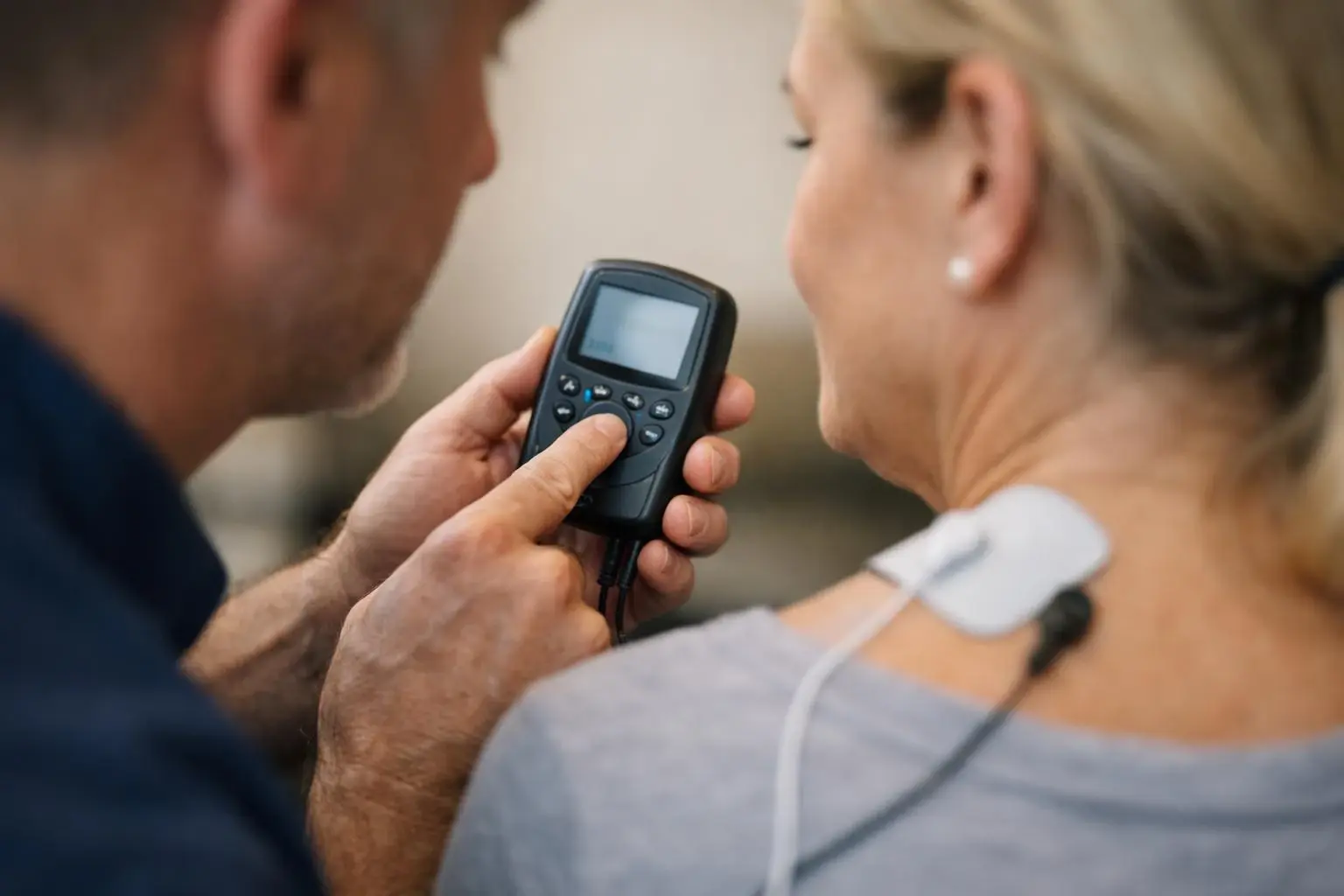
TENS Unit is a small, battery-powered medical device that delivers mild electrical pulses through skin electrodes to help reduce pain. TENS stands for Transcutaneous Electrical Nerve Stimulation. The device is often used for temporary relief of muscle, joint. Or nerve pain without medication or surgery.
Category
Pain management device
Used for
Temporary relief of muscle, joint. Or nerve pain
Common confusion
Not the same as EMS (Electrical Muscle Stimulation), which strengthens muscles
Also called
Transcutaneous Electrical Nerve Stimulation, TENS device
Often discussed with
Back Pain Treatment, Neck Pain Treatment

A TENS Unit's a portable, non-invasive device designed to help manage pain by sending low-voltage electrical currents through the skin. The term "TENS" stands for Transcutaneous Electrical Nerve Stimulation, where "transcutaneous" means "through the skin." These devices are small, often fitting in a pocket or purse. And are powered by batteries. They work by attaching adhesive electrodes to the skin near the area of pain, delivering gentle pulses that interfere with pain signals traveling to the brain.
Related glossary terms: Chronic Pain, Acute Pain, Nerve Compression.
TENS Units are commonly used for various types of pain, including back pain, arthritis, muscle soreness. And nerve-related discomfort like sciatica. While they don't treat the underlying cause of pain, they can provide temporary relief, making them a popular choice for people seeking drug-free pain management. Many healthcare providers, including chiropractors, physical therapists. And pain specialists, recommend TENS Units as part of a broader treatment plan.
The way a TENS Unit works is based on two main theories: the Gate Control Theory and Endorphin Release. According to the Gate Control Theory, the electrical pulses from the TENS Unit stimulate nerve fibers that block pain signals from reaching the brain. Essentially, the pulses "close the gate" on pain messages, preventing them from being felt. The second theory suggests that the electrical stimulation encourages the body to release endorphins, which are natural pain-relieving chemicals produced by the brain.
TENS Units typically offer adjustable settings, allowing users to control the intensity, frequency. And duration of the electrical pulses. Intensity refers to how strong the pulses feel. While frequency refers to how often the pulses are delivered per second. Some devices also offer pre-programmed modes for specific types of pain, such as acute pain, chronic pain. Or muscle soreness. Electrodes are placed on clean, dry skin, usually near the painful area. And the device is turned on to begin the session, which can last anywhere from 15 minutes to several hours.

TENS Units matter because they offer a drug-free, non-invasive option for managing pain, which can be especially valuable for people who can't or prefer not to take pain medications. For individuals with chronic pain conditions, such as arthritis or fibromyalgia, a TENS Unit can provide a sense of control over their symptoms, allowing them to participate more fully in daily activities. The portability of these devices also means that pain relief can be accessed at home, work. Or on the go, without the need for frequent clinic visits.
Another important aspect of TENS Units is their role in complementing other treatments. For example, someone receiving chiropractic care for back pain might use a TENS Unit between adjustments to help manage discomfort. Similarly, athletes recovering from injuries or surgeries may use a TENS Unit to reduce pain and inflammation, allowing them to engage in physical therapy more comfortably. By providing temporary relief, TENS Units can help break the cycle of pain, making it easier for individuals to stay active and avoid the negative effects of prolonged inactivity.
TENS Units are most useful in situations where pain is interfering with daily life. But the underlying cause doesn't require immediate medical intervention. For instance, someone with occasional back pain from sitting at a desk all day might use a TENS Unit to relieve stiffness and discomfort without relying on painkillers. Similarly, individuals recovering from minor injuries, such as sprains or strains, may find that a TENS Unit helps them manage pain during the healing process, allowing them to return to normal activities sooner.
TENS Units are also valuable for people with chronic pain conditions who are looking for ways to reduce their reliance on medication. For example, someone with osteoarthritis might use a TENS Unit to ease joint pain, particularly after physical activity. But TENS Units are not suitable for everyone. People with certain medical conditions, such as epilepsy, heart problems. Or those with implanted medical devices like pacemakers, should avoid using a TENS Unit unless approved by a healthcare provider. And TENS Units should never be used on broken or irritated skin, near the eyes. Or over the front of the neck.
EMS devices are designed to strengthen or rehabilitate muscles by causing contractions. While TENS Units focus on blocking pain signals.
Ultrasound therapy uses sound waves to promote healing deep in tissues, whereas TENS Units use electrical pulses for surface-level pain relief.
While TENS Units can be effective for temporary pain relief, they work best when combined with other therapies. Always follow the manufacturer’s instructions and consult a healthcare provider to ensure proper use, especially for chronic conditions.
After a long day of gardening, Sarah experiences soreness in her lower back. She places the electrodes from her TENS Unit on either side of her spine, turns the device to a comfortable intensity. And relaxes for 20 minutes. The gentle pulses help ease her discomfort, allowing her to move more freely without relying on pain medication.
Chronic Pain is persistent discomfort that lasts for three months or longer, often continuing even after the initial injury or illness has healed. Chronic Pain can stem from conditions like arthritis, nerve damage. Or back problems. And may affect daily activities, mood. And sleep. Unlike short-term pain, it requires ongoing management rather than a quick fix.
Acute Pain is sudden, sharp discomfort that lasts from a few seconds to less than three months. Acute Pain signals the body that something is wrong, often due to injury, surgery. Or illness. Unlike long-term pain, Acute Pain usually fades once the cause heals or is treated.
Nerve Compression is a condition where a nerve is squeezed or pressed by surrounding tissues like bones, muscles, tendons. Or discs. This pressure disrupts the nerve’s normal function, causing pain, tingling, numbness. Or weakness in the affected area. Nerve Compression often occurs in the spine, wrists. Or elbows and can result from injury, repetitive motion. Or poor posture.
Soft Tissue Therapy is a hands-on treatment method that targets muscles, tendons, ligaments. And fascia to reduce pain, improve mobility. And promote healing. Soft Tissue Therapy includes techniques like massage, myofascial release. And stretching to address injuries, overuse. Or tension without surgery or medication.
Advanced Injury Care Clinic
Contact Advanced Injury Care Clinic for practical guidance on TENS Unit and related chiropractor work in Hendersonville.