
What Is the Sciatic Nerve?
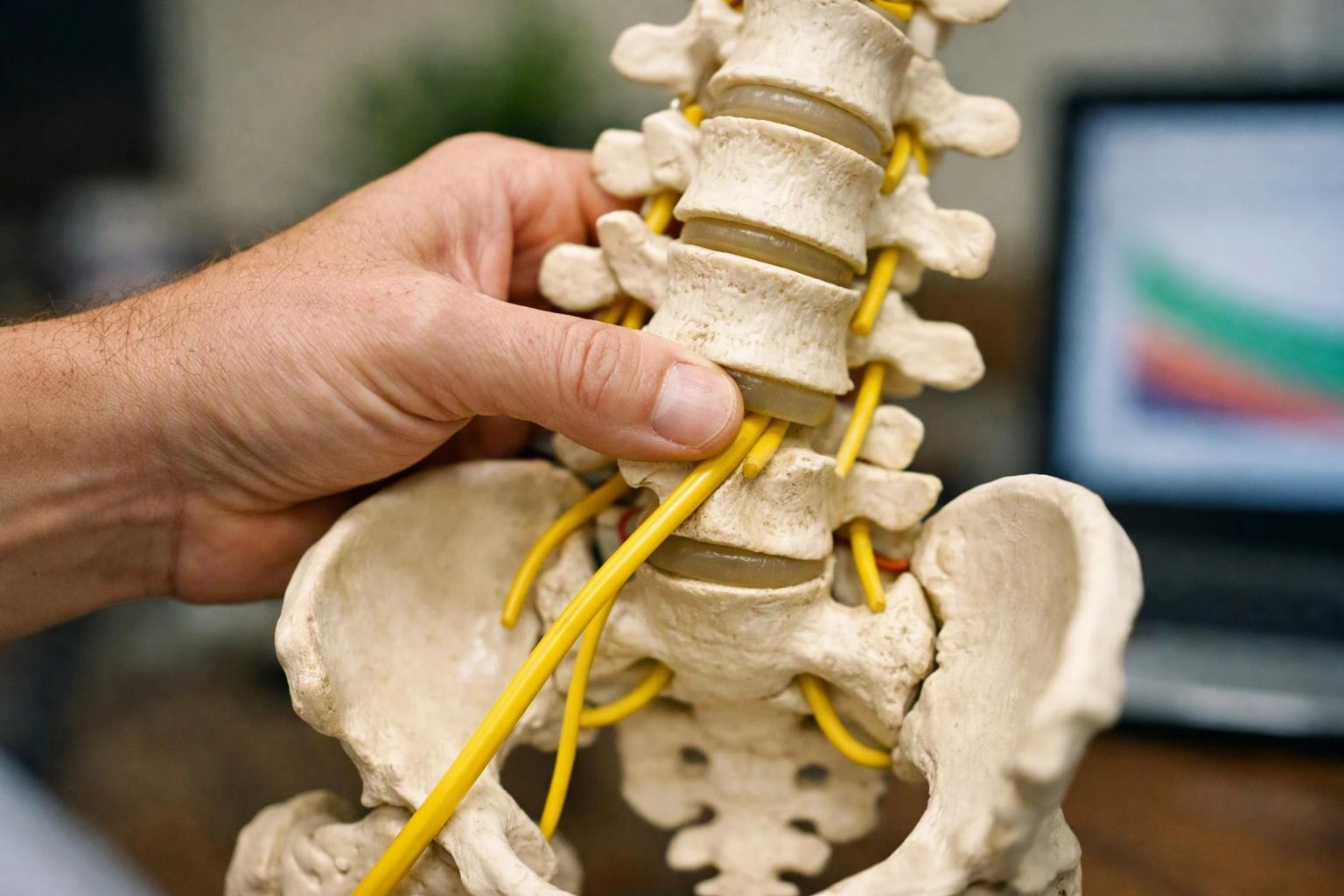
The sciatic nerve is the body’s largest peripheral nerve. It begins from nerve roots in the lower spine, passes through the pelvis and buttock, and continues down each leg. The nerve carries movement signals to leg muscles and sensory signals from parts of the leg and foot. Irritation along this pathway can produce sciatica symptoms.
Quick Facts About Sciatic Nerve
Category
Peripheral nerve
Used for
Leg movement and sensation
Common confusion
The nerve is not the same as sciatica
Also called
Ischial nerve
Often discussed with
Sciatica Treatment
Key Takeaways About Sciatic Nerve
- It is the largest peripheral nerve in the body.
- Its pathway extends from the lower spine into each leg.
- Sciatic nerve symptoms are not always caused by a disc problem.
How Sciatic Nerve Works

The sciatic nerve forms from several nerve roots in the lumbar spine and sacrum. These roots join within the pelvis before the nerve travels through the buttock and along the back of the leg. Branches continue toward the lower leg and foot, which allows signals to move between the spinal cord, muscles, skin, and joints.
Related glossary terms: Lumbar Spine, Nerve Impingement, Radiculopathy.
Clinicians assess the nerve pathway through a history, movement examination, strength checks, reflex testing, and sensory observations. These findings help show whether symptoms follow a nerve pattern or may come from another structure. The lumbar spine and nerve roots are often considered together because irritation near the spine can affect the nerve farther down the leg.
From the Advanced Injury Care Clinic team
When we assess sciatic nerve concerns, we review symptom location, movement limits, strength, sensation, and reflex changes. We also consider the lumbar spine, pelvis, and surrounding soft tissues so our examination reflects the full pathway instead of focusing only on the painful area.
Sciatic Nerve in Practice: A Real-World Example
A person with a low back injury may feel pain or tingling that travels through the buttock and down the leg. During Sciatica Treatment, the examination can help identify whether the pattern follows the sciatic nerve or points to another source.
Related Services
Related Terms
Lumbar Spine
The lumbar spine is the lower section of the vertebral column, located between the thoracic spine…
Nerve Impingement
Nerve Impingement is a condition in which nearby tissue places pressure on a nerve, disrupting normal…
Radiculopathy
Radiculopathy is a nerve root condition that causes pain, numbness, tingling, or weakness along the path…
Disc Herniation
Disc Herniation is a condition in which the soft inner material of a spinal disc pushes…
Advanced Injury Care Clinic
Have Questions About Sciatic Nerve?
Contact Advanced Injury Care Clinic for practical guidance on Sciatic Nerve and related chiropractor work in Nashville.