
What Is the Lumbar Spine?
Lumbar Spine is the lower section of the spinal column between the thoracic spine and sacrum. It contains five vertebrae that support the trunk, protect nerve structures, and help you bend, rotate, and extend your lower back. Discs, facet joints, ligaments, muscles, and nerves work with these vertebrae during movement.
Quick Facts About Lumbar Spine
Category
Spinal region
Used for
Assessing lower-back function
Common confusion
The lumbar spine is not the entire back
Also called
Lower back spine, Lower back
Often discussed with
Back Pain Treatment, Chiropractic Adjustment
Key Takeaways About Lumbar Spine
- It forms the lower back between the rib cage and pelvis.
- Its joints, discs, and muscles share movement and load.
- Lumbar spine is not the same as the sacroiliac joint.
How Lumbar Spine Works
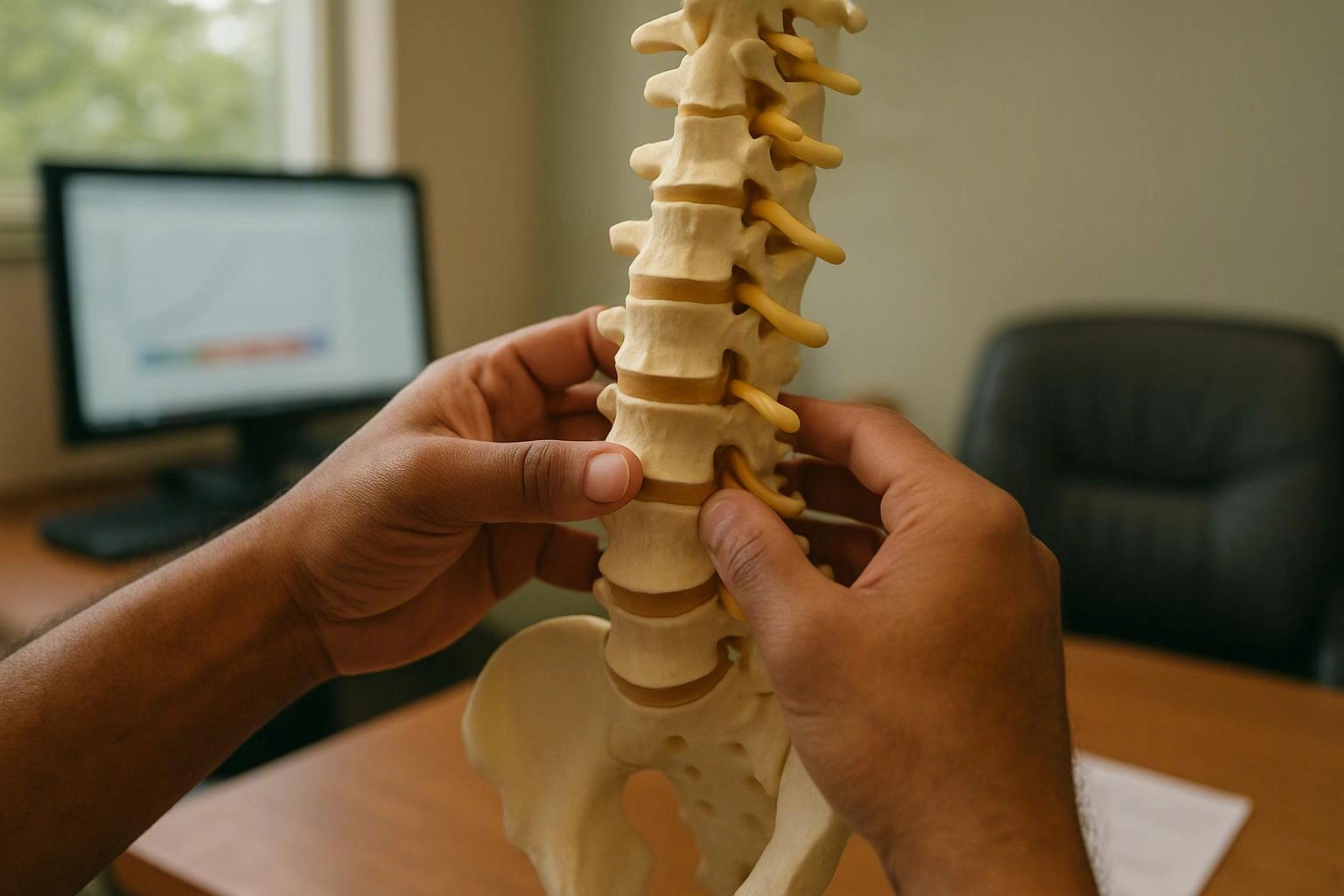
The lumbar spine transfers forces between the upper body and pelvis while allowing controlled bending, extension, and rotation. Intervertebral discs help separate neighboring vertebrae and distribute pressure. Facet joints guide motion at the back of the spinal column, while ligaments and muscles help maintain control.
Related glossary terms: Thoracic Spine, Sacroiliac Joint, Facet Joint.
Clinicians assess this region through your movement, posture, muscle control, and reported symptoms. They may also examine how the lumbar spine relates to the thoracic spine, pelvis, hips, and nearby nerves. A limited movement pattern can involve more than one structure, so the examination considers the whole movement system. The sacroiliac joint connects the pelvis to the sacrum and may produce symptoms near the lower back, but it is a separate structure.
From the Advanced Injury Care Clinic team
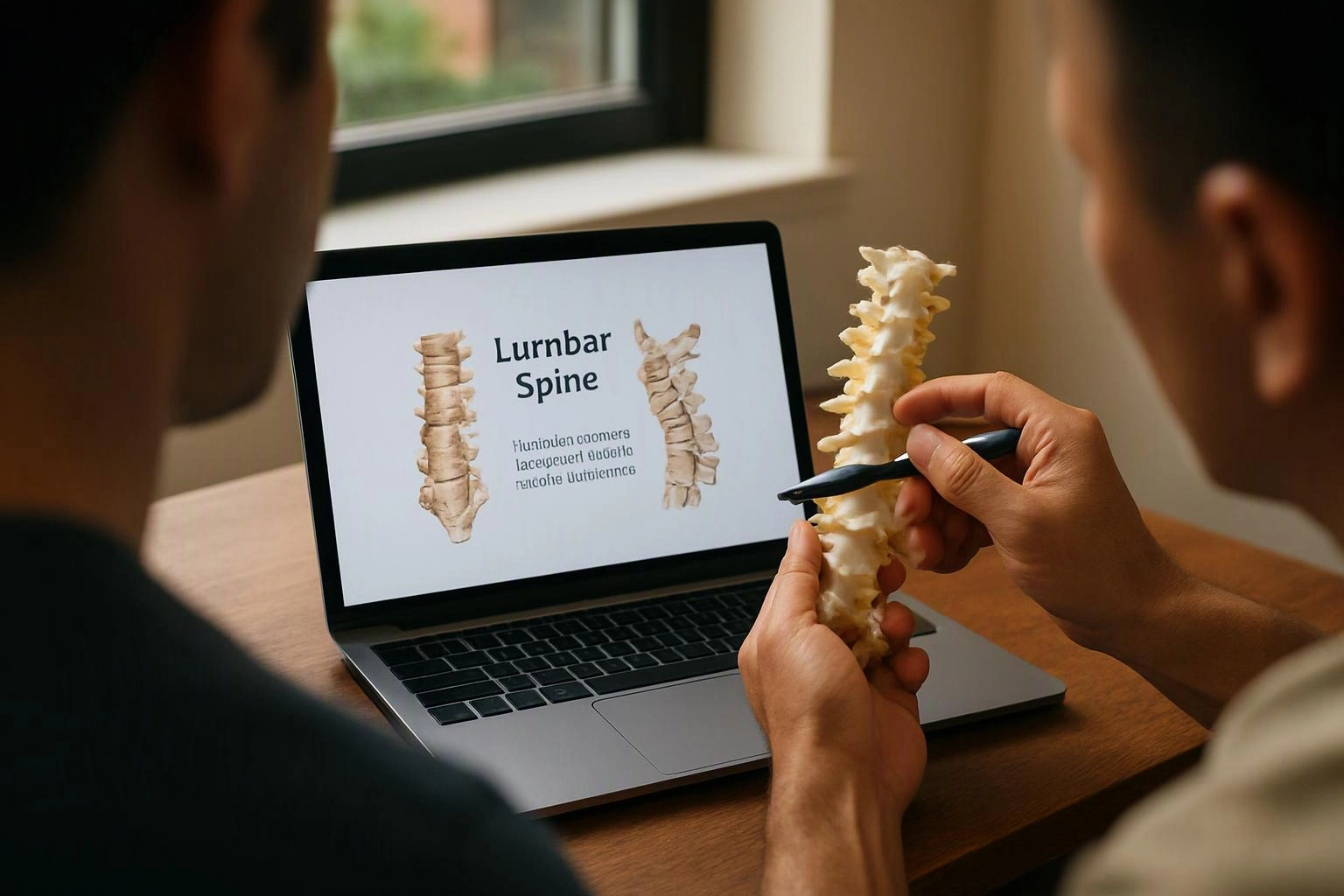
When we assess the lumbar spine during Back Pain Treatment, we observe how the lower back moves with the pelvis and hips. We also check muscle control, tenderness, and symptom patterns. Our findings help us select appropriate hands-on care and exercise recommendations for the person’s presentation.
Lumbar Spine in Practice: A Real-World Example
A person may report lower-back pain after lifting a box and feel discomfort during bending. During Back Pain Treatment, the lumbar spine is considered alongside hip motion, pelvic position, muscle control, and the person’s symptom pattern.
Related Services
Related Terms
Thoracic Spine
Thoracic Spine is the middle section of the spinal column, located between the neck and lower…
Sacroiliac Joint
Sacroiliac Joint is the connection between the sacrum at the base of the spine and the…
Facet Joint
A facet joint is a small synovial joint at the back of the spine that connects…
Range Of Motion
Range Of Motion is the available movement at a joint or group of joints, measured through…
Advanced Injury Care Clinic
Have Questions About Lumbar Spine?
Contact Advanced Injury Care Clinic for practical guidance on Lumbar Spine and related chiropractor work in Hendersonville.