
What Is Disc Herniation?
Disc Herniation is a condition in which the soft inner material of a spinal disc pushes through a weakened or torn outer layer. The displaced material may irritate nearby nerves, causing back pain, neck pain, numbness, tingling, or weakness. Symptoms depend on the disc’s location and the tissues affected.
Quick Facts About Disc Herniation
Category
Spinal disc condition
Used for
Understanding back or neck symptoms
Common confusion
Disc bulge and disc herniation
Also called
Herniated disc, Slipped disc
Often discussed with
Back Pain Treatment, Sciatica Treatment
Key Takeaways About Disc Herniation
- Disc herniation involves displaced material within a spinal disc.
- Symptoms vary by location and nerve involvement.
- A disc bulge is not always the same condition.
How Disc Herniation Works
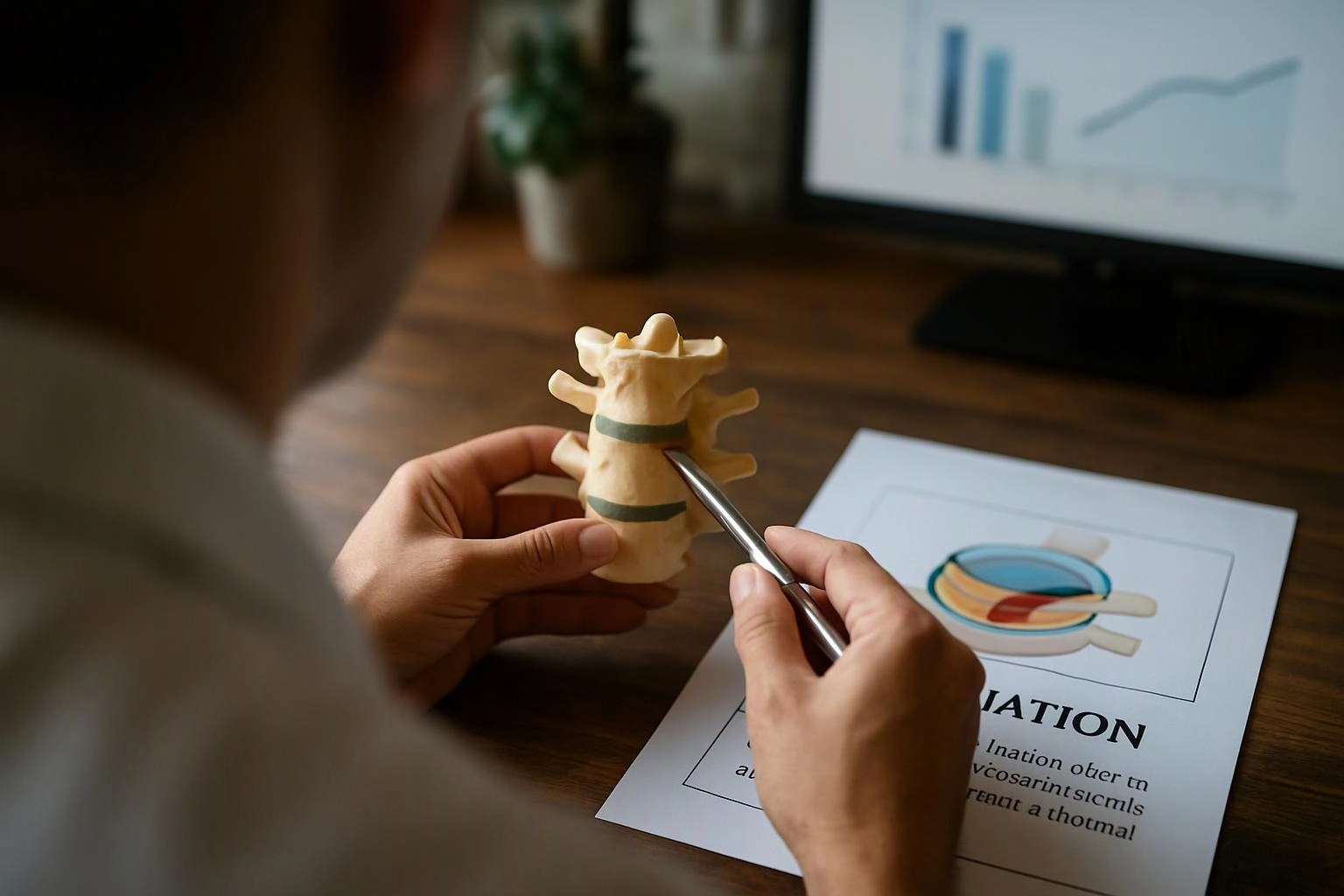
Disc Herniation changes the shape of a spinal disc when its inner gel-like material moves through a damaged area of the outer ring. The material may contact a nearby nerve root, which can create pain or altered sensation along the nerve’s path. A herniation may occur in the lumbar spine or cervical spine, and symptoms depend on the affected level.
Related glossary terms: Disc Bulge, Lumbar Spine, Cervical Spine.
Assessment connects the reported symptoms with movement, strength, sensation, and reflex findings. Imaging may show the disc’s structure, but an image alone does not establish the source of pain. Radiculopathy describes nerve-related symptoms that may accompany a herniation. Spinal stenosis describes narrowing around the spinal canal or nerve openings and can occur with different spinal conditions.
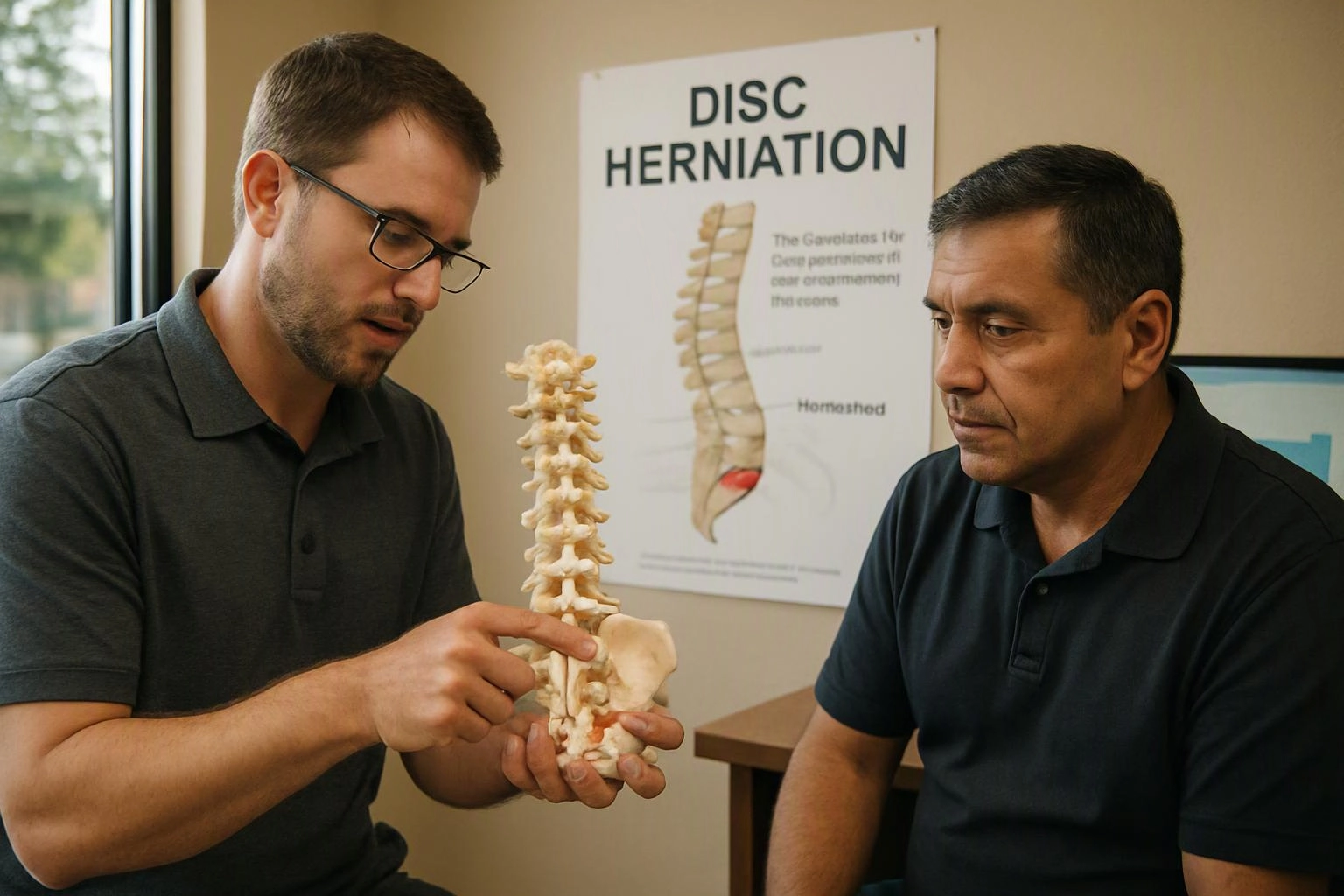
From the Advanced Injury Care Clinic team
When we assess a possible disc herniation, we review the symptom pattern and examine movement, strength, sensation, and reflexes. We also consider whether the findings fit the lumbar spine, cervical spine, or another source of pain. Our team uses that information to guide care within Back Pain Treatment.
Disc Herniation in Practice: A Real-World Example
A person develops low back pain after lifting and notices tingling that travels into one leg. In Back Pain Treatment, the symptom path and examination findings help determine whether nerve irritation may relate to a lumbar disc herniation.
Related Services
Related Terms
Disc Bulge
A Disc Bulge is an outward extension of a spinal disc’s outer layer beyond its usual…
Lumbar Spine
The lumbar spine is the lower section of the vertebral column, located between the thoracic spine…
Cervical Spine
Cervical Spine is the upper section of the spinal column that runs through the neck and…
Radiculopathy
Radiculopathy is a nerve root condition that causes pain, numbness, tingling, or weakness along the path…
Advanced Injury Care Clinic
Have Questions About Disc Herniation?
Contact Advanced Injury Care Clinic for practical guidance on Disc Herniation and related chiropractor work in Nashville.