
What Is Kinesiology Tape?
Kinesiology Tape is an elastic adhesive strip placed on the skin to provide light sensory and mechanical support around muscles and joints. The tape stretches with body movement, so it can support activity without fully restricting motion. Clinicians may apply it during sports injury treatment as one part of a broader care plan.
Quick Facts About Kinesiology Tape
Category
Elastic therapeutic tape
Used for
Movement support during activity
Common confusion
Not the same as rigid athletic tape
Also called
Elastic therapeutic tape, K tape
Often discussed with
Sports Injury Treatment
Key Takeaways About Kinesiology Tape
- Elastic construction allows movement during activity.
- Application follows the involved body area and movement goal.
- Kinesiology tape does not function like a rigid brace.
How Kinesiology Tape Works
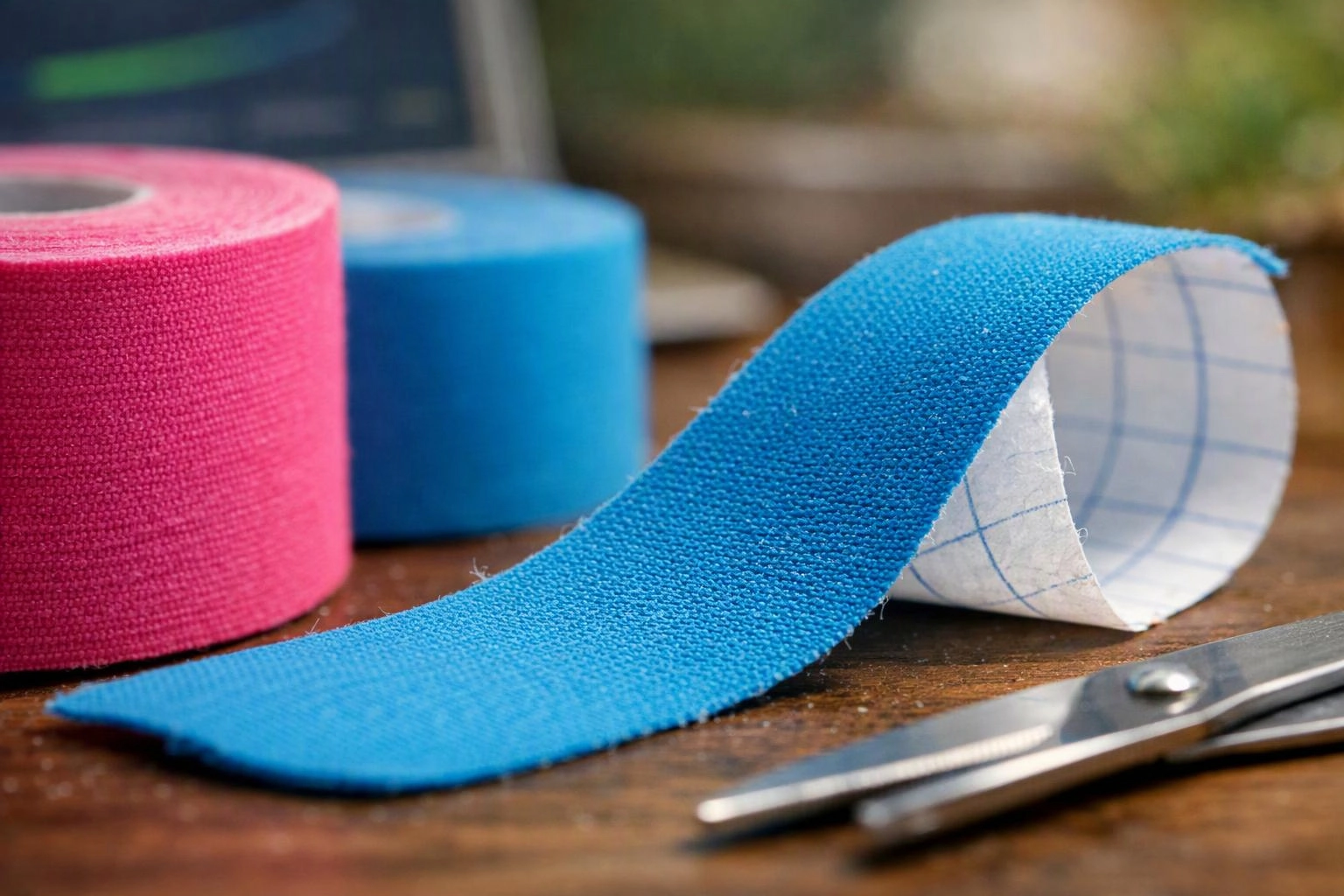
Kinesiology Tape works through gentle stretch and contact with the skin. The applied tension changes how the skin and underlying tissues move during activity. That input may help a person notice a joint position or movement pattern while the taped area remains mobile.
Related glossary terms: Adhesion, Mechanoreceptor, Proprioception.
Application depends on the body area, skin condition, movement goal, and activity demands. A clinician may place strips along a muscle or across a joint to provide directional support. Proprioception describes awareness of body position, while mechanoreceptors are sensory structures that respond to physical contact and movement. Tape supports these sensory cues, but it does not replace an examination or address every cause of pain.
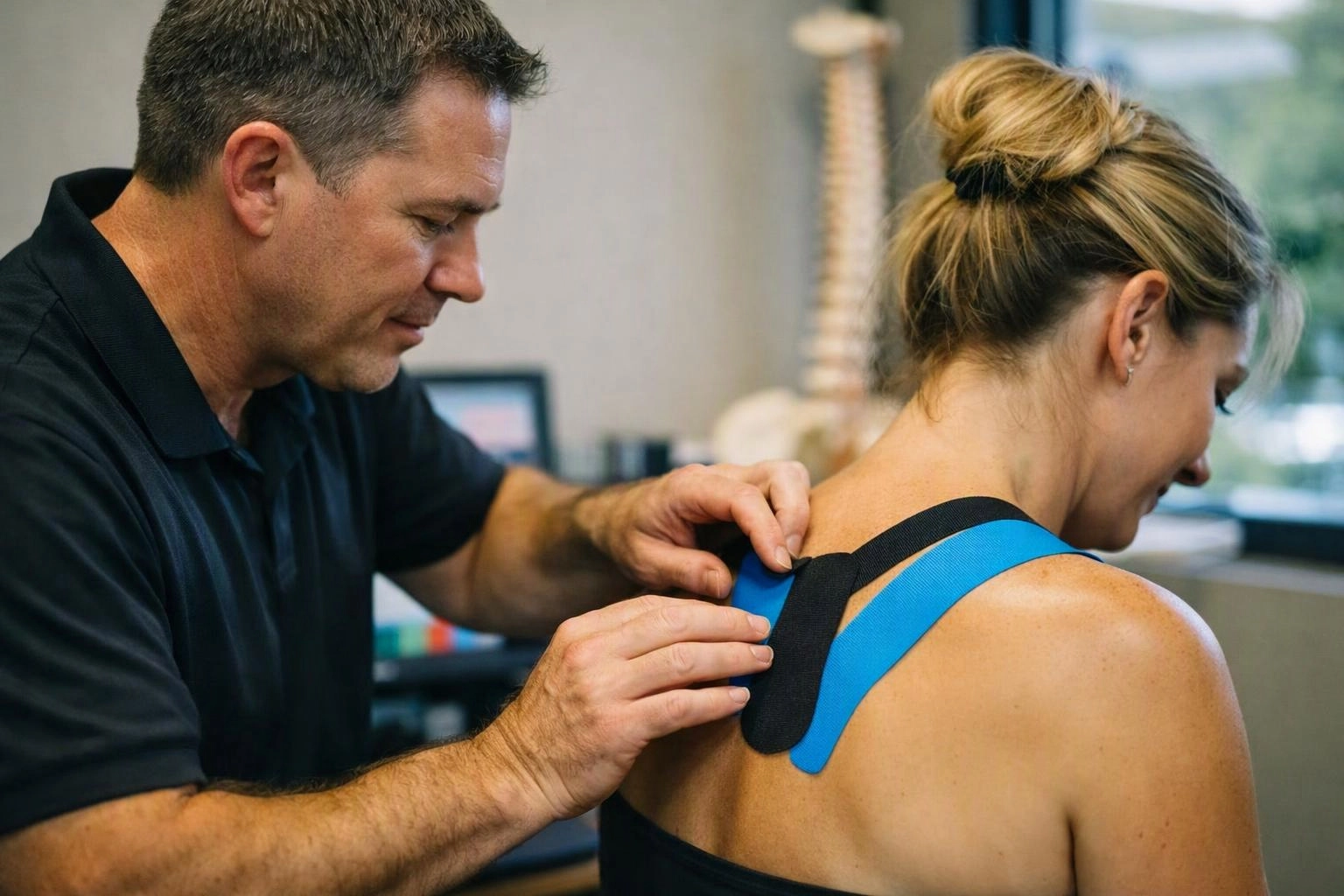
From the Advanced Injury Care Clinic team
When we use Kinesiology Tape, we examine the involved movement and choose an application that fits the sports injury treatment plan. We check the tape placement during movement and adjust the approach if the tape changes motion in an unwanted way.
Kinesiology Tape in Practice: A Real-World Example
A runner with discomfort around the knee may receive Kinesiology Tape along the area during sports injury treatment. The tape can provide a sensory reminder during running while the clinician addresses movement, strength, and other contributing factors.
Related Services
Related Terms
Adhesion
An adhesion is a band of scar-like connective tissue that causes nearby tissues to stick or…
Mechanoreceptor
A mechanoreceptor is a sensory receptor that detects physical forces, including pressure, stretch, vibration, and movement…
Proprioception
Proprioception is the body's awareness of joint position, movement, and force without relying on sight. Sensory…
Range Of Motion
Range Of Motion is the available movement at a joint or group of joints, measured through…
Advanced Injury Care Clinic
Have Questions About Kinesiology Tape?
Contact Advanced Injury Care Clinic for practical guidance on Kinesiology Tape and related chiropractor work in Hendersonville.