
What Is Disc Degeneration?
Disc Degeneration is a gradual change in the spinal discs that reduces their ability to cushion and separate the vertebrae. Discs may lose water content, become less flexible, or develop small tears. These changes can occur with aging or repeated stress, and imaging findings do not always explain a person’s symptoms.
Quick Facts About Disc Degeneration
Category
Spinal disc condition
Used for
Evaluating disc-related back or neck symptoms
Common confusion
Not identical to disc herniation
Also called
Degenerative disc disease, DDD
Often discussed with
Herniated Disc Treatment, Spinal Decompression Therapy
Key Takeaways About Disc Degeneration
- Disc degeneration affects disc structure and flexibility.
- Imaging findings may not match symptom intensity.
- Disc degeneration is not the same as a herniated disc.
How Disc Degeneration Works
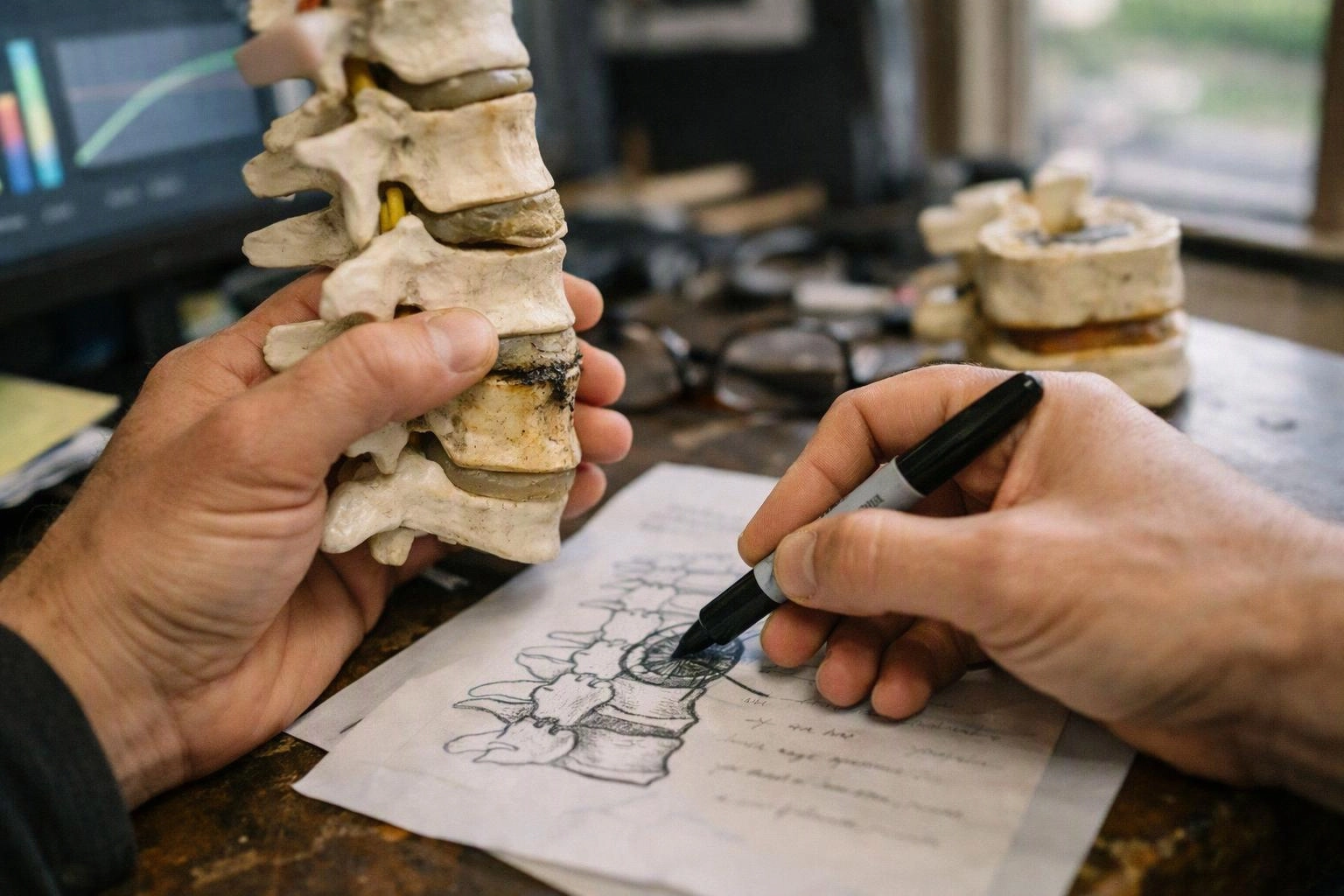
Disc degeneration changes the structure of the soft discs between the spinal bones. A disc may lose water, become thinner, or develop small areas of wear. These changes can reduce the disc’s ability to absorb pressure during movement, although the degree of wear does not always match the person’s pain.
Related glossary terms: Disc Bulge, Lumbar Spine, X-Ray Imaging.
Clinicians consider symptoms, movement, strength, sensation, and imaging together. Herniated discs involve material extending through a weakened area of the disc, while degeneration describes broader changes within the disc. The lumbar spine often receives close attention when symptoms involve the lower back, buttocks, or legs. Disc degeneration can also occur in the neck and may affect movement or nearby nerve structures.
From the Advanced Injury Care Clinic team
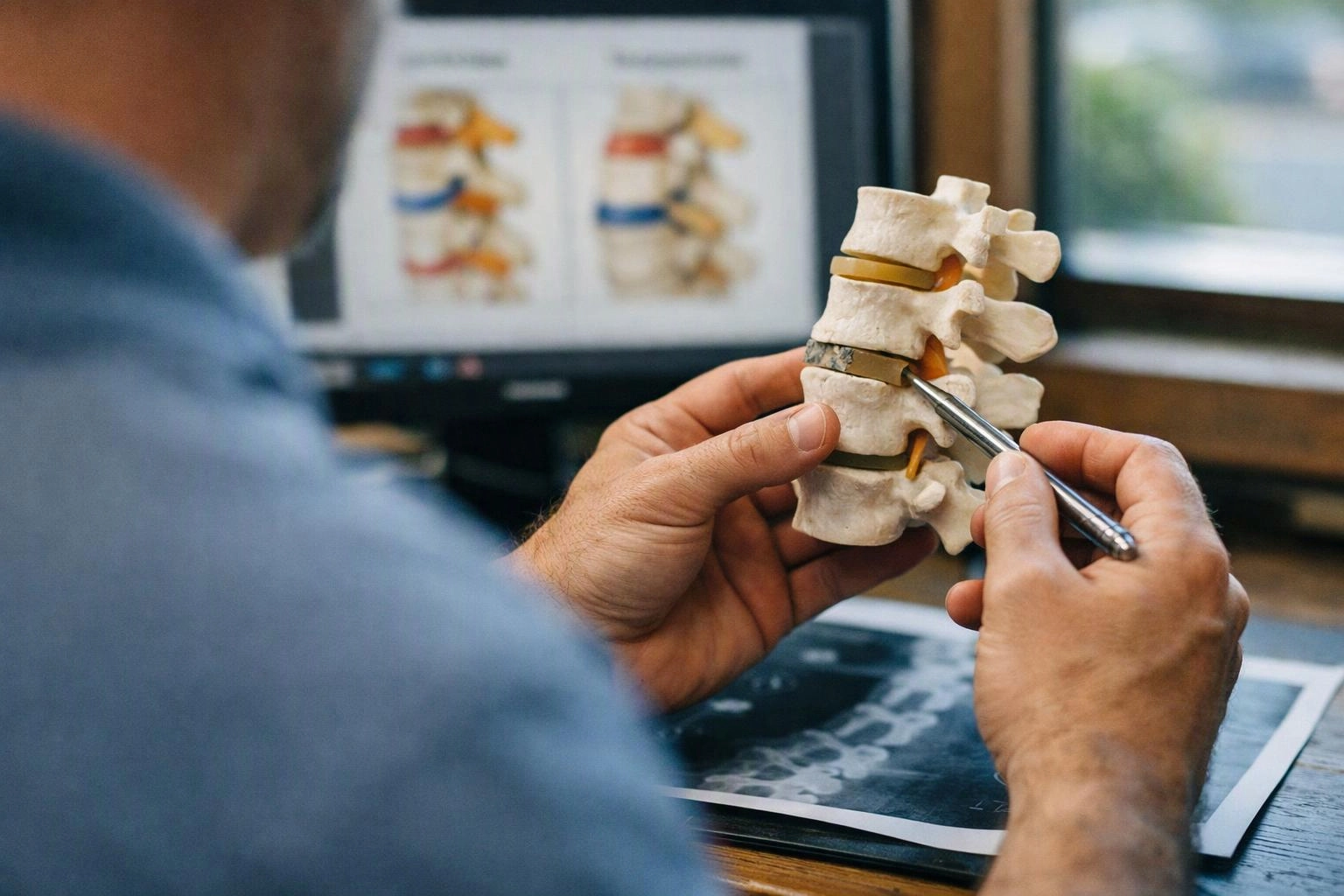
When we assess disc degeneration, we connect imaging findings with movement limits, symptom patterns, and neurological signs. Our team also checks whether a disc finding fits the person’s reported pain and function. This approach helps us distinguish a degenerative change from a separate disc or joint problem.
Disc Degeneration in Practice: A Real-World Example
A person with lower back pain may have disc degeneration shown on imaging after repeated lifting or normal aging. The care team reviews that finding alongside movement testing and any leg symptoms before relating it to herniated disc treatment.
Related Terms
Disc Bulge
A Disc Bulge is a condition in which the outer wall of a spinal disc extends…
Lumbar Spine
Lumbar Spine is the lower section of the spinal column between the thoracic spine and sacrum…
X-Ray Imaging
X-Ray Imaging is a diagnostic imaging method that uses a controlled beam of radiation to create…
Nerve Root Compression
Nerve Root Compression is pressure on a spinal nerve root where the nerve leaves the spinal…
Advanced Injury Care Clinic
Have Questions About Disc Degeneration?
Contact Advanced Injury Care Clinic for practical guidance on Disc Degeneration and related chiropractor work in Hendersonville.