
What Is Nerve Root Compression?
Nerve Root Compression is pressure on a spinal nerve root where the nerve leaves the spinal column. The pressure may result from a disc bulge, narrowed nerve passage, joint changes, or nearby swelling. Depending on the affected area, nerve root compression can produce radiating pain, tingling, numbness, or weakness along the nerve’s path.
Quick Facts About Nerve Root Compression
Category
Spinal nerve condition
Used for
Explaining radiating nerve symptoms
Common confusion
Often confused with muscle pain or referred pain
Also called
Nerve impingement, Nerve Root Impingement
Often discussed with
Sciatica Treatment, Herniated Disc Treatment
Key Takeaways About Nerve Root Compression
- Symptoms often travel beyond the spine into an arm or leg.
- The affected spinal level helps explain the symptom pattern.
- Nerve root compression is not the same as ordinary muscle soreness.
How Nerve Root Compression Works
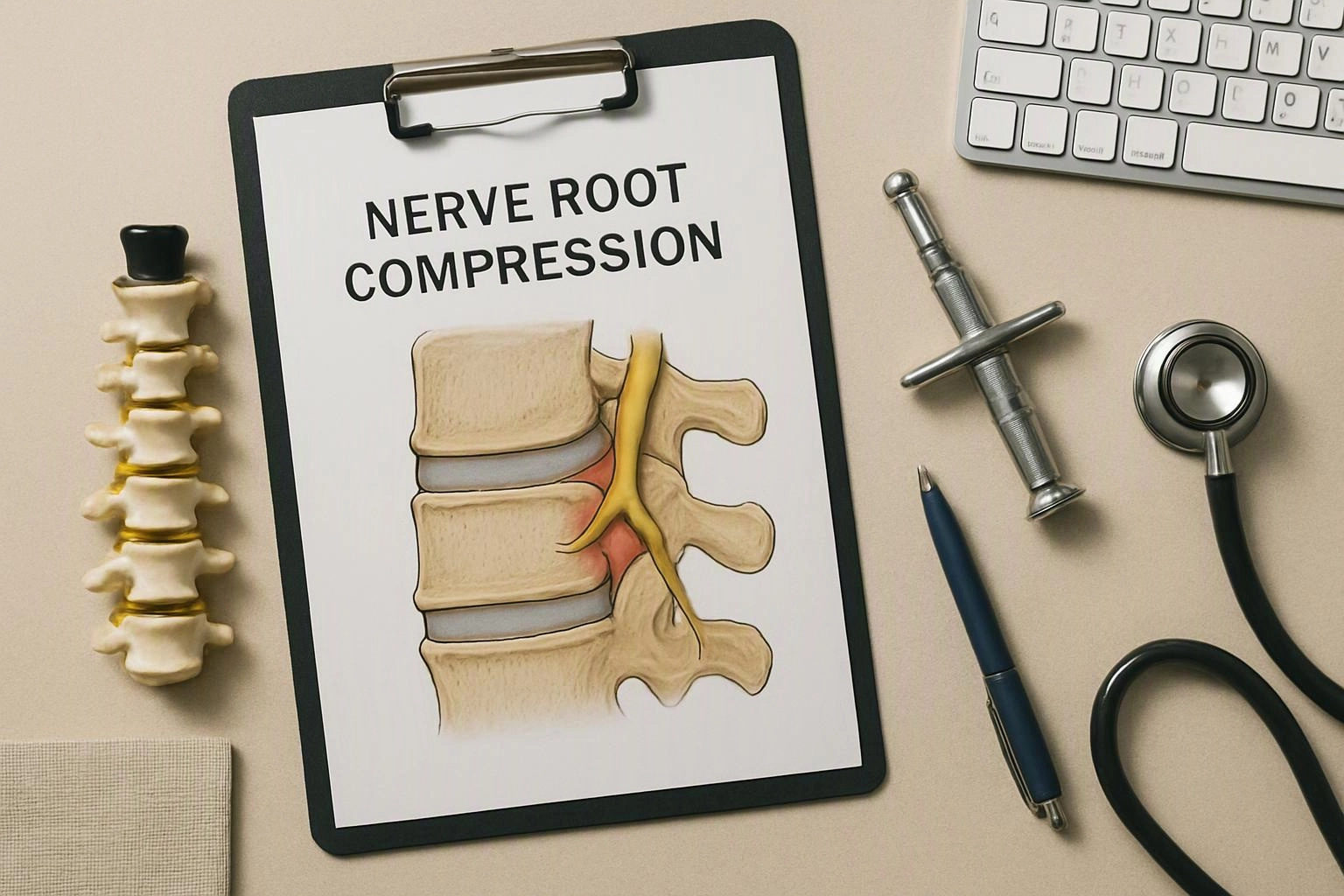
Nerve Root Compression occurs when tissue near a spinal nerve root reduces room around that nerve. A disc bulge, arthritic joint change, or narrowing in the nerve passage can alter the available space. The affected nerve may then send symptoms along its pathway, which can reach the buttock, leg, shoulder, or arm.
Related glossary terms: Cervical Radiculopathy, Disc Bulge, Foraminal Stenosis.
Healthcare professionals consider the symptom location, sensation changes, strength, reflexes, and spinal movement when assessing the condition. The lumbar spine commonly relates to symptoms traveling into the lower body, while the cervical spine relates to symptoms traveling into the upper body. Imaging may support the assessment, but findings must match the person’s symptoms and physical examination.
From the Advanced Injury Care Clinic team
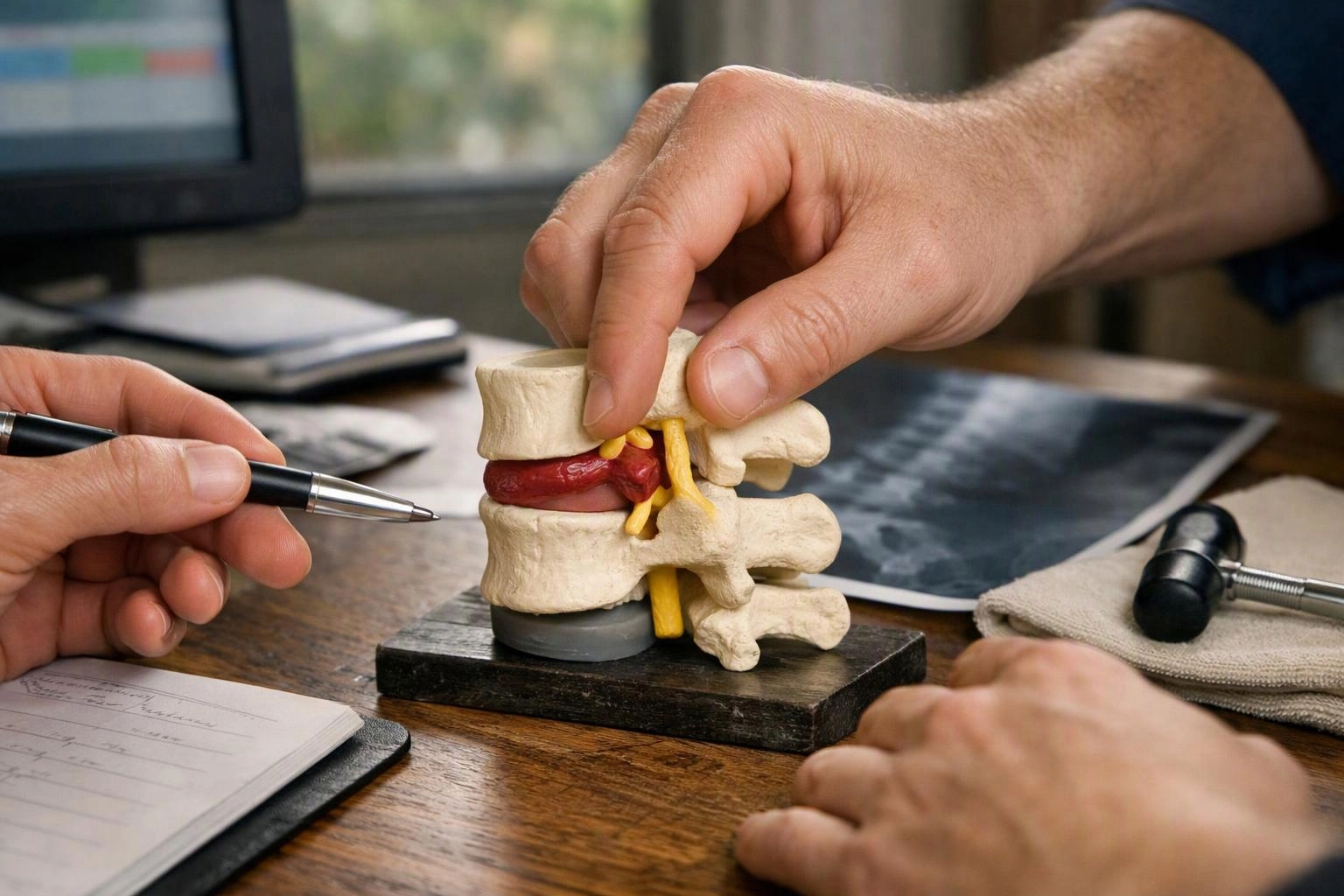
When we assess possible nerve root compression, we review the symptom pattern, spinal movement, strength, sensation, and reflex responses. Our team also considers whether the findings fit the suspected spinal level and whether another condition could explain the symptoms. This approach helps guide care within Sciatica Treatment.
Nerve Root Compression in Practice: A Real-World Example
A person with a lower-back disc bulge may feel pain that travels from the back into the buttock and leg. Numbness or weakness along the same pathway can suggest that a nerve root is being affected.
Related Services
Related Terms
Cervical Radiculopathy
Cervical Radiculopathy is a condition in which irritation or compression of a nerve root in the…
Disc Bulge
A Disc Bulge is a condition in which the outer wall of a spinal disc extends…
Foraminal Stenosis
Foraminal Stenosis is a narrowing of the openings between spinal bones where nerve roots leave the…
Lumbar Spine
Lumbar Spine is the lower section of the spinal column between the thoracic spine and sacrum…
Advanced Injury Care Clinic
Have Questions About Nerve Root Compression?
Contact Advanced Injury Care Clinic for practical guidance on Nerve Root Compression and related chiropractor work in Hendersonville.