
What Is Biomechanics?
Biomechanics is the study of how forces, movement, and body structures interact during physical activity. The field examines actions such as walking, jumping, lifting, and changing direction. In sports chiropractic care, biomechanics helps describe how joint motion, muscle control, posture, and movement patterns affect physical performance and load distribution.
Quick Facts About Biomechanics
Category
Movement science
Used for
Assessing movement and load
Common confusion
Not limited to posture
Often discussed with
Sports Chiropractic Care
Key Takeaways About Biomechanics
- It focuses on movement and force, not anatomy alone.
- Movement patterns can guide sports care decisions.
- Biomechanics is not the same as body alignment.
How Biomechanics Works
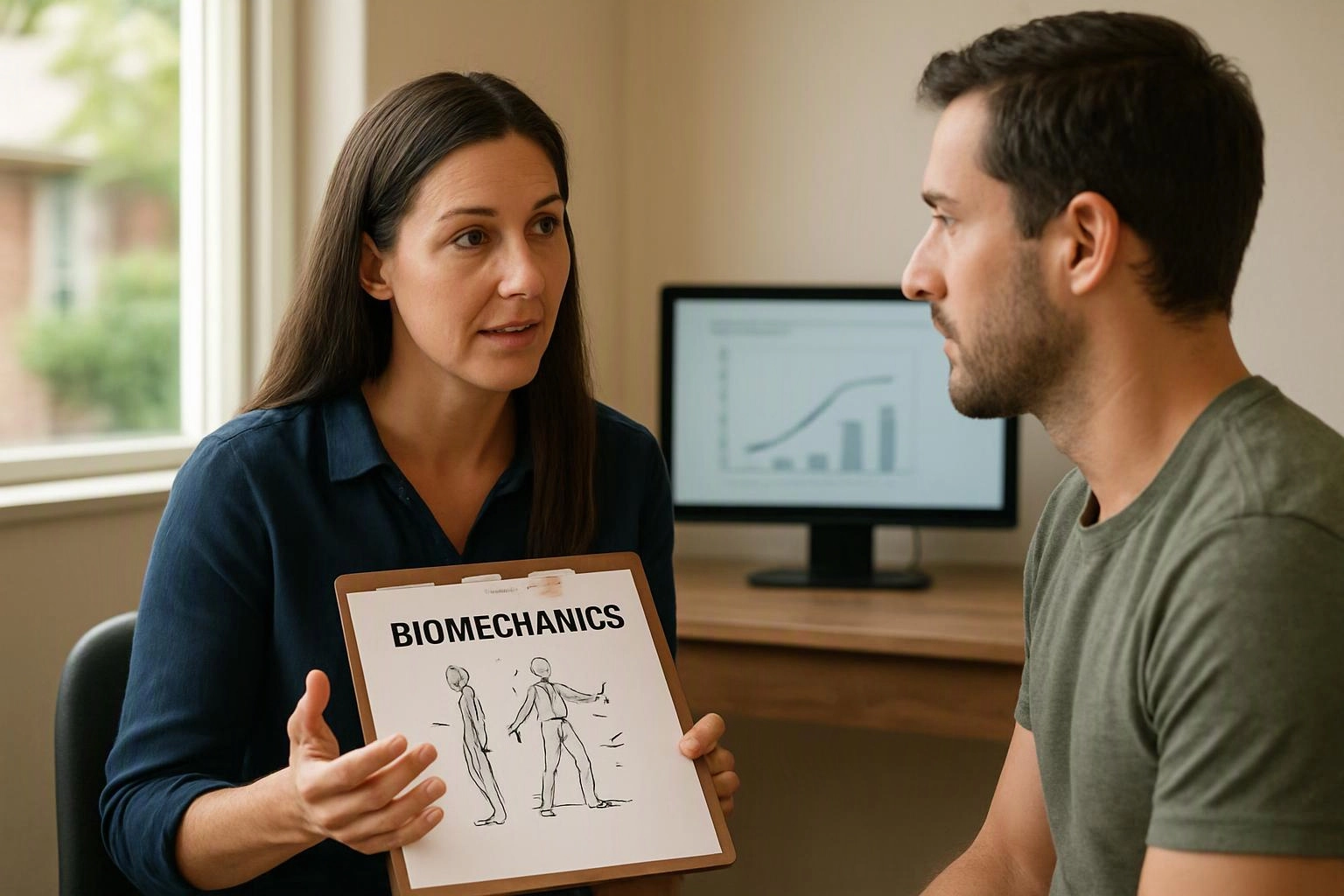
Biomechanics examines how body parts move in relation to one another and how forces pass through the body during an activity. A review may consider joint motion, balance, muscle timing, foot contact, and the direction of force. The practical goal is to describe a movement pattern clearly.
Related glossary terms: Gait Analysis, Proprioception, Range Of Motion.
Sports professionals may observe an athlete walking, running, landing, or changing direction. They may also compare movement on each side of the body and note where control changes under load. Gait analysis and proprioception are related concepts that can add context to a movement review. Biomechanics describes what happens during movement, while treatment decisions require a broader clinical assessment.
From the Advanced Injury Care Clinic team
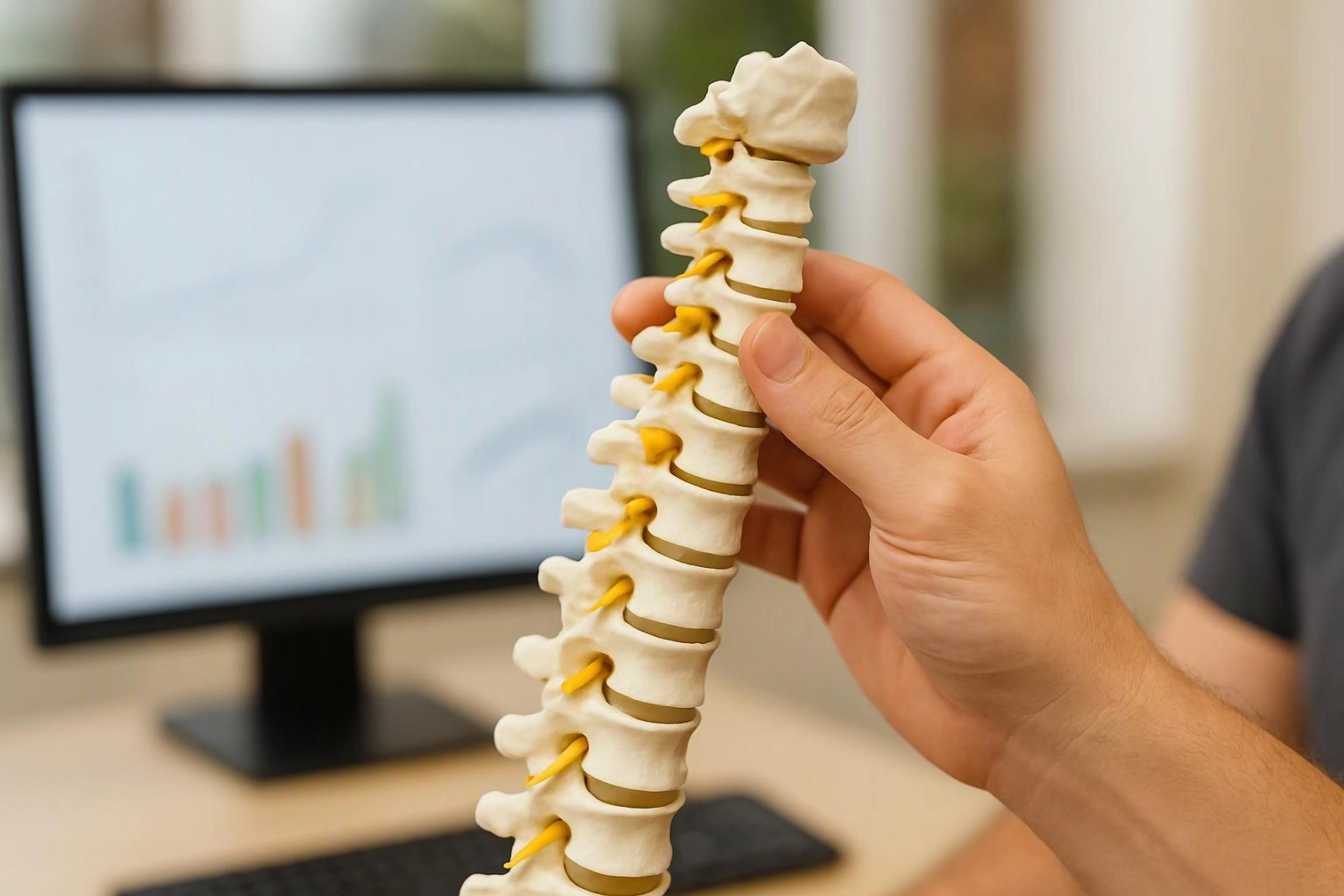
When we assess biomechanics, we watch how a person moves during activities connected to the sport or task. We consider joint motion, control, balance, and load transfer together. Our team uses those observations to guide sports chiropractic care and to track meaningful changes in movement quality.
Biomechanics in Practice: A Real-World Example
A runner with repeated discomfort during direction changes may receive a movement review during walking, jogging, and single-leg tasks. The review can show whether hip control, foot motion, or trunk position changes as the task becomes more demanding.
Related Services
Related Terms
Gait Analysis
Gait Analysis is a clinical assessment of how you walk or run. It examines movement patterns…
Proprioception
Proprioception is the body’s sense of position, movement, and force without relying on vision. Sensors in…
Range Of Motion
Range Of Motion is the amount of movement available at a joint or body region. Clinicians…
Forward Head Posture
Forward Head Posture is a postural pattern in which the head rests in front of the…
Advanced Injury Care Clinic
Have Questions About Biomechanics?
Contact Advanced Injury Care Clinic for practical guidance on Biomechanics and related chiropractor work in Nashville.