Spinal Decompression Therapy: What to Expect Before, During, and After
Spinal decompression therapy usually begins with a health review and examination, continues with guided positioning and controlled treatment, and ends with aftercare guidance; Advanced Injury Care Clinic evaluates whether the approach fits your symptoms and goals.
Request an EstimateWhat Is Spinal Decompression Therapy?
Spinal decompression therapy is a chiropractic treatment that uses controlled movement and positioning to address selected spinal conditions. The approach focuses on the spinal column and may be considered for some patterns of back pain, neck pain, or disc-related symptoms.
Our team uses a chiropractic evaluation to decide whether non-surgical spinal care fits your condition. We explain how the treatment relates to your symptoms before care begins.
Spinal decompression may include lumbar decompression therapy or cervical decompression therapy, depending on the area being assessed. We do not treat every spinal complaint with the same settings or approach.
What Happens Before Your First Session?
Spinal decompression therapy begins with a review of your symptoms, health history, examination findings, and treatment goals. We use that information to decide whether treatment is suitable and to identify possible contraindications.
What to Bring and What to Tell Us
How Does a Spinal Decompression Session Work?
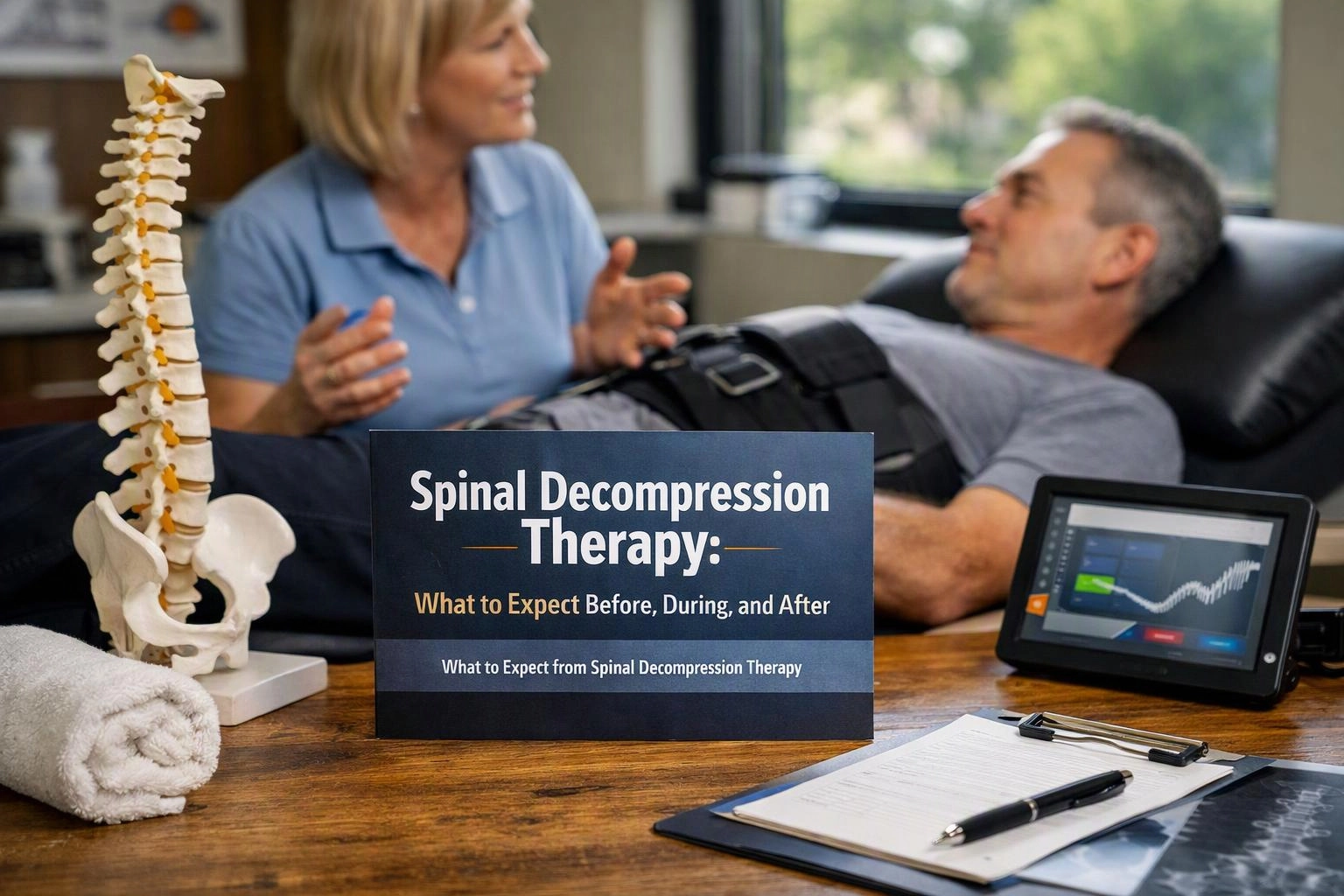
Spinal decompression therapy uses a specialized table and controlled treatment settings selected according to the examination and your response during the session. We guide your patient positioning so the intended spinal area is supported.
The decompression table may use controlled traction and movement based on the treatment plan. We explain what to expect before starting and invite you to share comfort feedback throughout the session.
Our chiropractic monitoring continues during treatment. We can adjust positioning or treatment settings when your response indicates that a change is appropriate.
Session timing depends on the evaluation, treatment settings, the area being addressed, and your response to care. We explain the expected treatment session process during your visit.
For more detail about our approach, see Spinal Decompression Therapy.
What Should You Expect After Treatment?
After spinal decompression therapy, you receive guidance about activity, symptom monitoring, and the next step in your care plan. We discuss how your body responded and what changes should be reported.
Your post-treatment response may include changes in comfort, movement, or symptoms. We encourage you to notice meaningful changes without judging the treatment from one response alone.
Activity guidance may include adjusting movements that increase symptoms and returning to usual activity according to your response. Hydration and comfortable movement can support your general aftercare routine.
Contact our team promptly about concerning or worsening symptoms. A follow-up evaluation helps us review progress and decide whether the treatment plan should continue, change, or use another approach.
How Can You Prepare for Spinal Decompression Therapy?
Preparing for spinal decompression therapy means bringing useful health information and knowing what you want to discuss. Good preparation helps our team connect your symptoms with practical treatment expectations.
Spinal Decompression Therapy Compared With Physical Therapy
Spinal decompression therapy focuses on controlled spinal treatment, while physical therapy emphasizes movement training, strength, mobility, and functional rehabilitation. The best fit depends on your clinical evaluation and recovery goals.
Cost depends on the evaluation, treatment plan, recommended visits, visit frequency, and rehabilitation needs. We can explain what our proposed care includes and how to obtain an exact quote.
| Factor | Spinal decompression therapy | Physical therapy |
|---|---|---|
| Cost | Depends on the evaluation, treatment plan, and number of recommended visits. | Depends on the evaluation, treatment plan, visit frequency, and rehabilitation needs. |
| Timeline | The treatment timeline depends on symptoms, examination findings, and response to care. | The treatment timeline depends on functional goals, progress, and home exercise participation. |
| Maintenance | May include continued clinical reassessment and activity guidance. | May include home exercises, mobility work, and continued conditioning. |
| Best for | People whose examination supports a controlled spinal decompression approach. | People whose goals center on strength, movement, mobility, or functional recovery. |
What Are the Advantages of Spinal Decompression Therapy?
Spinal decompression therapy may be useful when a clinical evaluation supports controlled spinal care. We use the examination and your response to guide the treatment plan.
Best for: spinal decompression may fit people whose symptoms and examination findings support this approach.
What Are the Advantages of Physical Therapy?
Physical therapy may be useful when recovery depends on building movement capacity and improving function. We consider these goals when discussing care options.
Best for: physical therapy may fit people whose main goals involve strength, mobility, movement, or functional recovery.
Which Approach May Fit Your Goals?
The approach that fits best depends on your symptoms, examination findings, health history, and primary recovery goals. No single treatment suits every person or every spinal complaint.
Our clinical evaluation considers spinal symptoms alongside functional limitations. We then explain the care planning options that best match your needs and treatment expectations.
Questions to Ask Before Starting Treatment
Questions about treatment suitability, expected sensations, and follow-up can help you make an informed choice. We welcome questions before discussing a care plan.
Ask whether your symptoms and health history support spinal decompression therapy. Ask what sensations may occur during positioning and controlled traction.
You can also ask how progress will be reviewed, what aftercare guidance may include, and which alternative approaches may address your goals. We explain the reasoning behind our recommendations in clear terms.
How We Plan Your Spinal Decompression Care
Advanced Injury Care Clinic reviews your history, symptoms, examination findings, and goals before explaining whether spinal decompression therapy belongs in your care plan.
Our team uses patient evaluation findings to select an appropriate treatment approach and explain what the treatment session may involve. We also discuss activity guidance, symptom monitoring, and follow-up.
Progress review helps us decide whether care remains appropriate for your response and goals. Requesting an exact quote also allows us to explain the recommended treatment plan and what it includes.
Questions About What to Expect From Spinal Decompression Therapy
What does spinal decompression therapy feel like?
Advanced Injury Care Clinic uses guided positioning and controlled movement during spinal decompression therapy. Many people notice a stretching or pulling sensation, but your comfort feedback guides our monitoring and adjustments.
Can spinal decompression therapy be used for neck symptoms?
Yes, spinal decompression therapy may be considered for neck symptoms when the examination supports cervical treatment. We review your health history, symptoms, and findings before making that decision.
What should I wear to spinal decompression therapy?
Comfortable clothing that allows easy positioning is suitable for spinal decompression therapy. Avoid clothing that restricts movement or makes it difficult to access the area being assessed.
Can I return to normal activities after spinal decompression therapy?
Return to normal activities after spinal decompression therapy depends on your symptoms, treatment response, and activity guidance. We explain which movements to monitor and how to follow your care plan.
How is candidacy for spinal decompression therapy determined?
Candidacy for spinal decompression therapy is determined through a health history, symptom review, physical examination, treatment goals, and screening for contraindications. We use those findings to decide whether the approach fits your needs.
Advanced Injury Care Clinic can review your symptoms and explain whether spinal decompression therapy fits your goals. Contact us to discuss your evaluation, treatment plan, aftercare, and exact quote.
Related Resources
Chiropractic Care for Back Pain: What to Expect and How to Prepare
What It SolvesSciatica Treatment: What to Expect and How to Prepare
What It SolvesHerniated Disc Treatment: What to Expect and How to Prepare
Brand vs BrandSpinal Decompression Therapy Providers Worth Comparing in Hendersonville (2026)