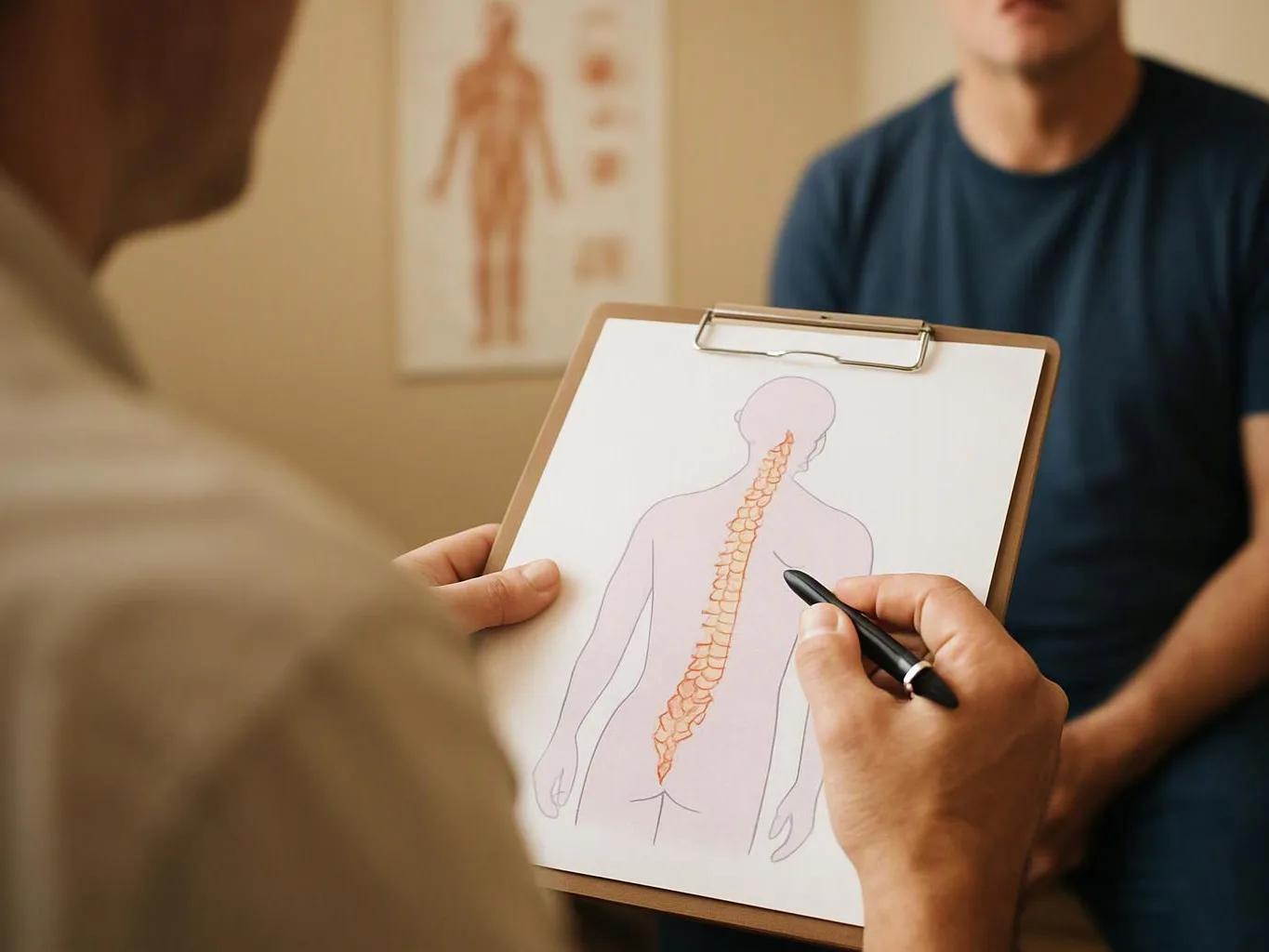
Herniated Disc Treatment: What to Expect and How to Prepare
Herniated disc treatment involves identifying the affected spinal structures, assessing symptoms and nerve involvement, and creating a conservative care plan that may include spinal decompression, chiropractic treatment, movement guidance, and follow-up monitoring. Advanced Injury Care Clinic evaluates each person before recommending care and explains how to prepare for treatment.
Request an EstimateWhat Is Herniated Disc Treatment?
Herniated disc treatment is a coordinated approach that evaluates disc-related symptoms and uses appropriate conservative care to support spinal function and symptom relief. Advanced Injury Care Clinic reviews the affected area, symptom pattern, and possible nerve involvement before we recommend a treatment plan.
An intervertebral disc sits between the vertebrae and helps the spine handle movement and load. A herniated disc occurs when disc material, including the annulus fibrosus and nucleus pulposus, shifts beyond its usual position and may irritate a spinal nerve or spinal nerve root.
Our chiropractic care may focus on spinal movement, pain management, and functional goals. Care can vary for a lumbar disc herniation, cervical disc herniation, or thoracic disc herniation.
What Symptoms Can a Herniated Disc Cause?
Herniated disc symptoms depend on the disc location and whether nearby nerves are irritated. We connect your symptoms with examination findings before selecting care.
What Commonly Causes a Herniated Disc?
A herniated disc can develop when disc tissue becomes less resilient or receives repeated stress. We ask about your work, activities, previous injuries, and movement habits to identify factors that may affect your symptoms.
How We Evaluate a Herniated Disc
Advanced Injury Care Clinic evaluates the symptom pattern, spinal movement, nerve-related findings, and relevant history before we recommend a treatment plan.
We begin with your medical history and ask when symptoms started, what changes them, and how they affect daily activity. Our physical examination may assess posture, spinal alignment, tenderness, range of motion, and movement control.
Neurological screening helps us check sensation, reflexes, strength, and other signs of nerve involvement. When the findings call for more information, we may discuss an imaging referral or coordination with another medical provider.
What to Expect During Herniated Disc Treatment
Herniated disc treatment may include spinal decompression therapy, chiropractic care, movement guidance, and symptom monitoring when those approaches fit the examination findings.
Our care may also include a chiropractic adjustment, manual therapy, or therapeutic exercise. We select each approach based on your symptoms, physical findings, activity limits, and treatment goals.
For people with sciatica caused by disc herniation, our sciatica treatment may focus on reducing aggravating movements and improving tolerance for useful activity. Back pain treatment may include education about posture, body mechanics, and gradual movement.
How Spinal Decompression Therapy Fits Into Care
Spinal decompression therapy may be considered when the examination suggests that controlled changes in spinal loading could support comfort and movement. We monitor how your symptoms respond during and after care.
Disc-related pressure, nerve irritation, and movement sensitivity can vary between people. Our team adjusts the treatment response plan when symptoms do not follow the expected pattern.
How to Prepare for Herniated Disc Treatment
Preparation for herniated disc treatment helps us understand your symptoms and set practical goals for care. Bring information that shows what has changed and what you want to improve.
This information helps us connect your concerns with the physical examination. We then explain the proposed treatment plan and any activity modification that may support it.
Which Prevention Steps Can Protect Your Back?
Back protection depends on reducing avoidable strain while maintaining useful movement. We teach practical habits that match your work, exercise, and daily activities.
How We Monitor Progress and Adjust Care
Advanced Injury Care Clinic monitors changes in pain, mobility, function, and nerve-related symptoms so we can adjust care when the response does not match the treatment plan.
We track the pain pattern, daily activity, and movement tolerance over follow-up visits. Neurological symptoms such as numbness, tingling, or muscle weakness receive careful attention.
A follow-up evaluation helps us decide whether to continue, modify, or pause an approach. Our team explains changes to the treatment plan and provides updated movement guidance when needed.
When Should Back or Leg Symptoms Receive Urgent Attention?
Progressive weakness, new loss of bladder or bowel control, or numbness in the saddle area requires urgent medical evaluation rather than routine treatment planning.
These symptoms can signal serious nerve involvement. Seek urgent medical care if they appear, worsen, or occur with severe changes in back or leg symptoms.
Questions to Ask About Herniated Disc Care
Useful questions help you understand the diagnosis, treatment goals, and next steps. Ask how examination findings shape the plan and how progress will be reviewed.
Questions About Herniated Disc Treatment
Can chiropractic treatment help with a herniated disc?
Yes, chiropractic treatment may help some people with a herniated disc when the examination supports conservative care. Advanced Injury Care Clinic evaluates the disc-related symptoms, spinal movement, and neurological findings before we recommend chiropractic care.
Is spinal decompression therapy appropriate for every herniated disc?
No, spinal decompression therapy is not appropriate for every herniated disc. We consider the symptom pattern, examination findings, nerve involvement, medical history, and treatment response before using this approach.
What should I bring to a herniated disc treatment appointment?
Bring your symptom history, medication list, previous imaging, activity limitations, and treatment goals. These details help us prepare for the physical examination and discuss a suitable treatment plan.
Can a herniated disc cause sciatica?
Yes, a herniated disc can cause sciatica when disc material irritates or compresses a nerve that travels into the leg. We assess radiating pain, numbness, tingling, and muscle weakness during the neurological screening.
What activities should I avoid while treating a herniated disc?
Activities that sharply increase pain, radiating symptoms, numbness, tingling, or weakness should be modified while the disc condition is being assessed. We provide movement guidance based on your findings and help you return to useful activity safely.
Advanced Injury Care Clinic can review your symptoms, explain your options, and help you prepare for an appropriate conservative care plan. Contact our team to discuss your next step.