Spinal Decompression or Chiropractic Adjustments: Comparing Care Options
Spinal decompression and chiropractic adjustments are different care options with different goals, and Advanced Injury Care Clinic evaluates your symptoms, health history, and examination findings before explaining which approach may fit.
Request an EstimateOptions at a Glance
Spinal decompression focuses on controlled unloading for selected pressure-related symptoms. Chiropractic adjustments focus on directed manual force to influence spinal joint motion and mechanical function.
- Spinal decompression therapy may fit disc-related pain, nerve irritation, or radiating symptoms.
- Chiropractic adjustment may fit joint restriction, stiffness, or movement-related mechanical pain.
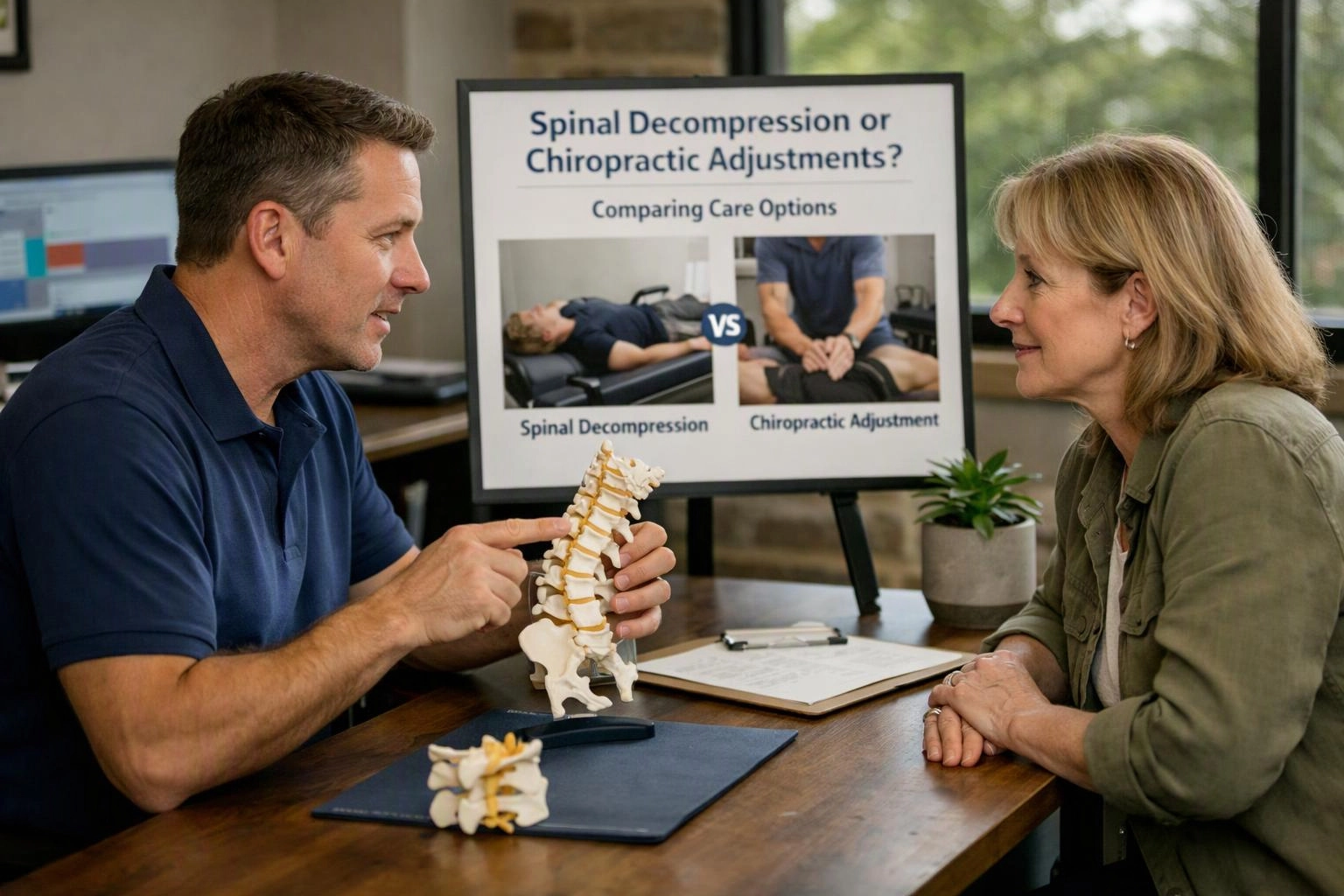
Our team uses the comparison below as a starting point, not as a substitute for an individualized evaluation. The suspected pain source, safety considerations, care goals, and response to treatment guide the final care plan.
How Spinal Decompression and Chiropractic Adjustments Differ
Spinal decompression therapy uses controlled unloading to address pressure-related spinal conditions. The approach may be considered when an intervertebral disc, nerve root, or surrounding tissue appears related to back pain, neck pain, or sciatica.
A chiropractic adjustment uses a directed manual force to influence motion in a spinal joint. We may consider this approach when joint restriction, muscle tension, or mechanical changes appear connected to the symptoms.
Spinal decompression and chiropractic adjustments can have different treatment goals. A physical examination helps us assess spinal joint mobility, range of motion, nerve irritation, and other findings before we recommend either option.
Spinal Decompression or Chiropractic Adjustment: Quick Comparison
Neither option is universally better because the appropriate choice depends on the suspected pain generator, examination findings, health history, and response to care. Cost drivers also differ according to the evaluation, treatment complexity, and services included.
| Factor | Spinal Decompression Therapy | Chiropractic Adjustment |
|---|---|---|
| Treatment goal | Controlled unloading for selected pressure-related symptoms | Influence joint motion and mechanical function |
| Cost drivers | Evaluation, care plan, treatment complexity, and included services | Evaluation, care plan, treatment complexity, and included services |
| Care timeline | Depends on symptoms, examination findings, and response to care | Depends on symptoms, examination findings, and response to care |
| Maintenance care | Considered only when consistent with the care plan and goals | Considered only when consistent with the care plan and goals |
| Best-fit concerns | Disc irritation, nerve symptoms, and selected radiating pain | Joint restriction, stiffness, and mechanical back or neck pain |
What Spinal Decompression Therapy May Help Address
Spinal decompression therapy is a non-surgical treatment approach that applies controlled unloading to the spine to address selected pressure-related symptoms.
Our team may discuss decompression when disc-related pain, nerve compression, sciatica, low back pain, or neck pain matches the examination findings. The treatment uses a traction-based approach, but the force and goals depend on the equipment and the individualized care plan.
Spinal decompression is not appropriate for every cause of pain. We review your symptom history, physical examination, neurological findings, and care goals before considering it.
Our Spinal Decompression Therapy service explains how this non-surgical option may fit within a broader plan.
Advantages and Best-Fit Uses of Spinal Decompression
Spinal decompression may be useful when the clinical picture suggests that controlled unloading could reduce stress around a disc or irritated nerve. We use the findings from your evaluation to decide whether the approach is reasonable.
Best for: people whose symptoms and examination findings suggest a pressure-related spinal problem that may respond to controlled unloading.
What a Chiropractic Adjustment May Help Address
A chiropractic adjustment is a manual treatment that applies a directed force to a spinal joint to influence motion and mechanical function.
We may consider an adjustment when joint restriction, reduced spinal joint mobility, muscle tension, or movement-related symptoms appear connected to mechanical back pain or neck pain. Manual therapy may be used as one part of a broader care plan.
An adjustment is not automatically suitable for every symptom pattern. Our physical examination helps us assess movement, tenderness, range of motion, and neurological symptoms before we recommend it.
Advantages and Best-Fit Uses of Chiropractic Adjustments
Chiropractic adjustments may fit symptoms that change with movement and appear linked to restricted joint function. We match the manual approach to your examination findings and comfort.
Best for: people whose symptoms and examination findings suggest joint restriction or mechanical movement problems.
Is Spinal Decompression the Same as Traction?
Spinal decompression and traction both use unloading forces, but spinal decompression describes a more specific treatment approach whose technique and clinical goals depend on the equipment and care plan.
Traction is a broad term for applying a pulling or unloading force to the spine. Spinal decompression may use axial unloading with a more targeted setup, but the terms should not be treated as interchangeable in every clinic.
We explain the force, positioning, expected treatment goals, and safety considerations before adding either approach to care.
What Changes the Cost of Comparing These Care Options?
The cost of spinal decompression or chiropractic care depends on the evaluation, recommended treatment plan, treatment complexity, insurance benefits, and whether additional services are included.
An initial examination may involve a review of your health history, symptom pattern, physical findings, and care goals. The recommended care plan can change the overall out-of-pocket cost when it includes different treatment methods or supporting services.
We explain what the recommended care includes and how to obtain an exact quote from Advanced Injury Care Clinic before care begins.
How Insurance Coverage May Apply
Insurance coverage for spinal decompression and chiropractic adjustments varies by plan, treatment classification, and benefit requirements, so coverage should be confirmed before care begins.
Health insurance may use different rules for medical necessity, covered chiropractic services, referrals, documentation, or visit limits. Coverage for spinal decompression therapy may also depend on how the benefit plan classifies the treatment.
Our team can discuss the information needed for coverage verification, but your insurer makes the final coverage decision. Ask about deductibles, exclusions, authorization requirements, and expected out-of-pocket cost.
How We Decide Which Care Option Fits
Advanced Injury Care Clinic compares your health history, symptom pattern, physical examination, and care goals before recommending spinal decompression or a chiropractic adjustment.
When to Ask About Spinal Decompression
Ask Advanced Injury Care Clinic about spinal decompression when symptoms suggest a pressure-related spinal problem and an examination supports considering controlled unloading as part of care.
Relevant concerns may include persistent back pain, sciatica, radiating leg pain, disc-related symptoms, or neurological symptoms. These symptoms can have different causes, so a clinical evaluation is important before selecting treatment.
Bring information about symptom changes, previous diagnoses, imaging reports, and past treatment when available. We use that information with the examination to decide whether decompression belongs in an individualized care plan.
Which Care Option Is Better for Your Symptoms?
The better option is the treatment that matches the suspected source of symptoms, examination findings, safety considerations, and response to care.
Spinal decompression may be a better fit when pressure-related symptoms and nerve irritation guide the decision. A chiropractic adjustment may be a better fit when joint restriction and mechanical movement problems guide the decision.
Some care plans may use both approaches when the examination supports that choice. We review patient preference, treatment response, and care goals as the plan develops.
Questions About Spinal Decompression and Chiropractic Adjustments
Can spinal decompression and chiropractic adjustments be used in the same care plan?
Yes, spinal decompression and chiropractic adjustments can be used in the same care plan when Advanced Injury Care Clinic finds that both approaches match the examination findings, safety considerations, and treatment goals.
What symptoms may make chiropractic adjustment a poor fit?
Severe or changing neurological symptoms, unexplained pain, or examination findings that suggest a different medical concern may make chiropractic adjustment a poor fit until further evaluation is completed.
What should I bring to an evaluation for spinal decompression?
Bring your symptom history, medication information, relevant imaging reports, previous treatment details, and questions about your care goals to an evaluation for spinal decompression.
Can spinal decompression help sciatica symptoms?
Spinal decompression may help sciatica symptoms when the examination suggests that disc irritation or nerve compression is contributing to the radiating pain.
Advanced Injury Care Clinic reviews your symptoms, examination findings, and care goals before explaining which option may fit.
Get a Free Estimate