Posture-Related Strain and Recurring Stiffness
Posture-related strain and recurring stiffness can contribute to neck or back discomfort and restricted movement. Advanced Injury Care Clinic assesses posture, movement, and related symptoms to guide appropriate chiropractic care.
Request an EstimateWhat Posture-Related Strain and Recurring Stiffness Feel Like
Posture-related strain often develops as discomfort or tightness in areas that support the head, shoulders, and spine. Our team looks at how these symptoms affect movement and daily activities.
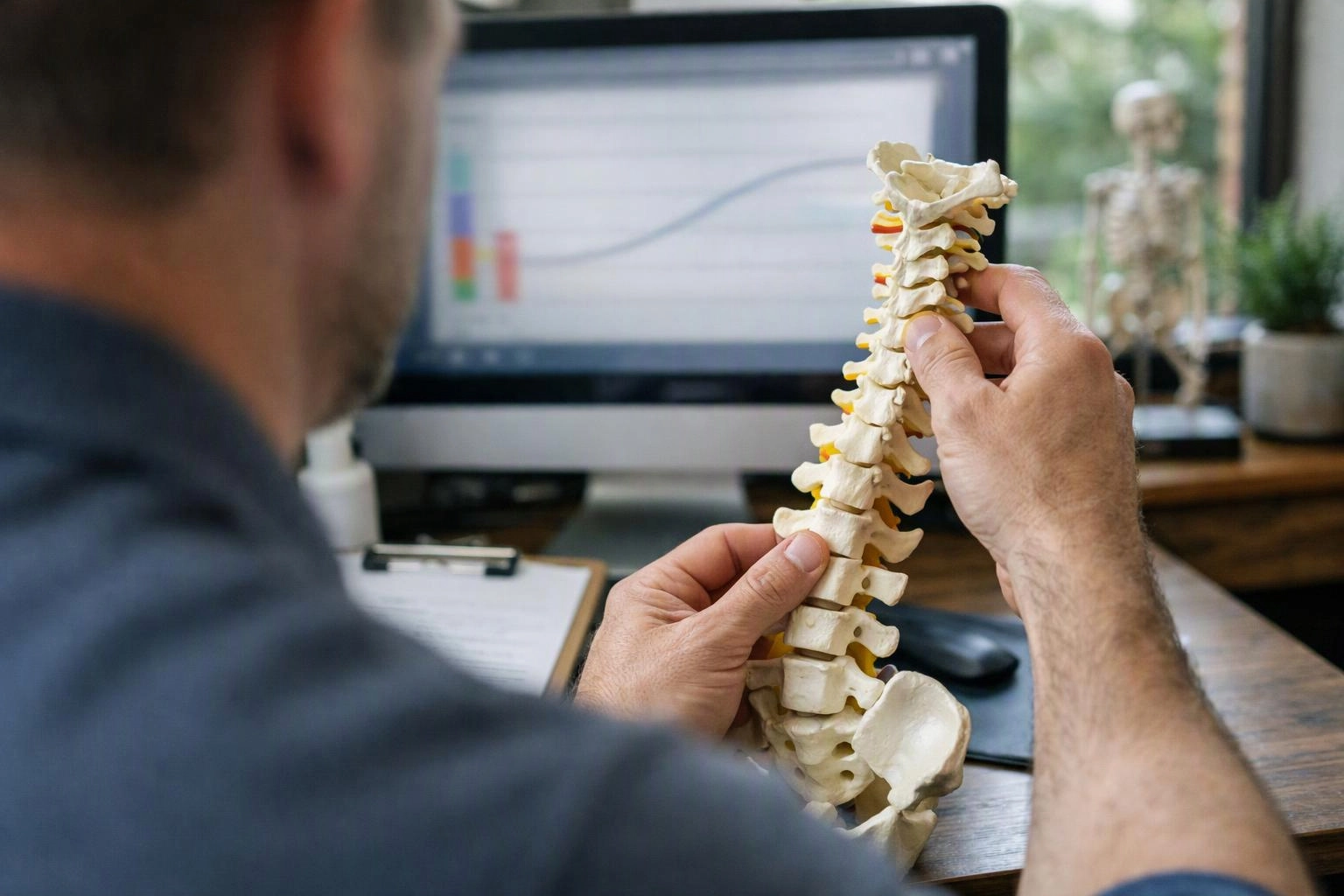
How Posture Can Contribute to Neck and Back Strain
Yes, sustained or inefficient posture can contribute to neck and back strain by placing repeated demand on muscles, joints, and supporting tissues.
Postural alignment affects how the body distributes force during sitting, standing, walking, and screen use. Forward head posture and rounded shoulders can increase demand on the neck and upper back, while poor sitting habits can add stress to the lower back.
Repeated spinal loading may lead to muscle fatigue when supporting muscles work for long periods without enough variation. We assess these patterns alongside symptoms to understand whether neck strain, back strain, or both may be linked to movement habits.
Common Causes of Recurring Stiffness
Recurring stiffness can develop when daily activities repeatedly place the body in the same position or demand the same movement. Our assessment helps connect these causes with the pattern of discomfort.
When Restricted Movement Warrants an Assessment
Restricted movement warrants an assessment when stiffness keeps returning, limits ordinary activities, or occurs with persistent neck or back discomfort.
Restricted range of motion can affect work, exercise, sleep, and simple tasks such as turning your head or bending. A chiropractic assessment can help identify whether posture, joint mobility, muscle tension, or another factor is contributing.
We review symptom patterns instead of focusing on posture alone. Recurring symptoms and functional limitations can provide useful information about the movement-related condition and the care that may be appropriate.
How Advanced Injury Care Clinic Assesses Posture-Related Discomfort
Advanced Injury Care Clinic uses a structured evaluation to connect your symptoms with posture, movement, and spinal or joint findings.
Chiropractic Care for Posture-Related Pain
Chiropractic care for posture-related pain focuses on the movement and alignment factors that may be contributing to neck or back discomfort.
Our team may use posture correction strategies, hands-on care, and movement support based on the findings from your examination. The goal is to help improve comfortable movement while addressing factors such as joint mobility, muscle tension, and repeated loading.
Our Posture Correction service can be part of a broader plan for posture-related pain. We also consider whether neck pain treatment or back pain treatment fits the symptoms and care goals identified during the assessment.
Ways to Reduce Posture-Related Strain
Daily movement habits can reduce repeated strain when they support varied positions and comfortable mobility. We can help you connect these habits with the findings from your assessment.
When Recurring Stiffness May Signal More Than a Posture Concern
Recurring stiffness may indicate more than a posture concern when symptoms persist, spread beyond the original area, follow an injury, or occur with neurological changes.
Radiating symptoms, numbness, or weakness may suggest that the symptoms need closer evaluation. An injury history can also change how we interpret recurring neck or back stiffness.
We recommend medical evaluation when symptoms are severe, worsening, or associated with significant neurological changes. Our assessment can help determine whether chiropractic care is appropriate or whether another form of medical evaluation should come first.
What to Expect When Planning Care
Planning care starts with your goals, clinical findings, and the treatment options that fit your movement needs.
We explain how posture correction, neck pain treatment, back pain treatment, and movement support may relate to your assessment. Care planning can change when symptoms, functional limitations, or examination findings point to a different priority.
Care costs depend on the assessment, the treatment approach, and the services included in your plan. We explain what the recommended care includes and how to obtain an exact quote before you decide.
To discuss recurring stiffness or posture-related pain with Advanced Injury Care Clinic, contact our team.
Questions About Posture-Related Strain and Stiffness
Can a chiropractor assess posture-related discomfort?
Yes, Advanced Injury Care Clinic can assess posture-related discomfort by reviewing your history and examining posture, movement, spinal alignment, and joint mobility.
Can posture-related strain cause recurring stiffness?
Yes, posture-related strain can contribute to recurring stiffness when muscles and joints face repeated demand from prolonged sitting, screen use, or limited movement variety.
What symptoms suggest posture-related pain needs further evaluation?
Posture-related pain needs further evaluation when discomfort keeps returning, restricts normal activities, follows an injury, radiates, or occurs with numbness or weakness.
Can posture correction help with restricted movement?
Yes, posture correction may support restricted movement when an assessment shows that alignment, muscle tension, or movement habits contribute to the limitation.
Related Resources
Spinal Decompression or Chiropractic Adjustments: Comparing Care Options
Compared ToChiropractic Care vs Physical Therapy: What to Compare Before Choosing
Compared ToPaying for Chiropractic Care After a Car Accident: Claims and Coverage Questions
Why It MattersPotential Benefits and Limits of Chiropractic Adjustments