
What Is Torticollis?
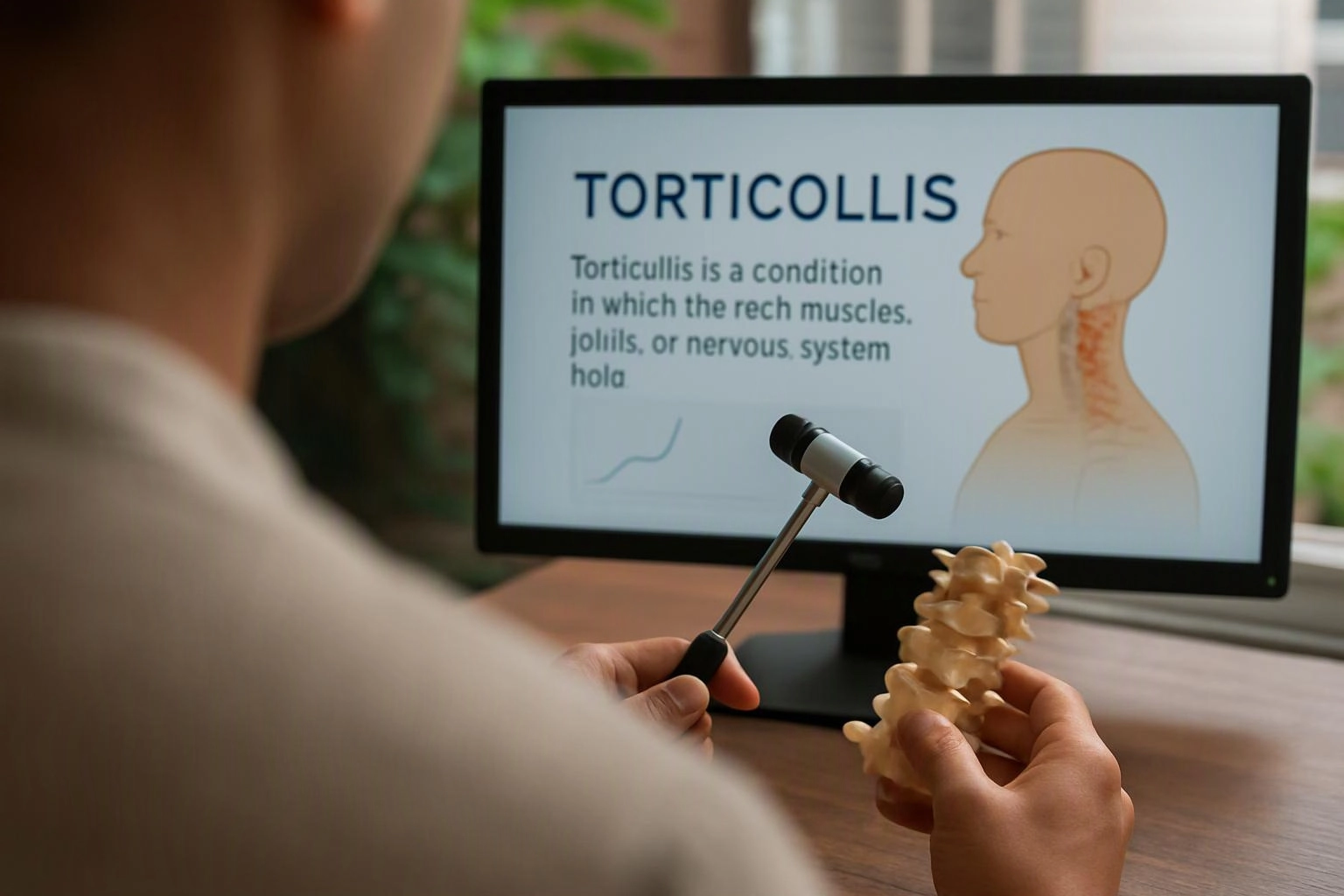
Torticollis is a condition in which the neck muscles, joints, or nervous system hold the head in an abnormal position, often with the chin turned or tilted. The condition may develop suddenly after strain or injury, or it may persist because of an underlying neurological or structural cause. Symptoms can include neck pain, stiffness, and limited movement.
Quick Facts About Torticollis
Category
Neck movement disorder
Used for
Describing abnormal head and neck positioning
Common confusion
Ordinary neck stiffness or muscle soreness
Also called
Wry neck
Often discussed with
Neck Pain Treatment, Whiplash Treatment
Key Takeaways About Torticollis
- The head may tilt, rotate, or remain fixed in an unusual position.
- Neck movement and muscle activity help distinguish its contributing factors.
- Torticollis is not always the same as ordinary muscle soreness.
How Torticollis Works

Torticollis changes the balance between the muscles and joints that position the neck. A shortened or overactive muscle may pull the head toward one side, while irritated joints or nerves can limit comfortable movement. The resulting posture may involve rotation, side bending, or both.
Related glossary terms: Cervical Spine, Range Of Motion, Myofascial Pain.
Assessment focuses on how the head rests, how the neck moves, and which tissues respond during examination. A clinician may compare active movement with assisted movement and check for tenderness, muscle guarding, or symptoms that extend into the shoulder or arm. Cervical spine mechanics can help show whether the pattern relates mainly to muscle control, joint restriction, or another source.
From the Advanced Injury Care Clinic team
When we assess torticollis during neck pain treatment, we observe head position, active range of motion, muscle tenderness, and changes after gentle movement. We also review the injury history and screen for symptoms that may require evaluation beyond routine musculoskeletal care.
Torticollis in Practice: A Real-World Example
After a rear-end collision, a person may hold the head turned slightly because neck muscles tighten and movement feels restricted. The examination can distinguish this guarded posture from a persistent movement disorder or a problem involving the cervical joints.
Related Services
Related Terms
Cervical Spine
Cervical Spine is the upper section of the spinal column in the neck. It includes the…
Range Of Motion
Range Of Motion is the available movement at a joint or group of joints, measured through…
Myofascial Pain
Myofascial Pain is a muscle and connective tissue pain pattern linked to sensitive areas within tight…
Trigger Point
Trigger Point is a sensitive area within a muscle or its surrounding fascia that may produce…
Advanced Injury Care Clinic
Have Questions About Torticollis?
Contact Advanced Injury Care Clinic for practical guidance on Torticollis and related chiropractor work in Hendersonville.