
What Is Spinal Stenosis?
Spinal Stenosis is a narrowing of the spaces within the spine that can reduce room for the spinal cord or nearby nerve roots. The narrowing may develop in the neck or lower back and may relate to age-related changes, disc changes, joint changes, or other structural factors. Symptoms can include pain, numbness, weakness, or altered walking.
Quick Facts About Spinal Stenosis
Category
Spinal structural condition
Used for
Understanding nerve-related back or neck symptoms
Common confusion
Not identical to a disc bulge
Also called
Narrowing of the spinal canal
Often discussed with
Back Pain Treatment, Spinal Decompression Therapy
Key Takeaways About Spinal Stenosis
- Narrowing may occur in the neck or lower back.
- Symptoms depend on which nerves or spinal structures are affected.
- Spinal stenosis is not the same as ordinary muscle soreness.
How Spinal Stenosis Works
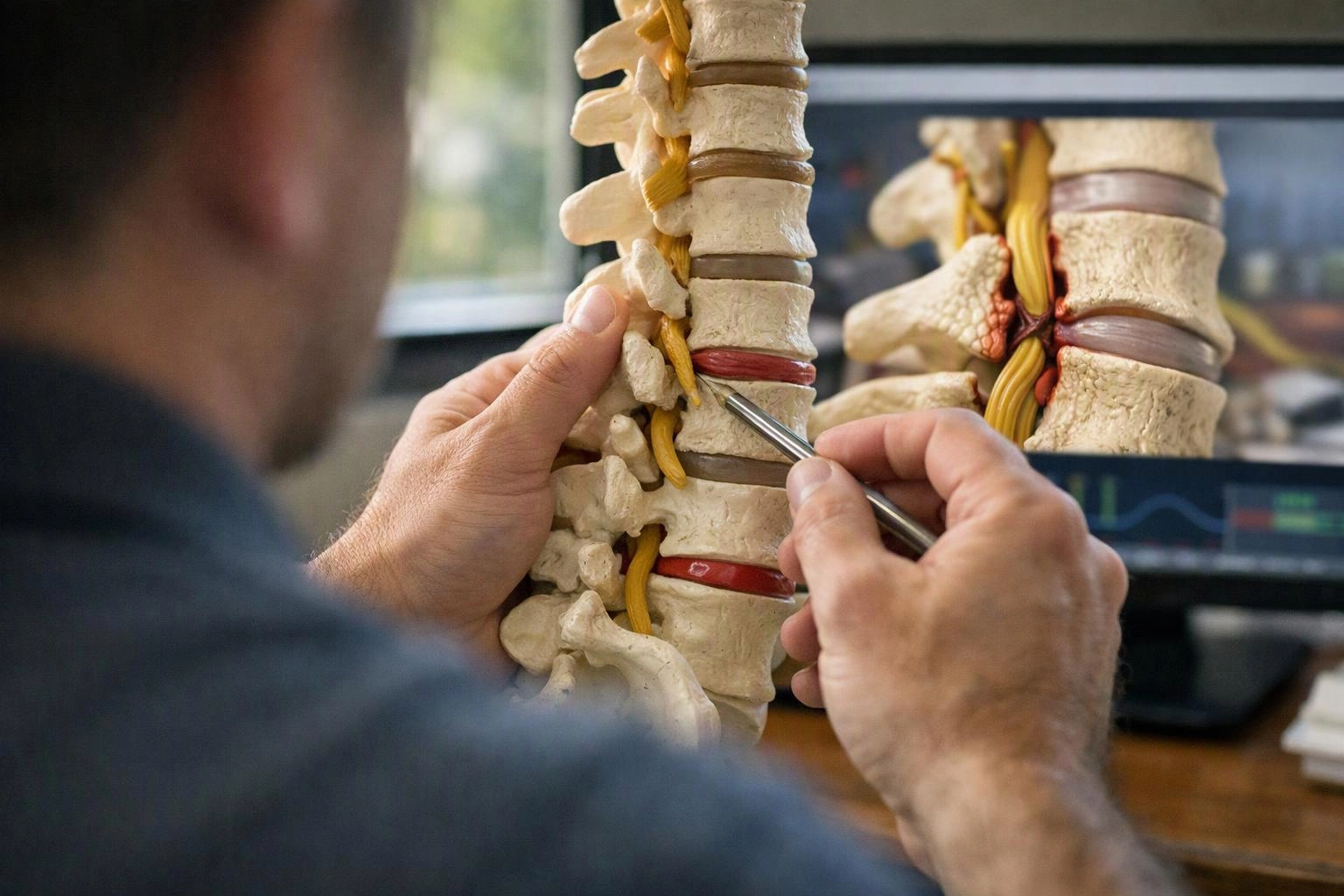
Spinal stenosis develops when the open spaces inside or between spinal bones become smaller. The reduced space may affect the spinal cord or a nerve root. The location matters because narrowing in the neck can affect different body areas than narrowing in the lower back.
Related glossary terms: Lumbar Spine, Cervical Spine, Foraminal Stenosis.
Healthcare professionals assess the pattern of symptoms, movement, strength, sensation, and reflexes. Imaging may help show changes in the spinal canal, openings for nerve roots, discs, or nearby joints. Symptoms may change with posture or activity because spinal position can alter available space around sensitive structures. A person may report back pain, leg discomfort, tingling, weakness, or changes in walking. These signs can also occur with other spinal conditions, so the findings require context.
From the Advanced Injury Care Clinic team
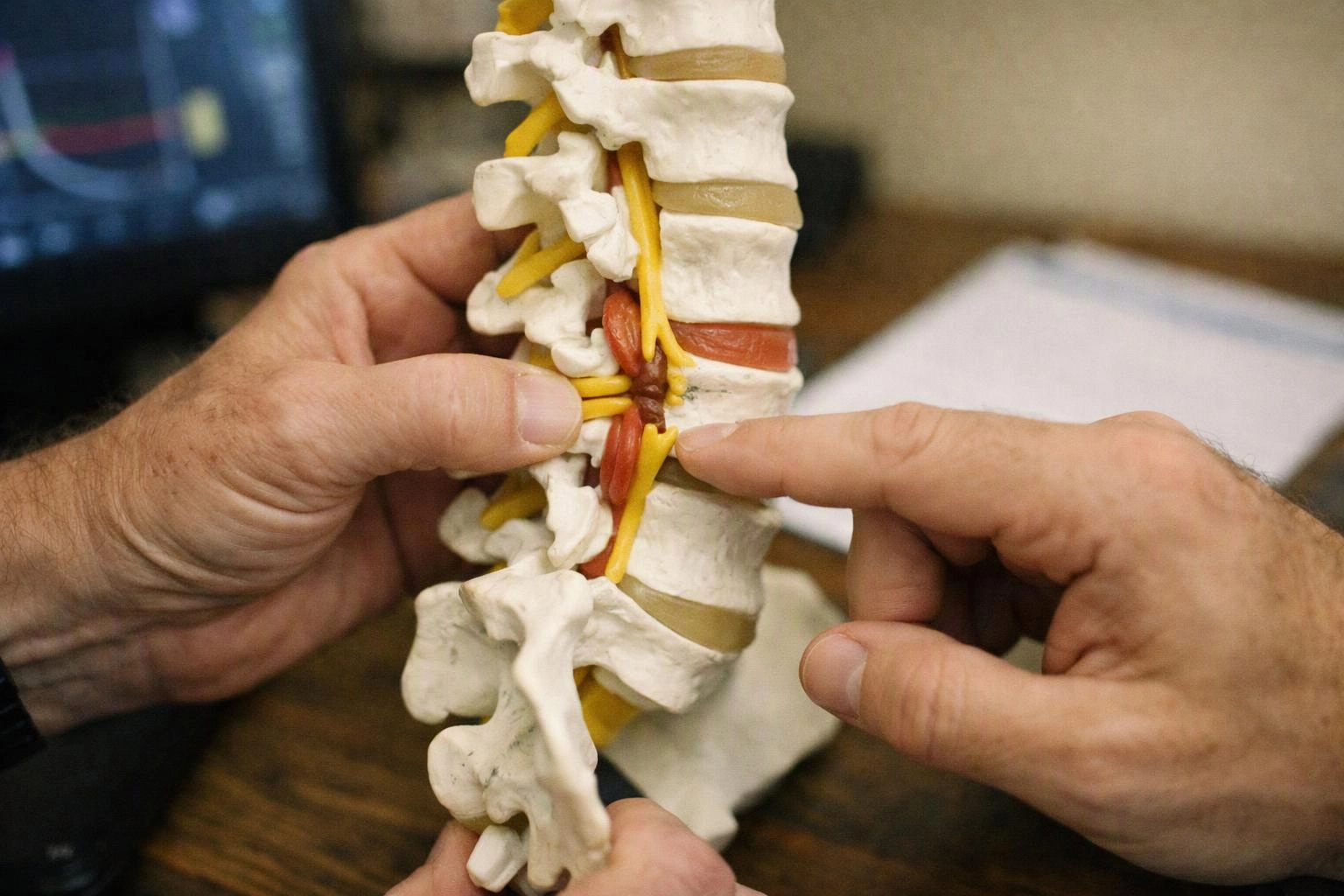
When we assess spinal stenosis in back pain treatment, we review symptom patterns, movement, strength, and nerve-related findings together. We also consider whether the symptoms fit the lower back or neck and whether another condition may explain the presentation. Our care planning is based on the individual examination.
Spinal Stenosis in Practice: A Real-World Example
A person with lower-back spinal stenosis may notice back discomfort and leg symptoms during standing or walking. The care team may examine movement and nerve-related findings to distinguish this pattern from muscle strain or a disc-related problem.
Related Services
Related Terms
Lumbar Spine
Lumbar Spine is the lower section of the spinal column between the thoracic spine and sacrum…
Cervical Spine
Cervical Spine is the upper section of the spinal column in the neck. It includes the…
Foraminal Stenosis
Foraminal Stenosis is a narrowing of the openings between spinal bones where nerve roots leave the…
Nerve Root Compression
Nerve Root Compression is pressure on a spinal nerve root where the nerve leaves the spinal…
Advanced Injury Care Clinic
Have Questions About Spinal Stenosis?
Contact Advanced Injury Care Clinic for practical guidance on Spinal Stenosis and related chiropractor work in Hendersonville.