
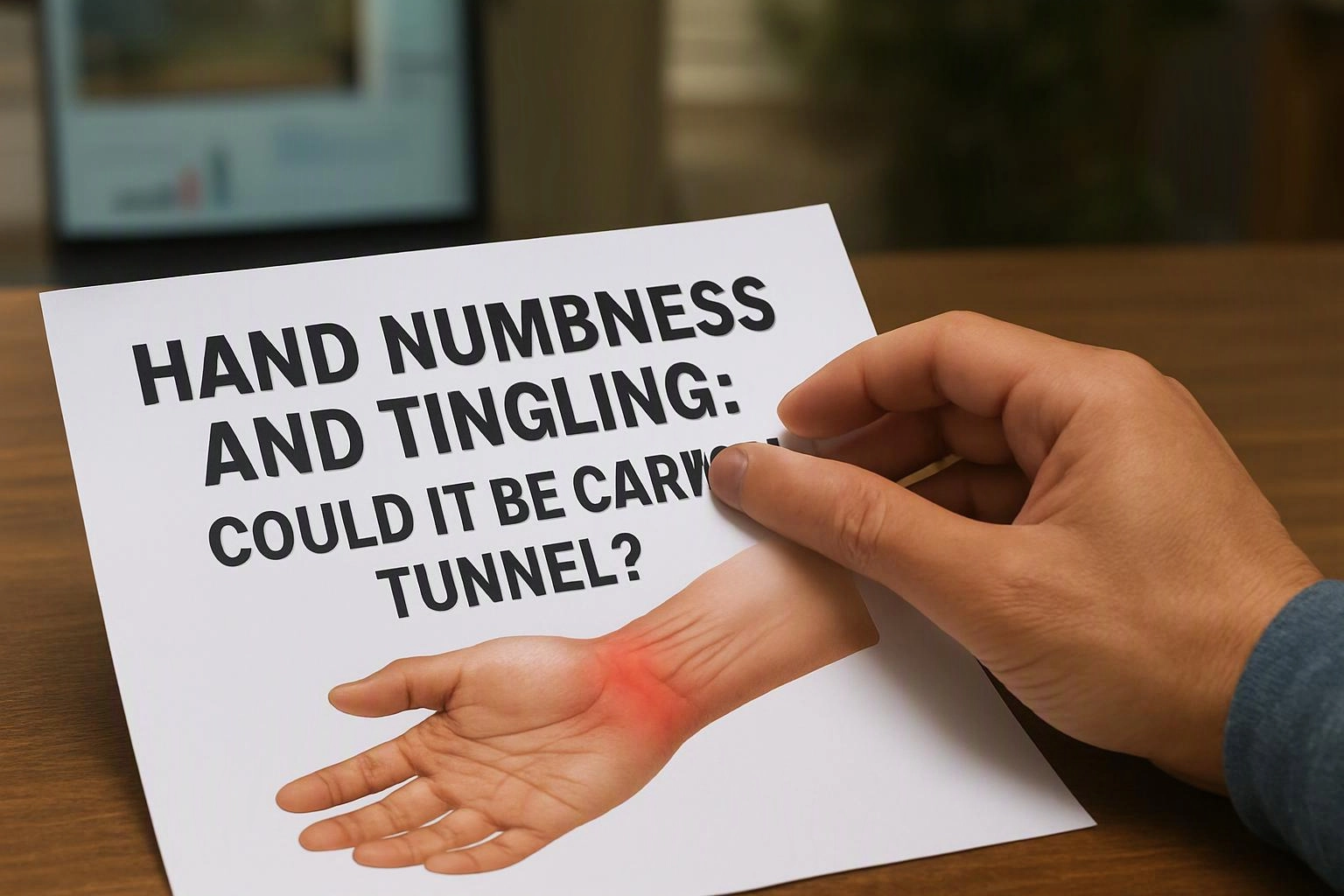
Hand Numbness and Tingling: Could It Be Carpal Tunnel?
Hand numbness and tingling can reflect carpal tunnel syndrome, and Advanced Injury Care Clinic assesses these symptoms, checks for related nerve problems, and explains appropriate chiropractic treatment options.
Request an EstimateWhat Does Carpal Tunnel Numbness Feel Like?
Carpal tunnel syndrome can cause numbness, tingling, and weakness when pressure affects the median nerve at the wrist.
The median nerve carries sensation from part of the hand and helps control some thumb movements. We look at the full symptom pattern because hand paresthesia can have more than one cause.
How Carpal Tunnel Symptoms Differ From Other Hand Problems
Carpal tunnel symptoms usually relate to median nerve compression at the wrist, but similar symptoms can come from another part of the nervous system. Wrist symptoms may overlap with neck nerve compression, elbow nerve compression, or peripheral neuropathy.
Neck nerve compression may cause symptoms that travel from the neck or shoulder into the arm and hand. Elbow nerve compression more often affects the ring and little fingers. Peripheral neuropathy can affect both hands or other areas of the body. Our team considers symptom location, timing, movement, and nerve function during a chiropractic assessment.
What Commonly Contributes to Carpal Tunnel Symptoms?
Several factors can increase pressure or irritation around the wrist and median nerve. We ask about daily activities and past injuries to help identify which factors may be affecting your symptoms.
These factors do not confirm carpal tunnel syndrome by themselves. Our examination helps connect possible contributors with the symptoms you report.
When Should Hand Numbness or Weakness Be Medically Evaluated?
Hand numbness or weakness should be medically evaluated when symptoms persist, worsen, interfere with hand function, or appear suddenly with other serious symptoms.
Persistent numbness, worsening grip weakness, loss of coordination, or repeated dropping of objects deserves prompt attention. Sudden weakness or numbness, especially with trouble speaking, facial changes, severe headache, chest symptoms, or difficulty walking, requires urgent medical evaluation. We help assess musculoskeletal and nerve-related patterns, but sudden serious symptoms need emergency medical care.
Early evaluation can help clarify whether symptoms are related to the wrist, neck, elbow, or another condition. We also explain when further medical evaluation may be appropriate.
How Can You Reduce Hand and Wrist Strain?
Simple changes can reduce stress on the wrist during work and daily activities. We can discuss practical adjustments that fit your symptoms and routine.
Strain reduction may help limit irritation, but it does not identify the cause of existing nerve symptoms. We assess ongoing numbness or weakness when self-care changes do not address the problem.
How We Assess Symptoms That May Be Carpal Tunnel
A chiropractic assessment reviews symptom patterns and examines the wrist, hand, neck, and related nerve function.
At Advanced Injury Care Clinic, we begin with your symptom history. We ask when the numbness began, which fingers are affected, what activities change it, and whether nighttime symptoms or grip weakness are present.
Our team performs a wrist examination and checks movement, tenderness, sensation, strength, and nerve function. We also include a neck and upper-extremity examination because nerve irritation can develop away from the wrist.
After the assessment, we explain what the findings may suggest and whether our Carpal Tunnel Syndrome Treatment approach fits your needs. We can also explain when referral for further medical evaluation is appropriate.
What Chiropractic Treatment May Address
Carpal Tunnel Syndrome Treatment may address restricted wrist mobility, surrounding soft tissue irritation, and movement habits that place stress on the hand and wrist.
Our Chiropractor may use care focused on wrist mobility and related areas of the upper extremity. Soft tissue treatment may also be considered when muscle or connective tissue tension contributes to restricted movement.
Ergonomic guidance can help you adjust wrist position, hand posture, and repetitive activities. We tailor care to the findings from your examination and monitor how your symptoms respond.
A medical clinic may be needed for additional testing or treatment when symptoms suggest a condition outside the scope of chiropractic care. We explain when referral for further medical evaluation is appropriate instead of assuming every hand symptom comes from the wrist.
Questions About Hand Numbness and Carpal Tunnel
Can carpal tunnel cause numbness in all the fingers?
Advanced Injury Care Clinic explains that carpal tunnel usually affects the thumb, index finger, middle finger, and part of the ring finger. Numbness across all fingers may point to another nerve problem or more than one source, so we assess the wrist, elbow, neck, and nerve pattern.
Can carpal tunnel symptoms affect both hands?
Yes, carpal tunnel symptoms can affect both hands, although symptoms may not feel equal on each side. We compare the symptoms and nerve function on both sides while checking for other possible causes.
Can hand tingling come from a pinched nerve in the neck?
Yes, hand tingling can come from neck nerve compression when an irritated nerve sends symptoms into the arm or hand. Our neck and upper-extremity examination helps compare a neck-related pattern with median nerve compression at the wrist.
Can chiropractic treatment help with carpal tunnel symptoms?
Yes, chiropractic treatment may help address wrist mobility, soft tissue tension, nerve irritation, and ergonomic factors linked to carpal tunnel symptoms. We first assess the symptoms and explain whether chiropractic care or further medical evaluation is appropriate.
Hand numbness, tingling, and weakness deserve an assessment when they affect comfort, coordination, or daily tasks. Advanced Injury Care Clinic reviews the wrist, median nerve, neck, and related structures before discussing care options.
Contact Advanced Injury Care Clinic to discuss your symptoms and arrange an evaluation.
Related Resources
Chiropractic Care Costs: What to Compare Before You Book
Compared ToUsing Insurance vs Paying Out of Pocket for Chiropractic Care
Compared ToChoosing a Chiropractor for a Work Injury: Coverage and Process Questions
Compared ToPrenatal Chiropractor or General Chiropractor: Questions for Choosing Care