
What Is the Atlas?
Atlas is the first cervical vertebra in the neck and supports the skull. This ring-shaped bone connects the head with the rest of the cervical spine. Unlike most vertebrae, the atlas has no typical vertebral body. Its joints help the head nod and distribute movement through the upper neck.
Quick Facts About Atlas
Category
Cervical vertebra
Used for
Assessing upper-neck structure and movement
Common confusion
Often confused with the axis, the next neck vertebra
Also called
C1 vertebra, First cervical vertebra
Often discussed with
Neck Pain Treatment, Chiropractic Adjustment
Key Takeaways About Atlas
- The atlas forms a ring around the upper spinal cord.
- Its joints support nodding and balanced head movement.
- The atlas is not the same bone as the axis.
How Atlas Works
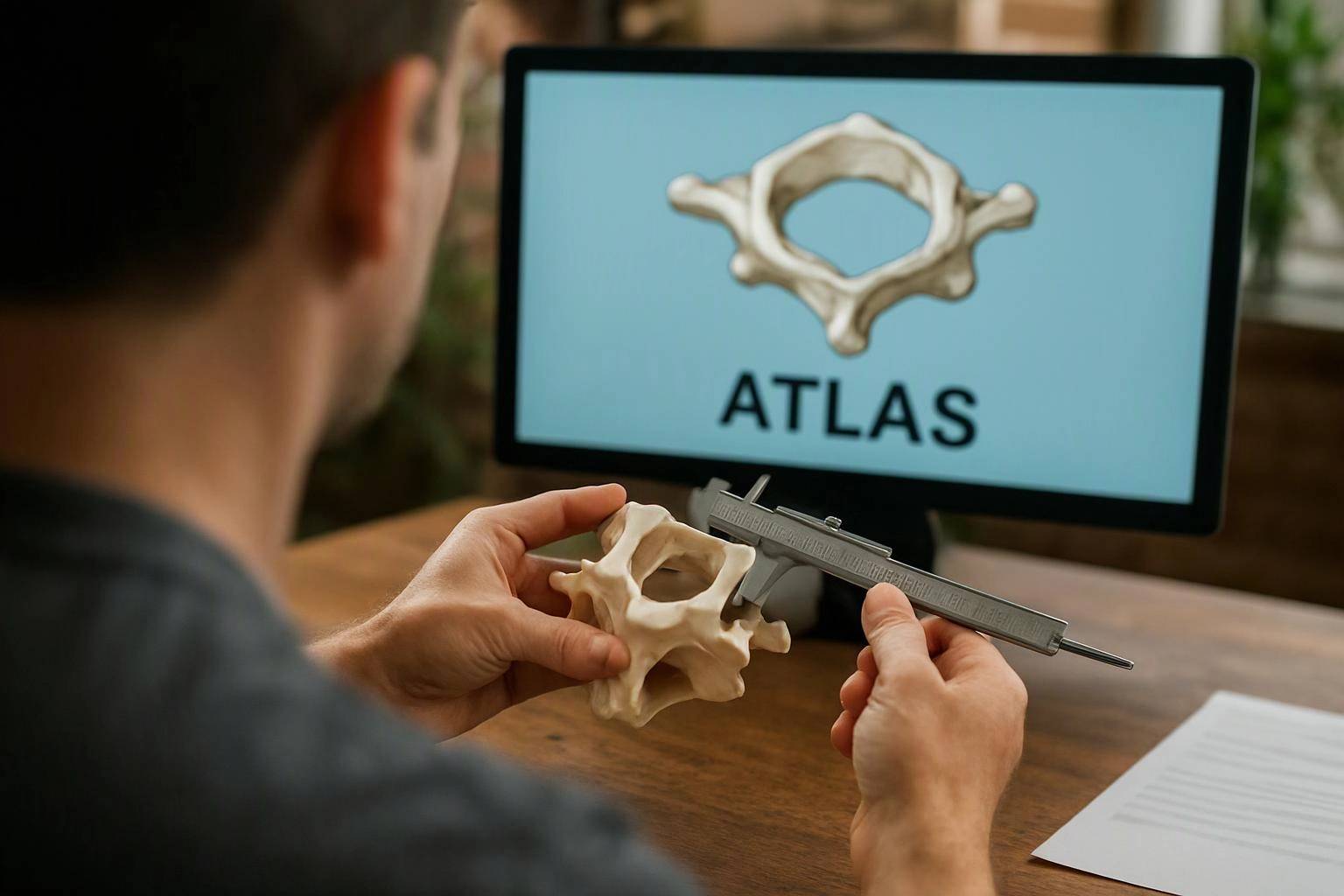
The atlas forms a ring at the top of the cervical spine. Its upper surfaces meet the base of the skull, while its lower surfaces connect with the axis. This arrangement lets the head move while keeping the upper neck aligned with the spine.
Related glossary terms: Axis, Cervical Spine, Vertebra.
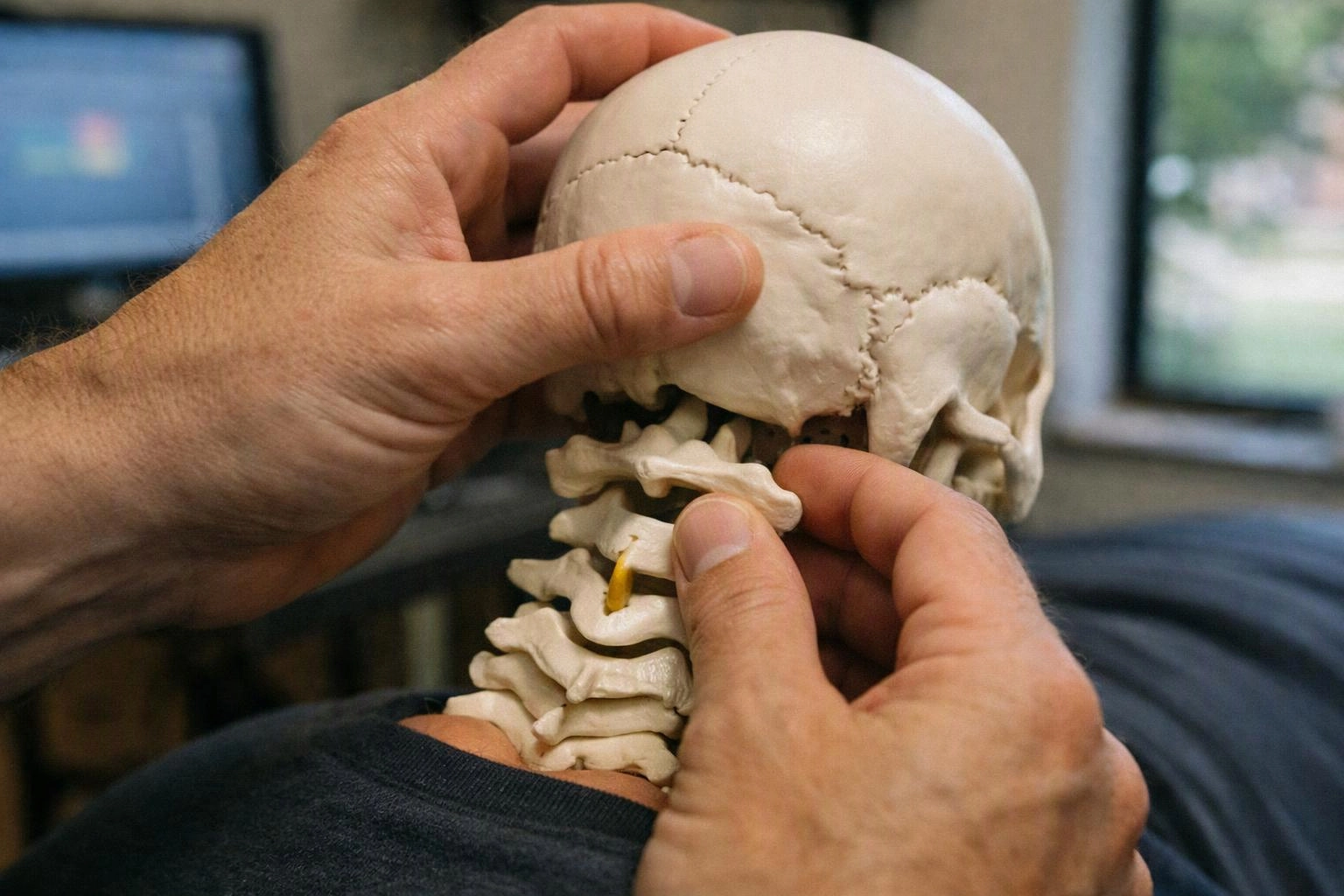
Atlas movement is considered during an assessment of neck pain, posture, and range of motion. A clinician may compare head movement from side to side, observe muscle tension, and examine how the upper cervical joints respond to gentle contact. The axis provides the pivot below the atlas, so both bones are assessed as part of the same upper-neck region.
From the Advanced Injury Care Clinic team
When we assess the atlas during Neck Pain Treatment, we examine upper-neck motion, posture, and nearby muscle tension together. Our team considers the atlas alongside the axis and the rest of the cervical spine, because one finding does not explain every neck-pain pattern.
Atlas in Practice: A Real-World Example
A person with neck pain may have limited comfort while looking upward or turning the head. During an assessment, the atlas is considered with the axis, cervical range of motion, and surrounding muscle activity to identify relevant movement findings.
Related Services
Related Terms
Axis
Axis is the second cervical vertebra in the neck, also called C2. The axis has a…
Cervical Spine
Cervical Spine is the upper section of the spinal column that runs through the neck and…
Vertebra
A vertebra is one of the bones that forms the spinal column. Each vertebra has a…
Range Of Motion
Range Of Motion is the amount of movement available at a joint or body region. Clinicians…
Advanced Injury Care Clinic
Have Questions About Atlas?
Contact Advanced Injury Care Clinic for practical guidance on Atlas and related chiropractor work in Nashville.